

 Travel Essentials
 Travel Essentials

Discover expert strategies for packing carry-on luggage efficiently, including organizational methods, space-saving techniques, and preparation tips.
 Travel Essentials
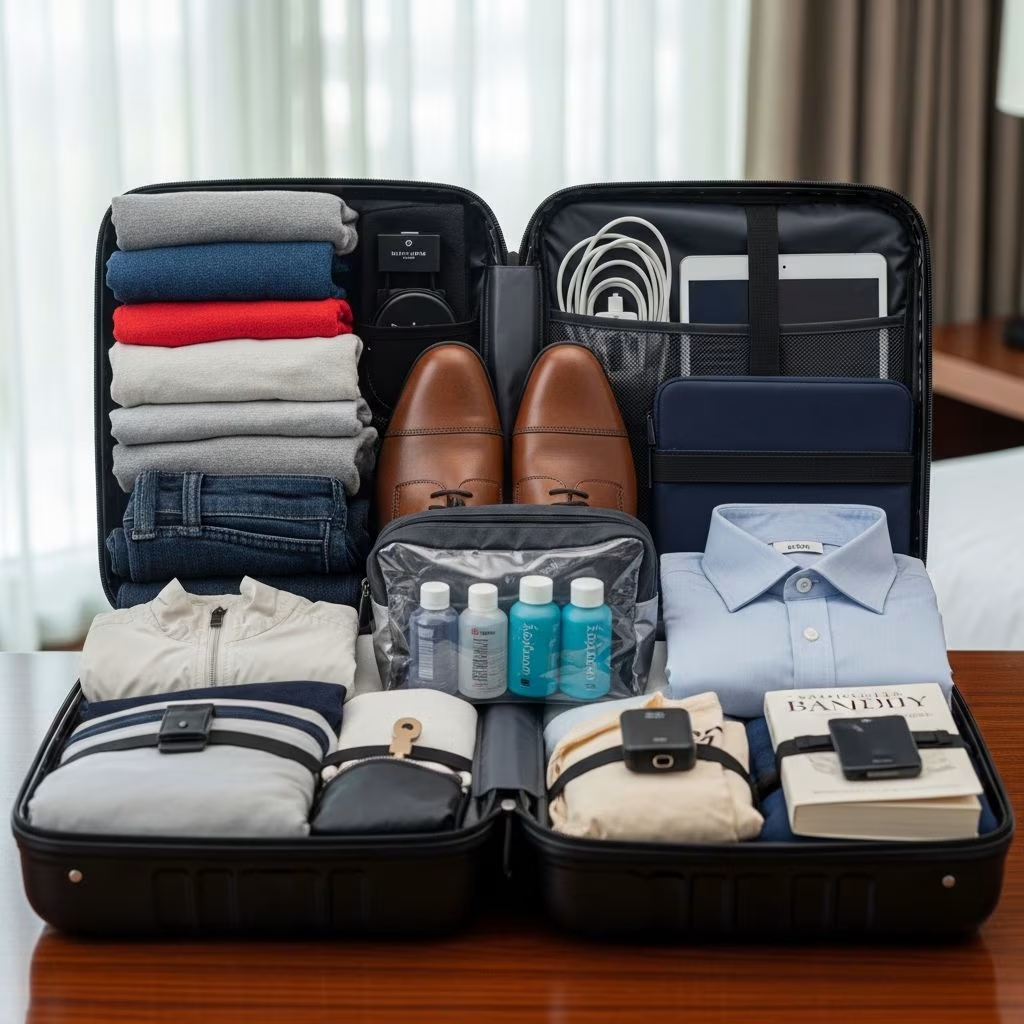
Packing for travel can feel overwhelming, especially when you’re limited to carry-on luggage. The constraint of fitting everything into a single compact bag requires strategy, planning, and knowledge of proven packing techniques. Whether you’re embarking on a weekend getaway or an extended trip, understanding how to pack efficiently means more comfort during your journey and fewer headaches at the airport. This guide explores comprehensive approaches to organizing your carry-on suitcase, backed by travel experts and practical experience.
The foundation of successful carry-on packing begins long before you place items into your suitcase. Each airline maintains specific requirements regarding dimensions, weight limits, and prohibited items, and these standards can vary significantly between carriers and even between different airports. What passes inspection at one location may be flagged at another, creating unnecessary complications at your departure gate.
Taking time to consult your airline’s official website and reviewing their carry-on policies eliminates surprises during check-in. Pay particular attention to liquid restrictions, as different airports enforce these rules with varying degrees of strictness. Some facilities require liquids to be in containers of 3.4 ounces or smaller and placed in a single clear bag, while others may have additional regulations. Familiarizing yourself with these requirements beforehand means you’ll travel with confidence and avoid last-minute repacking scenarios.
Additionally, note any weight restrictions your airline enforces. Some carriers are flexible with carry-on weight, while others strictly adhere to maximums. Understanding this helps you make informed decisions about what to pack and prevents overages that could result in fees or forced gate-checking of your bag.
Not all carry-on suitcases are created equal, and selecting the right one significantly impacts your packing success. Hard-shell luggage offers superior protection for fragile items but generally provides less flexibility for squeezing in additional belongings. Soft-sided carry-ons, conversely, offer some give and may allow you to compress items more effectively, though they provide less protection.
Consider the internal organization features of your chosen luggage. Suitcases with multiple compartments, cross-straps, and mesh pockets help distribute weight evenly and keep items organized throughout your journey. Look for models with a flat, expandable design rather than curved sides, as flat interiors accommodate rectangular packing cubes more efficiently and eliminate wasted space.
The quality of wheels and handle mechanisms also matters during extended travel days. Four-wheel spinners offer superior maneuverability through crowded terminals compared to two-wheel designs, and a telescoping handle that extends smoothly makes your bag easier to navigate through airports and hotels.
Before selecting individual clothing items, establish a color scheme that maximizes outfit combinations from minimal pieces. The most efficient approach involves choosing a primary color, a neutral base, and one accent color, then ensuring every garment coordinates with the others in this palette.
This method allows you to create multiple distinct outfits from relatively few items. For example, three pairs of bottoms and four tops in complementary colors generate twelve different outfit combinations. By limiting your color palette, you eliminate the temptation to pack items that don’t coordinate, which inevitably leads to overpacking.
Consider the activities planned for your trip when selecting specific items. Beach destinations require different pieces than city exploration or business meetings. Matching your capsule wardrobe to your intended activities ensures you pack only truly necessary clothing rather than keeping backup options “just in case.”
The debate between rolling versus folding clothing has long divided travelers, but the optimal solution often combines both techniques. This hybrid approach leverages the advantages of each method while minimizing their respective drawbacks.
For larger items like dresses, lightweight jackets, and pairs of pants, rolling works exceptionally well. Rolling compresses items efficiently and minimizes wrinkles better than one might expect. Smaller items like t-shirts and underwear benefit from the fold-and-stand method, where you fold garments into rectangular brick-like shapes and position them vertically in your luggage, allowing you to see everything at a glance.
The key to this hybrid approach involves consistency. Fold or roll each item into similar dimensions, creating uniform shapes that fit together like puzzle pieces within your suitcase. Start with larger items as your foundation, then fill remaining spaces with smaller compressed pieces. This systematic approach prevents gaps and wasted space while maintaining organization that allows quick identification of needed items.
Packing cubes represent one of the most transformative tools in the modern traveler’s arsenal, yet many people overlook their importance or underutilize them. These fabric compartments serve multiple critical functions beyond simple organization: they compress clothing, protect items from damage, and streamline the unpacking process at your destination.
Rather than randomly combining clothing types within cubes, assign specific categories to individual cubes. Designate one for shirts, another for bottoms, a separate compartment for undergarments, and additional cubes for accessories or intimates. This categorical organization means you can locate desired items instantly without disturbing your entire packed structure.
Compression cubes take functionality further by allowing you to manually squeeze air from packed items, significantly reducing their volume. This compression proves particularly valuable when traveling for extended periods in a carry-on, as you can fit approximately thirty percent more content than standard packing cubes allow.
Consider investing in varied cube sizes. A slim, flat cube design efficiently fills the awkward spaces along your suitcase’s bottom edges and around the handle compartments, which standard-sized cubes leave underutilized. Full-sized cubes then stack on top of these slim versions, creating an efficient layer system that maximizes every available inch.
Many travelers waste valuable real estate within their carry-on by overlooking built-in storage features and awkward gaps. The space between a suitcase’s handle bars, once the bag is closed, provides a surprisingly spacious channel perfect for belts, scarves, or rolled-up clothing. These handle-gap areas often measure four to six inches in width and extend the full length of your luggage.
The perimeter edges along your suitcase’s bottom and sides create additional storage opportunities. Slim packing cubes designed specifically for these narrow spaces can hold several items that would otherwise contribute to overall volume. Even the spaces beneath and around wheel mechanisms offer potential storage once you understand your specific luggage’s internal architecture.
Inside shoes represent excellent storage locations for small items like jewelry, chargers, or socks. Rather than dedicating valuable cube space to these items, distribute them throughout your footwear. This approach uses dead space effectively while keeping delicate items protected from crushing.
Front pockets and any compartments within your luggage should hold items you need easy access to during your flight, including headphones, lip balm, reading materials, and portable chargers. Keeping these essentials in accessible locations prevents the frustration of excavating through your entire packed suitcase during boarding.
How you distribute items within your carry-on affects both how it handles during transport and whether it meets weight requirements. Place heavier items like shoes, chargers, and toiletries near the wheels of your suitcase. This positioning creates better balance when your bag stands upright and prevents tipping, which can damage both your luggage and airport property.
Distribute weight evenly across the suitcase’s width rather than concentrating heavy items in one corner. This balanced approach makes your bag easier to maneuver through narrow aisles and less likely to shift awkwardly on overhead bins or luggage racks.
Medium-weight items should form the middle layer of your packing structure, with lighter clothing positioned toward the top. This arrangement protects delicate items from compression while maintaining overall balance throughout your bag.
Liquid restrictions represent one of the most misunderstood aspects of carry-on packing. Understanding and adhering to these rules prevents delays and potential confiscation of items at security checkpoints.
The fundamental rule requires that liquids, gels, and creams exist in containers of 3.4 ounces or smaller, contained within a single quart-sized clear plastic bag. However, minimizing your liquid quantity beyond these requirements simplifies airport passage and reduces anxiety about agent scrutiny.
Consider alternatives to traditional liquid products. Solid shampoo bars replace bulky liquid bottles, taking minimal space while lasting longer than equivalent liquid amounts. Dry deodorant works in most situations, and solid face balms substitute for liquid moisturizers effectively. Detergent sheets designed for single loads eliminate the need to pack full-sized detergent bottles or pods.
Travel-sized versions of essential products work well for short trips, while decanting larger bottles into small containers works for extended travel. Many travelers find that hotels provide basic toiletries, reducing the quantity they must pack from home.
When traveling for extended periods in a carry-on, separating clean and worn clothing becomes necessary. Standard packing cubes may contain odors inadequately, making compression bags valuable for containing soiled garments. These waterproof plastic bags serve multiple purposes: they isolate odors, compress dirty clothing significantly, and create additional storage space through the compression process.
Pack compression bags with your used clothing as they accumulate throughout your trip. The compression feature allows you to squeeze out excess air, reducing the volume these items occupy and potentially creating space for souvenirs or additional items. Many compression bags remain available relatively affordably and represent one of the least expensive packing investments with disproportionately large benefits.
Your personal item—the smaller bag allowed alongside your carry-on—serves a critical function that many travelers misunderstand. Rather than treating it as secondary luggage, recognize it as your primary source for in-flight necessities. Headphones, medications, eyeglasses, laptop, wallet, and phone chargers should occupy your personal item, keeping these essentials immediately accessible without excavating your carry-on during flight.
This organization becomes particularly important during boarding, when fumbling with a packed suitcase creates delays and frustration for fellow passengers. A well-organized personal item allows you to settle into your seat with everything you need already at hand, making your flight experience significantly more pleasant.
Select a personal item that complements your carry-on in style and functionality. A structured backpack provides balanced weight distribution across both shoulders, while a crossbody bag keeps essentials accessible while keeping your hands free. Avoid oversized personal items that crowd the space around your legs or interfere with seat reclining.
Temptation to pack your carry-on completely full is nearly universal, yet leaving some space serves important practical purposes. A slightly underfilled bag closes more easily, experiences less stress on zippers and seams, and accommodates unexpected items like souvenirs or purchases made during your trip.
This breathing room also makes repacking simpler if you need to reorganize items between hotels or during layovers. An overstuffed bag becomes progressively more difficult to manage as your trip progresses and you acquire additional items, making the final packing experience frustrating rather than manageable.
Leaving roughly ten to fifteen percent of your luggage capacity empty represents a reasonable target that balances maximum packing efficiency with practical flexibility.
The materials your clothing is constructed from significantly impact both how efficiently they pack and how they perform during travel. Natural fibers like merino wool offer inherent odor resistance and wrinkle recovery properties, meaning garments look fresher longer and require less frequent laundering during your trip.
Quick-drying synthetic blends and technical travel fabrics compress more effectively than heavy cotton while providing superior performance in varied climates. These specially designed travel materials often weigh less than conventional clothing, contributing to overall luggage weight reduction. While such specialized clothing sometimes costs more initially, the extended usability without washing during longer trips can justify the investment.
Stretch fabrics offer another advantage, providing greater movement and comfort while maintaining their shape throughout your journey. These materials often pack more compactly than rigid woven fabrics, contributing to more efficient space usage.
Attempting to pack immediately before departure creates stress and inevitably leads to overpacking through panic-driven decisions. Instead, establish a packing timeline that spreads the process across several days.
Begin by listing all activities planned for your trip and the clothing required for each. This inventory prevents packing items “just in case” that you ultimately won’t wear. Three to five days before departure, lay out all items you intend to pack and verify that everything coordinates within your chosen color scheme.
Two days before travel, conduct a second review. Remove items you’re uncertain about using. The general rule—if you haven’t worn it in a year, you probably won’t wear it on your trip—applies well to pre-travel packing. The evening before departure, complete final packing, allowing time for adjustments if needed.
Before committing your packing system to an actual trip, conduct a trial run in your home. Practice your folding and rolling methods with actual clothing you plan to pack, ensuring your techniques work with your specific items and luggage. This rehearsal identifies any issues with your system and allows refinement before high-stress airport situations.
Test your luggage’s weight after packing a typical trip’s worth of items. Confirm that your bag meets your airline’s requirements and handles comfortably when full. This verification prevents unpleasant surprises at airport check-in or gate areas.
A trial packing session also allows you to identify which packing cubes or organization systems work best with your specific luggage, optimizing your setup before actual travel.
A week typically requires three to four pairs of bottoms and five to seven tops, depending on planned activities and climate. This quantity allows multiple outfit combinations while remaining packable within carry-on constraints. Plan to do laundry mid-trip if possible.
Yes, hairdryers are generally permitted in carry-on luggage. They are not considered flammable or dangerous by most airlines and TSA regulations. However, verify your specific airline’s policy before packing.
Pack essentials you need immediate access to—medications, eyeglasses, laptop, chargers, headphones, and wallet—in your personal item. Pack clothing, shoes, and less-critical items in your carry-on suitcase.
Yes, compression bags prove valuable for containing soiled clothing and reducing volume. They typically cost under fifteen dollars and provide significant space-saving benefits for multi-day trips.
Rolling items instead of folding reduces wrinkles significantly. Storing heavier items on the bottom and lighter clothing on top also minimizes crushing and wrinkling. Many quick-dry travel fabrics naturally resist wrinkles better than standard materials.
