

 Travel Essentials
 Travel Essentials

Discover expert techniques for optimizing suitcase space, from strategic folding methods to organizational tools that transform how you pack for any journey.
 Travel Essentials
The difference between a stressful travel experience and a smooth journey often comes down to one critical factor: how you pack your luggage. Many travelers struggle with overstuffed suitcases, forgotten items, and the constant search for that one thing buried at the bottom of their bag. The good news is that packing is a skill that can be significantly improved with the right techniques and tools. Understanding how to pack strategically not only saves precious space but also protects your belongings, reduces wrinkles, and makes accessing your items infinitely easier throughout your trip.
Before diving into specific techniques, it’s essential to recognize that effective packing starts with intentional planning. Every item you place in your suitcase should serve a purpose, and the arrangement of those items matters tremendously. The most successful travelers approach packing as a systematic process rather than a last-minute scramble. This means evaluating your destination, understanding the climate, and determining the actual activities you’ll participate in rather than packing “just in case” items you may never use.
Strategic packing begins with creating an inventory of essentials specific to your trip duration and climate conditions. Rather than overpacking options, disciplined travelers choose versatile pieces that coordinate well together, allowing for multiple outfit combinations from fewer items. This foundational approach reduces overall luggage volume and eliminates decision paralysis when getting dressed during your travels.
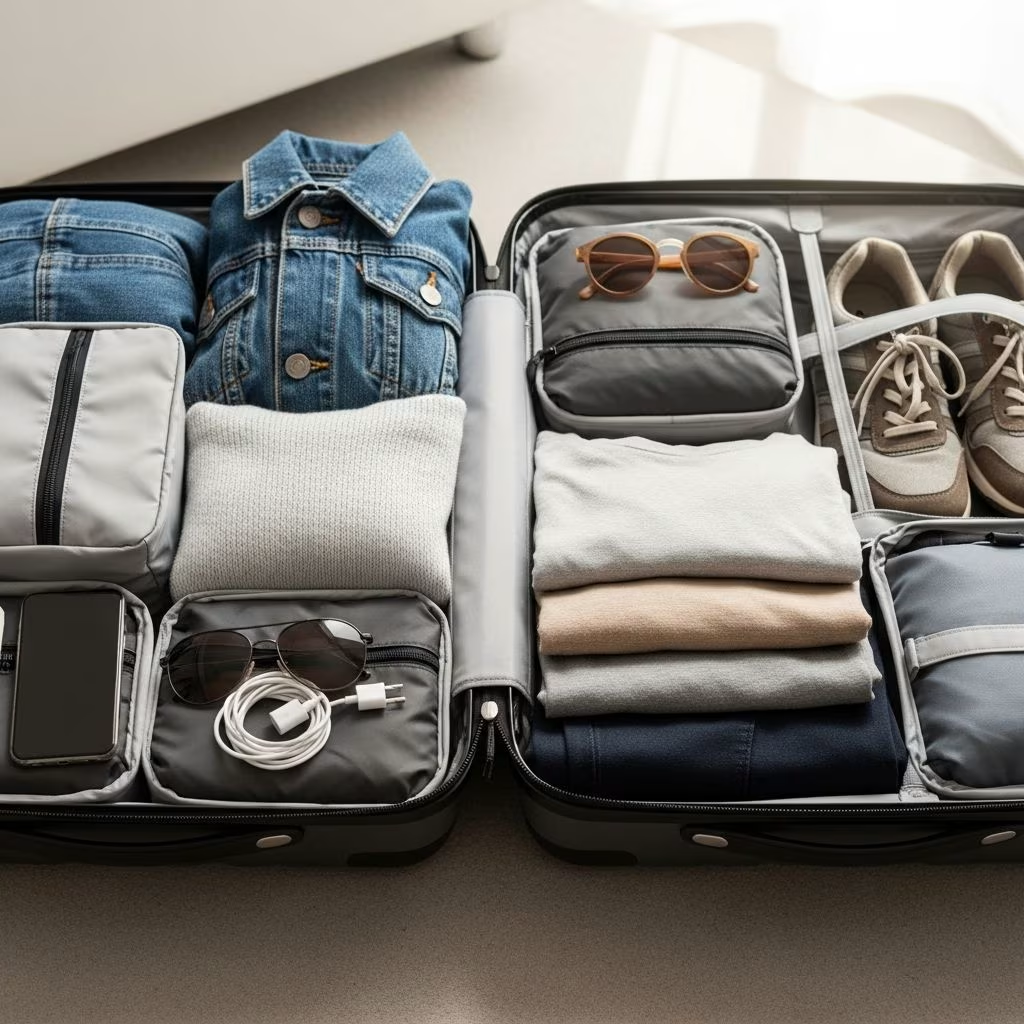
Among all packing innovations available to modern travelers, packing cubes represent perhaps the most significant advancement in luggage organization. These small, zippable fabric containers aren’t simply organizational tools—they fundamentally change how you interact with your belongings throughout your journey. Packing cubes serve multiple functions simultaneously: they compress your clothing, create visual organization within your suitcase, and allow you to access specific categories of items without displacing everything else.
The compression capability of quality packing cubes can create up to 50 percent additional space in your suitcase. This isn’t achieved through magic but through systematic compression achieved by the zipper mechanism combined with strategic folding and rolling techniques. When selecting packing cubes for your travel arsenal, prioritize several key features:
Experts recommend limiting your packing cube usage to approximately five cubes per standard suitcase. While more cubes might seem beneficial, having too many can actually overwhelm your organizational system rather than enhance it. If you upgrade to a larger suitcase, increase your cube sizes rather than multiplying the number of cubes you use.
Rolling clothing represents one of the most effective space-saving techniques available to travelers, particularly when combined with packing cubes. Unlike traditional folding, which creates bulky rectangles that waste space, rolling compresses clothing into compact cylinders that nestle together efficiently. This method simultaneously saves space and reduces wrinkles on delicate fabrics.
The rolling process should follow specific guidelines to maximize its effectiveness. Begin by folding items along pre-existing creases when possible, particularly for items like collared shirts that have natural fold lines. Roll items tightly starting from the end you’re least concerned about wrinkling, reserving the more delicate end for the last rolling motion. For items with high wrinkle potential, consider lining them with plastic before rolling or opt for flat folding instead.
Advanced travelers employ a hybrid approach called two-tier packing. This method involves placing your base layers flat on the bottom of your packing cube and rolling your softer items on top. This technique provides both structure and flexibility, allowing your cube contents to be stable while still accommodating last-minute adjustments.
How you organize items within your packing cubes significantly impacts both your packing efficiency and your ability to locate items during your trip. The most straightforward organizational approach treats cubes like dresser drawers—group similar items together just as you would in your bedroom. This could mean dedicating one cube to all tops, another to bottoms, another to undergarments and accessories, and so forth.
However, alternative organizational schemes may work better for different travelers. Some prefer organizing by outfit rather than by clothing type, particularly for shorter trips where specific outfit planning is possible. This approach eliminates decision-making during your trip and ensures all components for complete outfits are grouped together.
One often-overlooked organizational strategy involves managing dirty laundry efficiently. Rather than mixing clean and worn clothes throughout your trip, designate a cube as your dirty laundry receptacle as soon as items require washing. Some travelers prefer transferring soiled items to a reusable compression sack to contain odors and preserve the cleanliness of remaining items. This system transforms unpacking at home into a streamlined process—simply transfer the entire cube contents directly into your laundry.
Beyond packing cubes and rolling, experienced travelers employ nesting strategies that leverage the three-dimensional space within their luggage more creatively. Nesting refers to placing smaller items inside larger containers, effectively using previously unused space. Common nesting applications include inserting folded scarves and belts along the outer edges of your packing cubes, fitting rolled socks inside shoes, and placing undergarments inside bra cups. These seemingly small space-saving actions collectively contribute to significantly greater luggage capacity.
Shoes represent a particular opportunity for strategic placement. Rather than allowing them to waste valuable real estate in your suitcase, use shower caps or plastic bags to contain them and tuck items around and inside them. This approach protects your clothing from shoe dirt while simultaneously utilizing otherwise empty space.
Not all clothing items benefit equally from rolling or compression techniques. Successful packing requires matching your treatment method to each garment’s specific characteristics. Casual, soft fabrics like t-shirts and leggings respond excellently to rolling compression, both saving space and minimizing wrinkles. Structured pieces such as blazers, dress pants with creases, and button-front shirts often perform better when folded to preserve their intended shape and maintain crisp lines.
Understanding fabric weight and wrinkle tendency helps inform your packing decisions. Heavier items should be positioned at the bottom of your suitcase for weight distribution, while delicate items requiring minimal compression should be reserved for the upper portions of your bag. This hierarchical approach protects your most vulnerable items from being crushed under the weight of heavier belongings.
Beyond simple organizational benefits, how you arrange items within your luggage affects both the physical experience of traveling and your compliance with airline weight restrictions. Heavy items should occupy central positions in your suitcase, ideally distributed to avoid creating an unbalanced bag that strains one side of your luggage frame. Laptops, chargers, and other electronics are better placed in your personal item bag if airline policies allow, removing significant weight from your checked luggage.
Consider upgrading to smaller, lighter versions of items you typically use. Packable water bottles, compact travel-sized toiletries, and minimalist wallets collectively reduce your overall luggage weight without sacrificing functionality. Every ounce saved translates to more available capacity for items you genuinely need or want.
Understanding what not to do is equally important as knowing what to do. Many travelers make predictable mistakes that compromise their packing efficiency. Overpacking “just in case” items is perhaps the most common error. Most travelers use only 60-70 percent of what they pack, yet still fill their entire suitcase with rarely-worn options. Resist this temptation by first packing what you’re confident you’ll wear, then adding minimal backup pieces only if space remains.
Another frequent mistake involves ignoring the specific features of your packing tools. Using packing cubes designed for one suitcase size in a different-sized bag reduces their effectiveness. Similarly, attempting to pack without any organizational system results in wasted space and frustration when searching for specific items.
Begin developing your personal packing system by gathering the tools mentioned throughout this guide: quality packing cubes in various sizes, plastic compression bags or shower caps for shoes, and perhaps a packing list template. Before any trip, lay all intended items on your bed, photograph them, and evaluate whether each piece is truly necessary and coordinates with other items. This visual planning stage prevents forgotten items and reduces unnecessary bulk.
For your first uses of packing cubes and rolling techniques, allow extra time to experiment with what feels natural. Different travelers find different organizational approaches intuitive—what works perfectly for one person might feel cumbersome for another. Once you identify your preferred system, subsequent packing becomes increasingly efficient as the process becomes habitual.
Different trip types require modified packing approaches. Family travel with multiple travelers benefits from color-coded cubes assigned to each person, or alternatively, organizing cubes by activity and day rather than by individual. Business travel emphasizes wrinkle-prevention and outfit coordination, suggesting more emphasis on structured folding than aggressive compression. Adventure or multi-destination trips require more versatile pieces and flexible packing systems that accommodate unpredictable needs.
Adapting your packing approach to your specific circumstances maximizes the effectiveness of your organizational system while minimizing unnecessary complexity.
