

 Travel Essentials
 Travel Essentials

Learn practical methods to inspect hotel rooms, select appropriate luggage, and treat your belongings to eliminate bed bug risks before returning home.
 Travel Essentials
Travel exposes us to countless new experiences, but it also introduces the risk of encountering unwanted companions that can follow us home. Bed bugs have become increasingly common in hotels, hostels, and vacation rentals worldwide, making it essential for travelers to understand how these pests infiltrate luggage and what preventative measures can reduce infestation risks. Unlike other travel-related concerns, bed bug contamination isn’t a reflection of cleanliness or hotel quality—these resilient parasites can thrive in any environment, from luxury resorts to budget accommodations. The key to protecting your home lies in implementing a comprehensive prevention strategy that begins before you pack and extends well after you return.
Bed bugs are remarkably adaptable hitchhikers that exploit the interconnected nature of modern travel. These insects hide in mattress seams, upholstered furniture, and carpeting, waiting for opportunities to access new hosts or transportation methods. What makes them particularly problematic for travelers is their ability to survive extended periods without feeding—in optimal conditions, bed bugs can remain dormant in luggage for several months, simply waiting for the right circumstances to emerge and infest a new location.
The transmission pathway is straightforward but preventable. A bed bug encounters your luggage or clothing at a hotel, hides within folds, seams, or pockets, and travels with you back home. Once in your residence, the infestation can spread rapidly throughout your living space, requiring professional extermination and potentially causing significant financial damage. Understanding this risk trajectory emphasizes why proactive prevention measures taken during and after travel are so valuable.
The type of luggage you choose significantly impacts your vulnerability to bed bug infestations. Hard-shell suitcases offer distinct advantages over soft-sided alternatives because they feature fewer seams, crevices, and fabric components where bed bugs can conceal themselves. The smooth, rigid exterior of hard-shell luggage makes it easier to inspect thoroughly and provides fewer secure hiding spots for pests to establish themselves.
Soft-sided luggage, while often more flexible and lightweight for travel, presents multiple vulnerabilities. The fabric exterior contains numerous seams, folds, and material gaps that provide ideal hiding environments for bed bugs. Additionally, the fabric itself can harbor eggs and live insects deep within its weave, making detection and treatment more challenging. For frequent travelers or those visiting multiple locations during a single trip, investing in hard-shell luggage represents a practical defense strategy that pays dividends over time.
Effective bed bug prevention begins before you leave your home. Consider these preparatory steps:
Upon arriving at your accommodation, before unpacking or settling in, conduct a systematic inspection of your room. This proactive approach allows you to identify bed bug presence before your belongings become contaminated and provides an opportunity to request a different room if problems are detected.
Begin by examining the bed carefully. Check the mattress surface, particularly along the seams where fabric panels meet. Look at the headboard, investigating any crevices or gaps where the structure connects to the wall or mattress. Bed bugs often congregate in these areas because they provide proximity to sleeping humans while offering secure hiding spots. Use your flashlight to illuminate areas that might otherwise be obscured by shadows.
Extend your inspection beyond the bed to other furniture in the room. Examine upholstered chairs, sofas, and cushioned surfaces where bed bugs frequently hide. Check the edges where upholstery meets wooden frames and any visible seams or fabric folds. Don’t overlook nightstands, dressers, and other wooden furniture—bed bugs can hide in drawers and along structural joints.
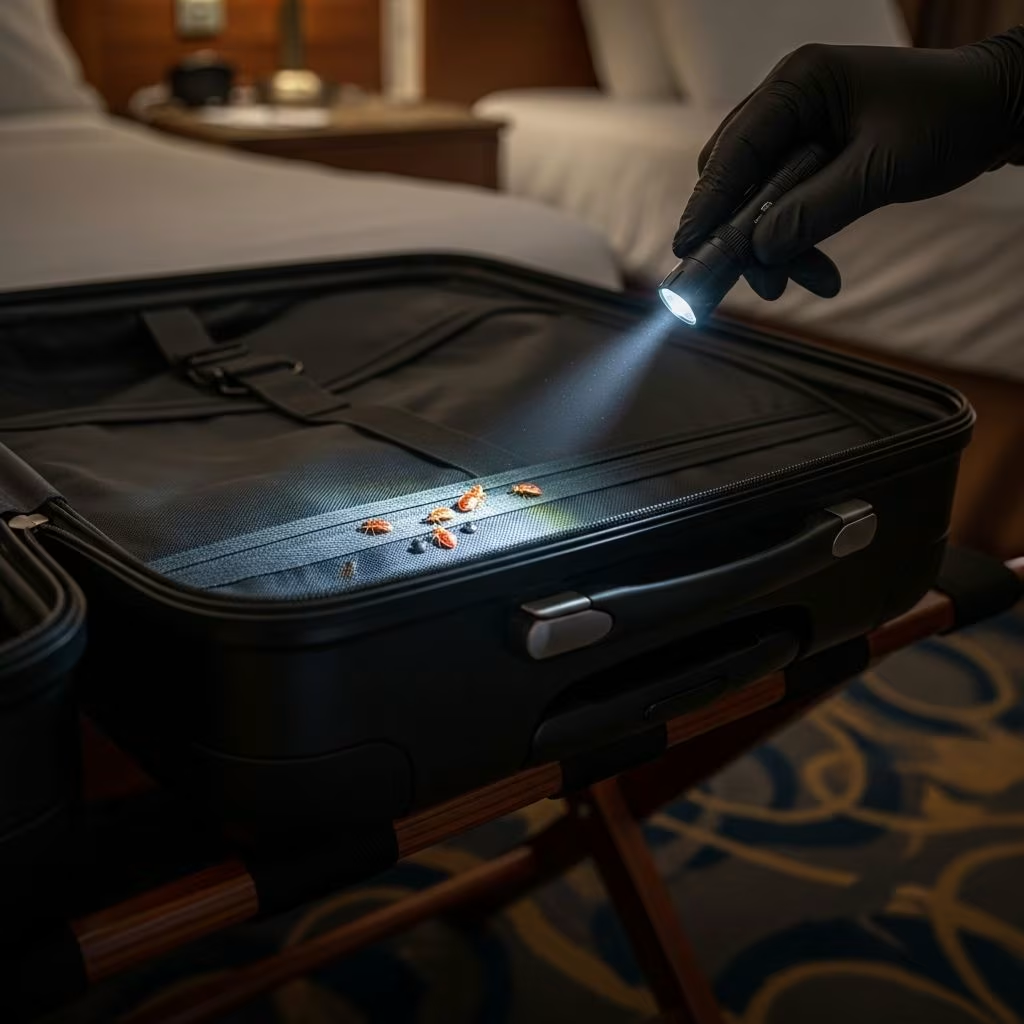
Look for telltale signs of bed bug presence, including small reddish-brown fecal spots, which appear as tiny dots or streaks on fabric or mattress surfaces, and actual insects, which are approximately the size of an apple seed and have a flat, oval-shaped brown body. If you identify evidence of bed bugs, contact the front desk immediately and request relocation to a different room, ideally in a different section of the building, as bed bug infestations can spread between adjacent rooms.
How and where you store your luggage during your hotel stay directly influences infestation risk. Avoid placing luggage on beds, sofas, or other upholstered furniture, as these surfaces represent direct pathways for bed bugs to access your belongings. Similarly, don’t place luggage on carpeted areas, as bed bugs frequently inhabit carpet fibers and can easily crawl from floor to suitcase.
Instead, use designated luggage racks or hard surfaces that provide minimal contact points for bed bugs to reach your bags. The bathroom often represents an ideal storage location, as tile and hard flooring surfaces create unfavorable environments for bed bugs, and the room’s typically lower humidity levels are less conducive to pest survival. If a luggage rack is your only option, inspect it carefully before placing your bags on it, and consider placing your luggage on a plastic bag or protective covering for additional security.
During your stay, keep worn clothing in separate sealed plastic bags rather than hanging items on furniture or leaving them loose on surfaces. This containment strategy prevents bed bugs from accessing fabric and reduces their opportunities to hide among your belongings.
Your actions immediately after returning home can mean the difference between a close call and a full-scale home infestation. Don’t bring luggage directly into your bedroom or living areas. Instead, proceed directly to a utility room, garage, or other isolated space where you can conduct thorough inspections and treatments without risking contamination of your home.
Heat treatment represents the most effective elimination method. Bed bugs cannot survive temperatures exceeding 120 degrees Fahrenheit, making heat exposure your most reliable decontamination tool. If weather permits, place sealed luggage in a closed vehicle parked in direct sunlight for several hours, as interior temperatures can reach lethal levels. Alternatively, invest in a portable heating unit designed specifically for bed bug treatment, which provides year-round protection regardless of external conditions.
For clothing and fabric items, immediately transfer contents directly into a washing machine without first placing them on floors or surfaces. Wash everything using the highest heat setting safe for the fabric, and dry on the highest heat setting possible. This combination of washing and high-heat drying eliminates bed bugs and their eggs effectively.
After heat treatment, vacuum all luggage seams, pockets, and crevices thoroughly. Follow vacuuming with wiping hard surfaces using disinfecting wipes or a damp cloth to remove any remaining insects or debris. Dispose of vacuum bags in sealed plastic bags placed directly in outdoor trash containers to prevent any survivors from escaping into your home.
While primary prevention methods focus on inspection and heat treatment, several supplementary approaches can provide additional layers of protection:
| Protection Method | Effectiveness Level | Best Used For | Considerations |
|---|---|---|---|
| Luggage encasement bags | Moderate to High | Soft-sided luggage | Must fit snugly; requires durable, cleanable material |
| Preventative sprays | Low to Moderate | Supplementary protection | Apply pre-travel; requires well-ventilated drying before packing |
| Dryer sheets | Minimal | Deterrent scent | Works best combined with other methods; replace regularly |
| Portable steamer | High | Clothing worn multiple times | Compact travel models available; kills bugs through heat |
| Alcohol spray solution | High | Suitcase exterior treatment | Mix 60% isopropyl alcohol with water; allow proper ventilation and drying |
Specialized luggage encasement bags function as protective barriers, preventing bed bugs from entering your suitcase or escaping from it if infestation has already occurred. These encasements prove particularly valuable for soft-sided luggage, which lacks the protection offered by hard-shell cases. A high-quality encasement should fit snugly around your luggage, be constructed from durable material that resists tearing, and feature easy-to-clean surfaces that can be wiped down between trips.
For frequent travelers or individuals planning multiple hotel stays during a single journey, encasement systems represent a worthwhile investment that can prevent costly home infestations. When selecting an encasement, prioritize products with secure seals, quality zippers, and materials designed to withstand regular travel use without degradation.
Bed bugs occur in accommodations across all price ranges and quality levels. Hotel prestige offers no protection against bed bug infestation, as these pests exploit the high-traffic nature of hospitality environments regardless of establishment quality or cleanliness standards.
Under favorable conditions, bed bugs can survive several months in luggage without feeding. This extended survival capacity makes post-travel treatment essential, as delayed intervention allows pests to establish themselves in your home.
While hard-shell luggage offers superior protection due to minimal seams and crevices, encasement systems provide an additional security layer that eliminates any remaining vulnerabilities, particularly for travelers visiting multiple high-risk locations.
Preventative sprays work best as supplementary deterrents rather than comprehensive solutions. They should be combined with inspection, proper luggage placement, and post-travel heat treatment for maximum effectiveness.
Bed bugs cannot survive temperatures exceeding 120 degrees Fahrenheit. Both washing machines set to high heat and dryers on maximum settings achieve lethal temperatures that eliminate both adult insects and eggs.
Effective bed bug prevention requires a multi-stage approach that addresses risk at each travel phase. Begin before departure by selecting appropriate luggage and preparing inspection tools. During your stay, conduct thorough room inspections and store luggage strategically on hard surfaces. Immediately upon returning home, implement heat treatment and decontamination procedures. This comprehensive strategy, combined with an understanding of bed bug behavior and vulnerability points, provides the strongest possible protection for your home and belongings.
By implementing these evidence-based strategies, you can travel with confidence, knowing you’ve taken every reasonable precaution to prevent bed bugs from infiltrating your home and requiring expensive professional pest control intervention.
