

 Travel Essentials
 Travel Essentials

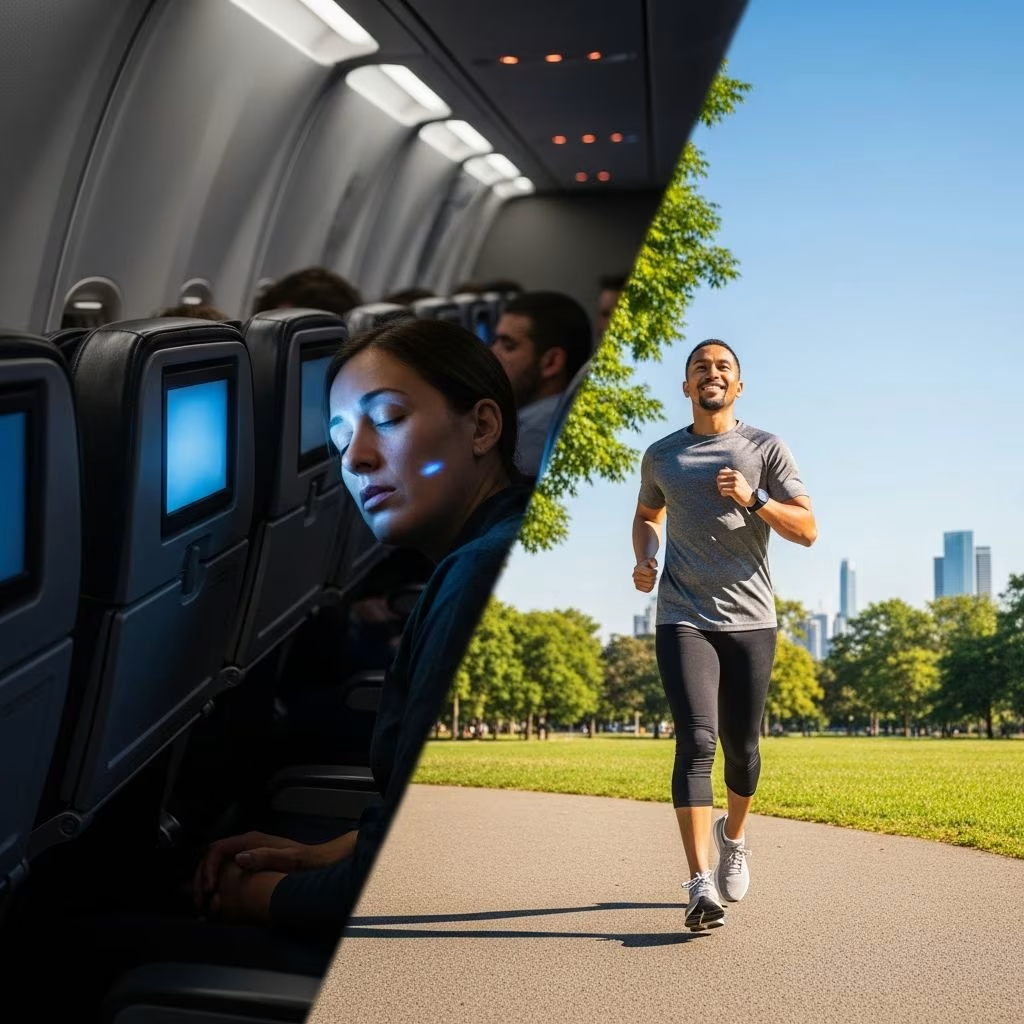
Discover effective methods to combat jet lag, from pre-flight adjustments and hydration to light therapy and supplements, ensuring you arrive refreshed and ready to explore.
 Travel Essentials
Jet lag disrupts your internal body clock, leading to fatigue, insomnia, and digestive issues when crossing multiple time zones. Effective countermeasures involve aligning your circadian rhythm through strategic planning, hydration, light management, and targeted supplements, allowing travelers to adapt swiftly and fully embrace their destinations.
The circadian rhythm, your body’s 24-hour internal clock, regulates sleep, hormones, and metabolism. Crossing time zones desynchronizes this rhythm from local day-night cycles, causing symptoms like daytime sleepiness and nighttime alertness. Research shows eastward travel often worsens symptoms due to phase advances being harder than delays. Severity peaks at 5-9 time zones, where sleep misalignment is toughest to resolve.
Factors like flight duration, direction, and connections influence impact. Overnight flights aid adjustment by mimicking natural sleep, while dehydration from cabin air exacerbates fatigue. Primary sources emphasize proactive shifts in sleep and light exposure to realign the clock efficiently.
Start adapting days before departure to ease the shift. For eastward trips, advance your schedule by retiring and rising one hour earlier nightly; westward travelers delay by one hour. This gradual pre-adjustment, recommended by health experts, reduces post-flight disruption.
Rest well in the 48 hours before flying. Avoid stress by finalizing packing early, ensuring you’re relaxed and resilient against travel demands.
Opt for overnight flights to align arrival with morning or afternoon, facilitating immediate adaptation. Position matters: Window seats allow leaning for sleep; emergency row offers legroom.
During flight:
| Flight Direction | Sleep Timing | Hydration Goal |
|---|---|---|
| Eastward | Early flight sleep to match new night | 8 oz/hour |
| Westward | Stay awake initially, sleep later | 8 oz/hour |
Upon landing, embrace local time immediately. Reset watches and mindset to destination hours, ignoring home time. Stay awake until early evening bedtime, combating drowsiness with activity.
Avoid early naps; power through fatigue with daylight and motion. This forces adaptation, minimizing multi-day lag.
Enhance recovery with evidence-based tools. Melatonin, a sleep-regulating hormone, shifts the circadian clock effectively.
Studies confirm combining melatonin, light, and sleep shifts eliminates jet lag for many, even across 8+ zones.
Tailor strategies by trip specifics. For 5-7 zones east (worst case), prioritize pre-advances and morning light.
| Time Zones | Direction | Key Pre-Flight Action | Arrival Focus |
|---|---|---|---|
| 1-4 | Any | Minimal shift | Light + activity |
| 5-9 East | East | Advance sleep 1h/night | Morning sun |
| 5+ West | West | Delay sleep 1h/night | Evening light |
Multi-leg trips: Front-load short flights to exhaust early, enabling deep sleep on long hauls.
Regular travelers benefit from routines. Track adaptations via journals, refining based on past trips. Maintain fitness and sleep hygiene year-round for resilience. Advanced users employ apps simulating destination light schedules pre-trip.
Eastward is typically harder, as advancing the clock challenges biology more than delaying.
Aim for 8 ounces per hour airborne to offset dehydration.
Effective for most, but consult doctors; combine with light for best results.
It aids via rhythm reset, especially outdoors with light exposure.
One day per time zone crossed, faster with strategies.
