

 Travel Essentials
 Travel Essentials

Discover actionable ways to minimize your environmental impact in Australia through smarter transport, eco-friendly lodging, sustainable eating, and waste reduction strategies.
 Travel Essentials
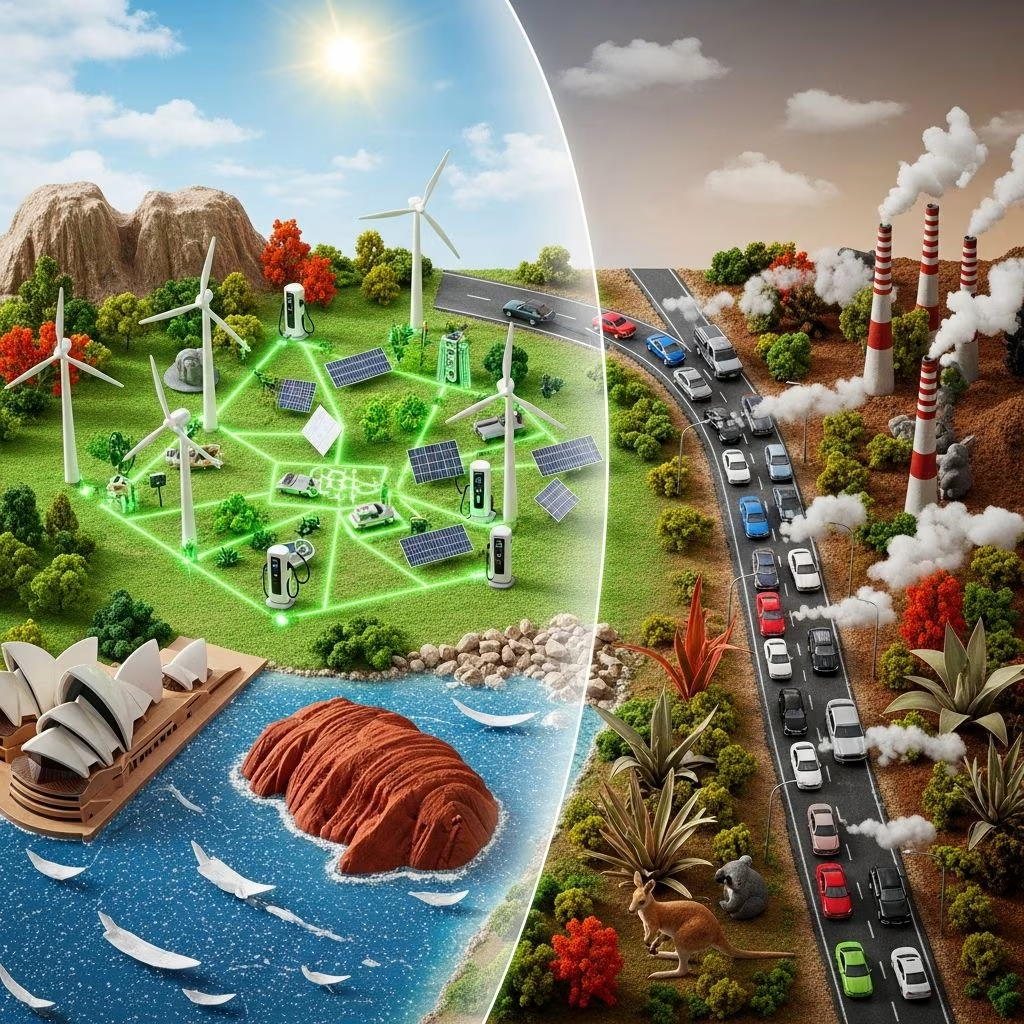
Australia’s vast landscapes, vibrant cities, and unique wildlife draw millions of visitors annually, but travel and daily life here contribute significantly to greenhouse gas emissions. With transport accounting for a large share of the nation’s carbon output, individuals can make meaningful reductions through conscious choices in mobility, energy use, diet, and waste management. This guide outlines practical, high-impact strategies tailored to Australia’s context, helping you enjoy the country while supporting its path to lower emissions.
Australia faces substantial hurdles in meeting global climate targets. Current policies project a reduction of only 15-23% below 2005 levels by 2030, far short of the 57% needed for 1.5°C compatibility. Key sectors like power (35% of emissions), industry (31%), and transport dominate, exacerbated by reliance on fossil fuels and land-use uncertainties. Transport alone represents 64% of emissions in regions like the ACT, mostly from private vehicles. Everyday actions by residents and travelers can bridge this gap, aligning personal habits with national goals like accelerating electric vehicle adoption and phasing out coal by 2030.
Mobility is a prime opportunity for emission cuts. Private cars dominate, but alternatives abound across urban and rural Australia.
For longer journeys, consider domestic rail over flights. The Indian Pacific or Great Southern Rail lines traverse the continent scenicly, with far lower per-passenger emissions than aviation.
| Transport Mode | CO2 Savings vs. Solo Car Drive | Australian Example |
|---|---|---|
| Public Bus/Train | Up to 80% | Sydney Opal network |
| Bike/E-Scooter | 100% | Brisbane CityCycle |
| Car-Share EV | 70-90% | GoGet electric fleet |
| Domestic Train | 90% | XPT Sydney-Melbourne |
Where you stay influences energy and resource use. Seek properties with sustainability certifications.
Platforms highlight low-impact stays: choose hostels with LED lighting, or eco-lodges in the Daintree Rainforest using rainwater harvesting. Travelers switching to renewable-powered homes can amplify savings, as this ranks among top individual actions.
Diet shapes emissions, with livestock responsible for 10% nationally via methane. Shift to plant-forward meals using local produce.
In cities, farmers’ markets and zero-waste cafes exemplify this. Shorter showers complement by conserving heated water energy.
Electricity use is critical; simple tweaks yield big wins.
For travelers, pick venues with energy-efficient appliances. In remote areas, solar-powered campsites align with off-grid living.
These habits cut the 4% from waste while conserving resources.
Some travel requires flying; offset via verified schemes like Fly Carbon Neutral with Qantas or Virgin, funding rainforests and renewables—no airline fees. Plant-based offsets through groups like Greenfleet support native forests.
Incorporating Opal cards, light rail, and ferries keeps cities navigable emission-free.
4WD sharing and solar camps reduce fuel use in the Red Centre.
Snorkel tours with electric boats protect the Great Barrier Reef.
Hiking trails and eco-buses preserve pristine nature.
Track via calculators from government sites, aiming for below-average footprints. Australians’ high consumption demands three planets’ worth of resources—adjusting daily habits counters this.
Around 8kg CO2 per day in urban areas.
Vary by state; ACT leads with free rego.
Cut meat; boosts savings significantly.
Yes, if verified like government-backed programs.
Search for EarthCheck or Green Globe certified options.
