

 Travel Essentials
 Travel Essentials

Discover how to maximize a single day in Bhutan with insider tips on timing, must-visit locations, and authentic experiences that capture the kingdom's essence.
 Travel Essentials
Bhutan represents one of the world’s most unique travel destinations, where ancient traditions blend seamlessly with pristine natural landscapes. For visitors working with limited time, understanding how to structure a single day becomes crucial to capturing the essence of this extraordinary kingdom. Whether you’re a first-time traveler or returning to explore deeper, a well-planned 24-hour period can encapsulate the spiritual, cultural, and natural dimensions that make Bhutan unforgettable.
The kingdom’s geography significantly influences how travelers organize their days. Most visitors arrive through Paro International Airport, which serves as the primary entry point for international flights. Paro Valley, nestled in western Bhutan, functions as the gateway region for most tourism activities. From here, the kingdom fans out across multiple valleys, each offering distinct cultural and natural attractions.
The distance between major attractions varies considerably. Thimphu, the capital city, sits approximately 65 kilometers from Paro and requires roughly 2-3 hours of travel by vehicle. Punakha Valley lies further east, accessible via the scenic Dochula Pass. Understanding these distances helps travelers prioritize activities and allocate time efficiently within a single day framework.
Successful day planning in Bhutan begins with an early start. Most visitors targeting the iconic Tiger’s Nest Monastery begin their morning hikes before sunrise, aiming to depart their accommodations around 4:30-5:00 AM. This timing strategy offers multiple advantages:
Weather patterns in Bhutan change rapidly, particularly in mountainous regions. An early start maximizes the window of favorable conditions before afternoon clouds and precipitation develop.
Tiger’s Nest Monastery, formally known as Taktsang Palphug, stands as Bhutan’s most iconic cultural landmark. Perched dramatically on a cliff face at approximately 3,120 meters above sea level, this monastery represents the spiritual heart of the kingdom. The structure’s name derives from Tibetan Buddhist legend, which recounts how Guru Rinpoche, a revered Buddhist master, arrived at the site riding a tigress to meditate and subdue negative forces.
The monastery was constructed in 1692, centuries after the legendary visit. Its architecture exemplifies traditional Bhutanese design, featuring intricately painted wooden elements, ornate decorative details, and structural integration with the natural cliff environment. The complex includes multiple temples, meditation chambers, and residential quarters for monks.
The approach to Tiger’s Nest involves a well-maintained hiking trail that ascends approximately 900 vertical meters over roughly 5-6 kilometers. The entire experience, including the hike, monastery visit, photography, and rest breaks, typically requires 4-5 hours. A mid-trail teahouse offers refreshment and rest opportunities, providing visitors with locally-prepared butter tea and traditional snacks.
Photography restrictions apply to the interior spaces of the monastery, preserving the sacred nature of these areas. Visitors should approach the experience as a pilgrimage rather than merely a photographic opportunity, demonstrating respect for the spiritual significance of the location.
For visitors with time before commencing the Tiger’s Nest hike, Paro Valley offers enriching morning options. The historic town of Paro itself features traditional architecture, local markets, and cultural landmarks worth exploring. Historic fortifications and administrative buildings showcase Bhutanese construction techniques and aesthetic principles.
Alternatively, visitors might participate in morning meditation sessions at local monasteries or practice traditional Bhutanese archery, a national sport deeply embedded in the culture. These early-hour activities establish cultural context that enriches the subsequent monastery visit.
Following the Tiger’s Nest trek, afternoon hours present opportunities for different experiential categories. Depending on energy levels and interests, visitors might pursue several pathways:
Bhutan’s fortress monasteries, known as dzongs, represent architectural marvels combining religious, administrative, and defensive functions. These structures feature intricate wooden carvings, detailed murals, and sophisticated spatial planning that reflects centuries of refinement. Interior spaces reveal elaborate iconography depicting Buddhist philosophy, historical narratives, and spiritual concepts through visual imagery.
Mountain passes throughout the kingdom offer panoramic vistas showcasing the Himalayan landscape. Dochula Pass, situated at 3,100 meters elevation, features 108 white stupas arranged in a circle, creating a striking visual statement against the mountain backdrop. The surrounding environment shifts dramatically across seasons; spring brings vibrant rhododendron blooms in multiple colors, while autumn offers clarity and crisp lighting conditions.
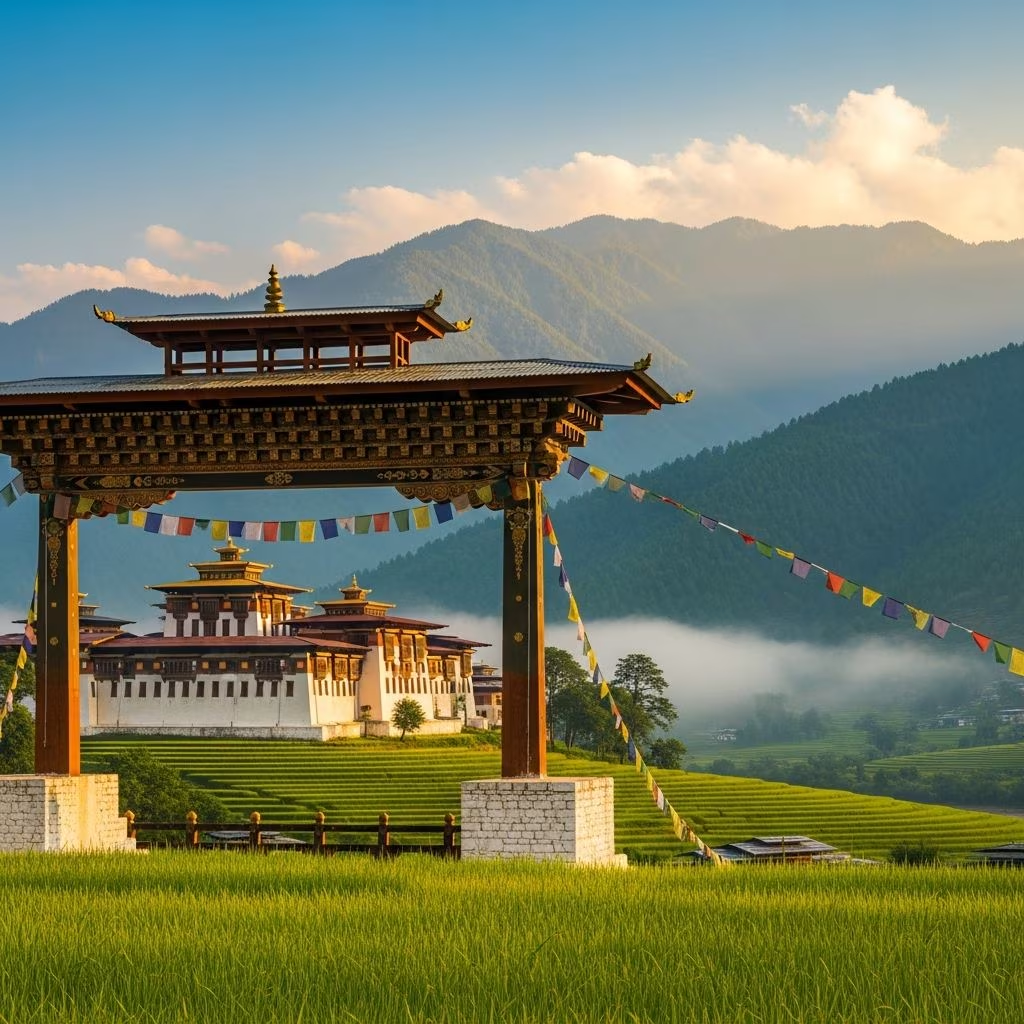
Prayer flags flutter across these elevated locations, their colors—blue, white, red, green, yellow—representing different Buddhist concepts and natural elements. Local tradition holds that wind carries prayers inscribed on these flags throughout the environment, blessing the landscape and surrounding communities.
Bhutan’s suspension bridges combine functional design with experiential appeal. The Pho Chhu Suspension Bridge, the longest in the country at 160 meters, spans the Pho Chhu Valley and provides dramatic perspectives of Punakha Dzong. Crossing these structures safely requires attention to cable tension and bridge movement patterns, but they offer unique vantage points unavailable from alternative routes.
Bhutan’s cultural festivals, known as Tshechus, constitute extraordinary travel opportunities. These events, timed according to the lunar calendar, feature elaborate masked dances, community participation, and spiritual ceremonies. The Paro Tshechu occurs annually, drawing visitors from across the globe to witness sacred performances in traditional dress and participate in the festival atmosphere.
Planning a day visit around festival timing requires advance coordination. Accommodation booking becomes essential 4-6 months ahead, as festival periods represent peak travel seasons. Proper dress codes—long sleeves, covered legs, and respectful attire—demonstrate cultural sensitivity and facilitate meaningful participation in festival activities.
Most Bhutan travel follows regulated tour operator frameworks. Licensed Bhutanese guides provide cultural interpretation, historical context, and practical navigation assistance. These professionals share legends attached to specific locations, explain architectural symbolism, and facilitate interactions with local communities in respectful ways.
Private vehicle transport allows flexibility in scheduling and route selection. Drivers navigate mountain roads connecting different valleys, managing elevation changes and variable road conditions. Travel times between major attractions vary significantly based on seasonal factors and infrastructure conditions.
Bhutanese cuisine reflects the kingdom’s geography and cultural traditions. Ema datshi, the national dish combining chilis and cheese, appears on most menus and represents comfort food across the kingdom. Rice forms the foundation of most meals, accompanied by seasonal vegetables, meat preparations, and traditional sauces.
Butter tea, a beverage combining black tea with yak butter and salt, appears regularly throughout the day. While unfamiliar to many Western palates initially, this drink provides sustained energy for physical activities and warming effects in mountain environments.
Mountain teahouses along popular hiking routes offer refreshment and simple meal options. These establishments provide cultural insight through their casual interaction with local staff and observation of daily life in rural communities.
Bhutan maintains an exceptional safety reputation compared to many international destinations. The kingdom’s low crime rates, stable political environment, and community-oriented social structures create secure conditions for independent exploration. However, specific practical precautions enhance the day experience:
Visual documentation has become integral to travel experiences, yet Bhutan requires sensitive approaches to photography. Interior monastery spaces prohibit photography to maintain spiritual sanctity. Certain religious ceremonies and rituals have photographic restrictions. Individuals appearing in photographs should grant permission before capturing images.
Landscape photography benefits from early morning and late afternoon lighting angles. Golden hour photography, occurring shortly after sunrise and before sunset, creates dimensional lighting that emphasizes topographic features and architectural details.
Beyond physical activity and cultural observation, day experiences in Bhutan offer opportunities for personal reflection. The kingdom’s Buddhist traditions emphasize mindfulness and meditation practices. Designated meditation spaces exist throughout the country, and some travelers incorporate quiet contemplation periods into their itineraries.
Prayer flags, stupas, and monastery environments create contemplative atmospheres distinct from typical tourist settings. Many visitors report profound personal responses to these spaces, experiencing emotional depth unexpected in standard travel activities.
No single day template serves all travelers identically. Some visitors prioritize rigorous physical activity and outdoor adventure. Others emphasize cultural immersion and architectural study. Families with children require different pacing and activity selections than solo or partner travelers. Accommodating personal interests within structured travel frameworks creates more satisfying experiences.
Discussing preferences with guides and tour operators allows customization within practical constraints. This communication ensures the arranged experience aligns with individual expectations and capacity levels.
A single day in Bhutan cannot comprehensively represent the kingdom’s full depth, yet thoughtful planning creates experiences with substantial emotional and intellectual impact. The combination of spiritual sites, cultural landmarks, natural beauty, and personal reflection generates lasting impressions. Many visitors report that single-day experiences motivate future return visits to explore additional regions and deepen their understanding of Bhutanese culture and landscape.
