

 Travel Essentials
 Travel Essentials

Discover key principles for becoming a skilled wildlife spotter, from preparation and timing to gear and behavior, ensuring respectful encounters with nature.
 Travel Essentials
Observing animals in their natural environments offers profound insights into the wild, but success demands preparation, patience, and respect. This guide outlines proven methods to elevate your abilities, drawing from established practices to ensure meaningful, non-intrusive encounters.
The cornerstone of effective wildlife spotting lies in minimizing human impact. Prioritizing animal welfare prevents disruption to ecosystems and behaviors. Core principles include maintaining safe distances, avoiding food offerings, and refraining from altering natural activities like foraging or mating.
Adhering to these rules fosters sustainable viewing, as emphasized by wildlife authorities.
Research transforms casual observers into adept spotters. Study target species’ diets, habitats, and daily patterns to predict sightings. For instance, herbivores frequent water sources at dawn, while nocturnal animals emerge at dusk.
Recognize environmental signs: worn trails indicate frequent passages, while droppings, scratches, or feathers reveal recent presence. Basic tracking skills—interpreting mud prints or bark marks—sharpen detection without advanced expertise.
| Sign Type | Indicates | Example Species |
|---|---|---|
| Footprints in mud | Recent passage | Deer, elephants |
| Scratches on trees | Territorial marking | Bears, big cats |
| Cleared paths | Regular travel routes | Elephants, buffalo |
Field guides aid identification, enhancing appreciation and decision-making.
Animals align with natural cycles, peaking active during crepuscular hours—dawn and dusk—when humans are least attuned. Plan outings accordingly, arriving pre-sunrise and staying through twilight.
Select vantage points strategically: position downwind to mask scent, using natural cover like bushes or ridges for concealment. Elevated spots or blinds provide unobstructed views without exposure.
Animals’ acute senses—superior hearing, vision, and smell—demand silence and immobility. Speak softly, avoid sudden noises, and freeze upon spotting movement. When relocating, move deliberately: crouch low, use cover, and step carefully to evade twigs or loose rocks.
Patience yields rewards; animals habituate to still observers, revealing authentic behaviors. Train eyes to detect anomalies: a glint of eyes, ear twitch, or color contrast against foliage.
Practice spotting in familiar areas—backyards or parks—to hone pattern recognition for wild settings.
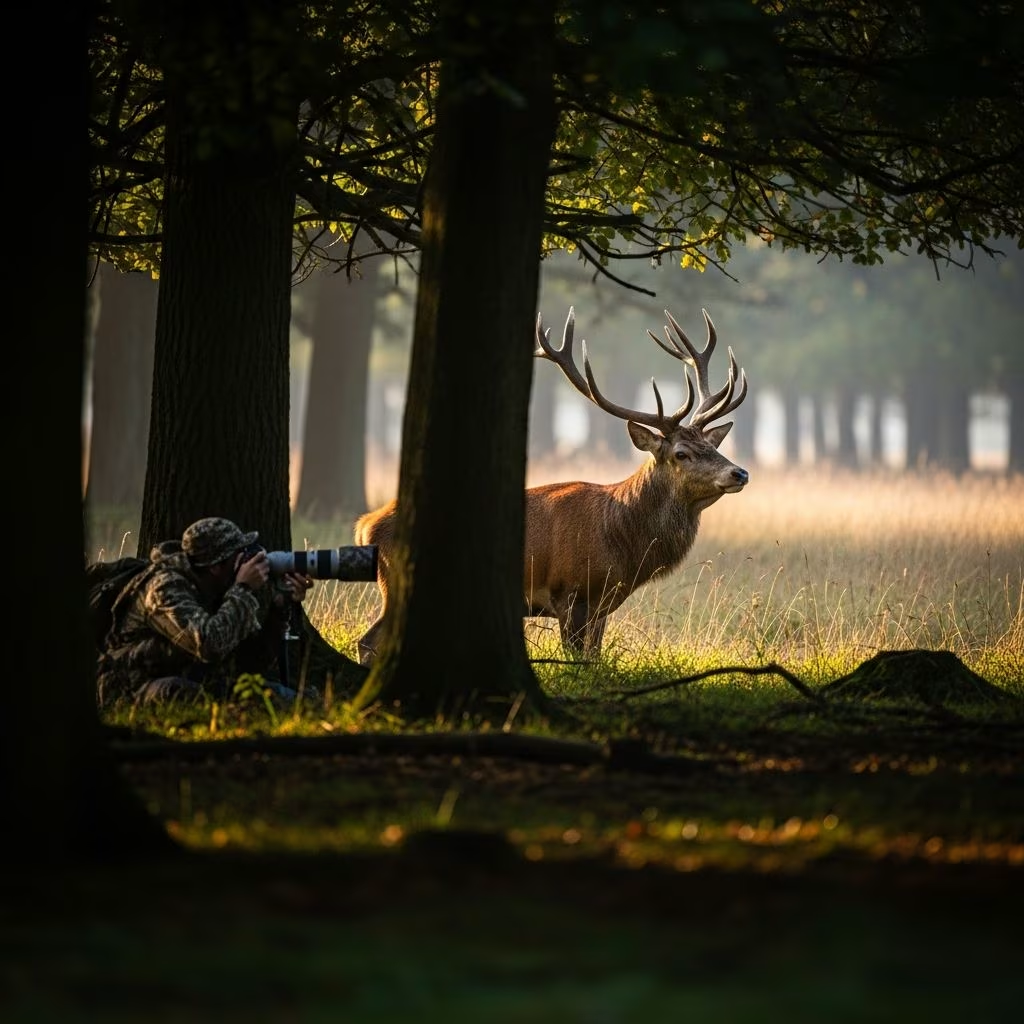
Quality gear bridges distances ethically. Binoculars (7x-8x magnification) offer bright, stable views with wide fields, perfect for low light. Spotting scopes excel for distant details, while cameras with telephoto lenses capture moments remotely.
| Gear | Best For | Key Features |
|---|---|---|
| Binoculars 7x-8x | Birds, small mammals | Lightweight, wide view, dawn/dusk clarity |
| Spotting scope | Large animals afar | High magnification, stable tripod mount |
| Telephoto lens | Photography | Zoom without approach |
Essentials also include field guides, notebooks for logs, and weather-appropriate attire in earth tones.
Contextual awareness amplifies success. Scan horizons methodically, starting broad then narrowing focus. Look beyond megafauna to insects or birds, which signal larger presences. Wide-angle lenses contextualize animals within habitats, revealing behavioral insights.
In vehicles, drive slowly with windows down for audio cues. On foot, pause frequently to listen and observe. Group efforts divide scanning sectors, increasing coverage.
Novices often err by rushing, ignoring wind direction, or chasing sightings. Over-enthusiasm leads to off-trail ventures, risking erosion or encounters. Counter with discipline: set session limits, rotate positions, and prioritize safety.
Spotting proficiency grows with repetition. Log observations—species, time, conditions—to identify patterns. Join guided tours or refuges for expert tips and prime locations.
Contribute to citizen science via apps reporting sightings, aiding conservation while refining skills.
Dawn and dusk align with peak animal activity, offering optimal sighting chances.
Minimum 25 yards for most, 100 yards for predators, using optics for closer views.
No; compact binoculars and a field guide suffice for beginners.
Prefer groups or guides in predator areas; always inform others of plans.
Listen for sounds, watch for movement flashes, and follow trails patiently.
Environments narrate stories: water edges host diverse activity, clearings attract grazers. Photographing surroundings with standard lenses captures context, from microhabitats to panoramas, enriching narratives.
Urban edges or refuges provide accessible practice, bridging to remote wilds.
