

 Travel Essentials
 Travel Essentials

Learn professional techniques for storing carry-on luggage in airplane overhead bins to maximize space and improve boarding efficiency.
 Travel Essentials
The overhead compartment has become a critical component of modern air travel, with airlines increasingly encouraging passengers to bring carry-on luggage to streamline ground operations. However, many travelers remain uncertain about the most effective methods for stowing their bags, leading to crowded bins, delayed boarding processes, and frustrated flight attendants. Understanding the proper techniques for overhead bin storage not only helps you travel more smoothly but also demonstrates respect for your fellow passengers by maximizing available space for everyone.
The primary principle behind proper overhead bin storage is spatial optimization. Unlike storing items at home, where you have unlimited space, aircraft overhead compartments follow strict dimensional constraints. Flight attendants and airline professionals consistently emphasize that the goal of any packing strategy should be to use every available inch while maintaining the safety and structural integrity of the compartment.
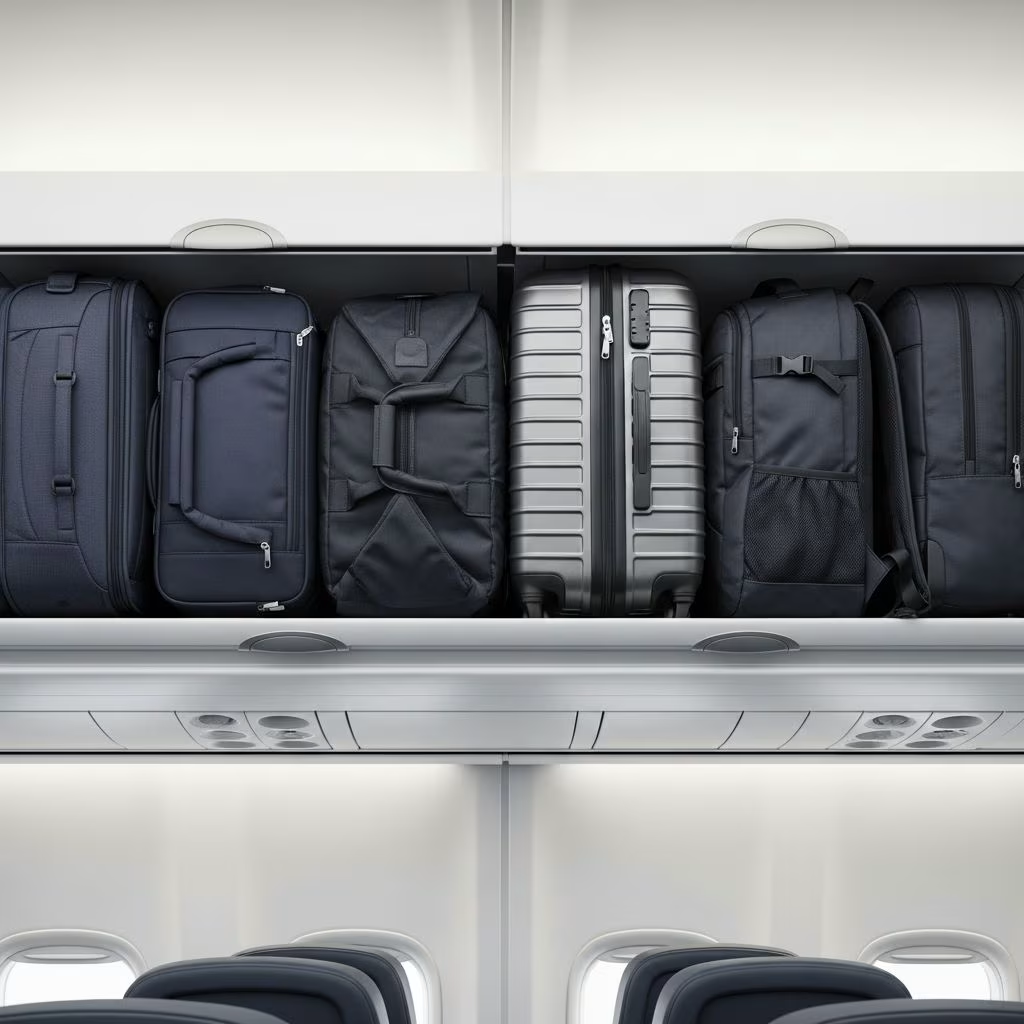
The vertical orientation method serves as the gold standard for most situations. By positioning your bag upright with the handle extended, you minimize the footprint the luggage occupies within the bin. This approach resembles how books stand side by side on a shelf—each one takes up minimal horizontal space while utilizing vertical height efficiently. This method works particularly well for roller bags and structured luggage designs, allowing multiple bags to fit securely within a single compartment.
While vertical placement represents the ideal scenario, aircraft design and compartment dimensions don’t always accommodate this approach. Modern airlines have adapted by endorsing the horizontal or “taco” method as a viable alternative. When positioning your bag horizontally, the recommended technique involves placing it on its side like a folded taco, which can actually occupy less vertical space than a standing position in certain compartment designs.
The wheels-first approach provides another practical consideration when horizontal storage becomes necessary. By inserting the bag wheels-first into the compartment, you create a smoother transition and reduce the risk of your luggage shifting during flight turbulence. This technique also facilitates easier removal during deplaning, as you can simply pull the bag back along the same path without maneuvering around neighboring luggage.
Smaller aircraft, particularly regional turboprops and narrow-body planes used for shorter routes, often feature overhead compartments with reduced height clearances. In these situations, lying your bag completely flat may be the only viable option. Before boarding any flight, take time to inspect stickers or diagrams inside the overhead bin—airlines typically include visual instructions showing the preferred storage orientation for that particular aircraft model.
Not every carry-on bag will work equally well on every aircraft. Luggage designed for international travel, which must accommodate both larger international bins and smaller domestic compartments, typically performs better across various aircraft types. Hard-sided bags, while protective of contents, often present challenges when attempting creative stowing arrangements, whereas soft-sided luggage offers flexibility and compressibility.
Checking your airline’s specific carry-on dimensions before traveling proves essential. Domestic routes generally feature more spacious overhead compartments than their international counterparts, so a bag that fits comfortably on a transcontinental flight might present difficulties on a regional route. Understanding these variations allows you to select appropriate luggage or adjust your packing strategy accordingly.
The most practical approach involves selecting bags that fall comfortably within the smallest dimension requirements you’ll encounter. This conservative strategy ensures your luggage will fit on any flight you take, reducing stress at the gate and minimizing the likelihood of bag-checking requests.
Overhead bin storage should be reserved exclusively for items you won’t need during your flight. This fundamental principle transforms the traveling experience for you and your seatmates. Items like books, electronic devices, snacks, neck pillows, sweaters, and other frequently accessed materials should remain in underseat luggage or personal items.
The underseat positioning rule serves multiple purposes simultaneously. First, it keeps the overhead compartment available for full-sized luggage, which cannot fit under seats. Second, it prevents the constant stream of passengers rising to retrieve forgotten items, which disrupts fellow travelers and blocks the aisle. Third, it maintains clear legroom for passengers seated nearby, creating a more comfortable flight experience for everyone.
Before boarding, conduct a thorough inventory of your carry-on bag. Remove anything you might reasonably need—whether a book, tablet, medications, or snacks—and place these items in a personal bag that will remain accessible throughout your flight. This preparation takes only minutes but dramatically improves the boarding process and flight experience.
The overhead bin directly above your assigned seat belongs to passengers in that row. While this concept may seem obvious, violations occur regularly when passengers attempt to maximize convenience by placing luggage near aircraft exits or in bins with available space several rows ahead. This behavior deprives the intended users of their allocated storage space and creates frustration among fellow travelers.
The unwritten but widely respected rule of aviation etiquette dictates that you should stow your luggage in the bin closest to your assigned seat whenever possible. This practice ensures fair distribution of storage resources and prevents situations where passengers seated in rows 15-20 have no overhead space because early boarders filled bins in rows 1-5.
Should you discover your designated bin is completely full, ask a flight attendant for assistance in locating alternative storage rather than removing someone else’s bag or forcing your luggage into an overstuffed compartment. Airline crew members can often identify less-crowded bins or, if necessary, arrange to check your bag at the gate without charge.
Many passengers struggle with the physical act of lifting their carry-on into overhead compartments, particularly on flights where bins are positioned high and aisles are narrow. Proper technique can make this significantly easier while preventing injury to yourself and avoiding damage to your luggage or aircraft.
The staged approach involves positioning your bag on a seatback at shoulder height before lifting it the remaining distance into the bin. This intermediate positioning reduces the distance you must lift the full weight of your luggage while allowing you to adjust your grip and brace yourself for the final insertion. This method proves especially useful when traveling with smaller frames, older passengers, or anyone experiencing temporary mobility limitations.
It bears noting that flight attendants are not required to assist passengers with luggage storage. While many will help when able, they also have numerous other responsibilities, and their primary job is passenger safety rather than baggage handling. Repeatedly requesting help strains crew resources and can frustrate flight attendants who may sustain injuries lifting heavy luggage. The general principle—”if you pack it, you stack it”—reflects the expectation that passengers should manage their own carry-on bags.
| Luggage Type | Advantages for Overhead Storage | Disadvantages |
|---|---|---|
| Soft-Sided Bags | Flexible dimensions allow squeezing into tight spaces; compressible for space maximization; lightweight for easier lifting | Offers less protection for fragile contents; can shift more easily during turbulence |
| Hard-Sided Luggage | Superior content protection; maintains shape for easier stacking; prevents compression damage | Rigid construction prevents fitting into irregular compartment spaces; heavier weight requires more effort to lift |
| Hybrid/Spinner Models | 360-degree wheels enable maneuvering in tight aisles; balanced protection and some flexibility; designed for multiple bin sizes | Often slightly more expensive; larger overall footprint than minimal bags |
Commercial aviation encompasses numerous aircraft models, each featuring unique overhead bin configurations. Understanding the variations helps you anticipate challenges and prepare appropriate storage strategies.
Narrow-body aircraft, used for most domestic and short regional flights, typically feature standard compartments with consistent dimensions. These aircraft generally accommodate standard carry-on dimensions without difficulty when bags are properly oriented. Wide-body aircraft used for international and long-haul flights often feature larger overhead bins capable of storing larger luggage pieces.
Regional turboprops and smaller regional jets, conversely, present the most significant storage challenges. These aircraft’s proportionally smaller overhead compartments require careful bag selection and strategic positioning. Airlines operating these routes often provide gate-checking services for oversized carry-on bags at no charge.
Modern aircraft include stickers and diagrams inside overhead compartments demonstrating proper luggage orientation for that specific aircraft model. These visual guides typically show the vertical, horizontal, and flat-lying positions, along with illustrations indicating which methods maximize available space. When you board any flight, take a moment to examine these instructions—they provide authoritative guidance specific to that aircraft’s bin design.
Some forward-thinking airlines have embraced social media and digital platforms to communicate storage best practices, recognizing that frequent travelers may overlook or forget printed materials. These multimedia approaches help newer or less-frequent flyers understand that proper bag stowing represents a shared responsibility benefiting all passengers.
Alert a flight attendant rather than removing someone else’s bag or forcing yours into an overstuffed compartment. Crew members can locate available space in other bins or arrange to check your bag at the gate without additional fees.
No. Removing or relocating another passenger’s luggage without permission violates aviation etiquette and may violate airline policies. Always seek assistance from crew members if you cannot locate suitable space.
While technically possible, it’s not recommended. Keeping frequently needed items like electronics in underseat personal bags ensures accessibility and prevents the need to retrieve bags during flight.
While some attendants may assist if time permits, this is not their responsibility. Flight attendants have injury risk considerations, and handling passenger luggage is not a required duty. Prepare to stow your own bag when boarding.
Place your largest bag vertically or horizontally in the overhead bin, then use a smaller personal item for underseat storage. This separation optimizes compartment space while keeping frequently needed items accessible.
Execute an efficient boarding routine by following this sequence: First, remove any items from your carry-on that you’ll need during the flight and transfer them to your personal bag. Second, proceed directly to your assigned row rather than exploring forward bins. Third, open the overhead bin and assess the configuration. Fourth, position your bag using the most space-efficient orientation for that compartment’s layout. Fifth, ensure your bag is secure and won’t shift during flight movements.
This straightforward approach minimizes delays, respects other passengers’ space, and reduces stress for both you and the flight crew. When multiple passengers execute this same sequence, the entire boarding process accelerates significantly, benefiting everyone on the aircraft.
Proper overhead bin storage represents more than just a convenience—it’s a collaborative practice that keeps air travel efficient and stress-free for all passengers and crew members. By understanding proper orientation techniques, respecting shared compartment space, and preparing your luggage strategically before boarding, you contribute meaningfully to a positive flying experience. Whether you travel frequently or occasionally, implementing these practices ensures smoother journeys and demonstrates consideration for your fellow travelers.
