

 Travel Essentials
 Travel Essentials

Comprehensive guide to optimizing physical comfort, mental wellness, and practical logistics for extended flights over 8+ hours.
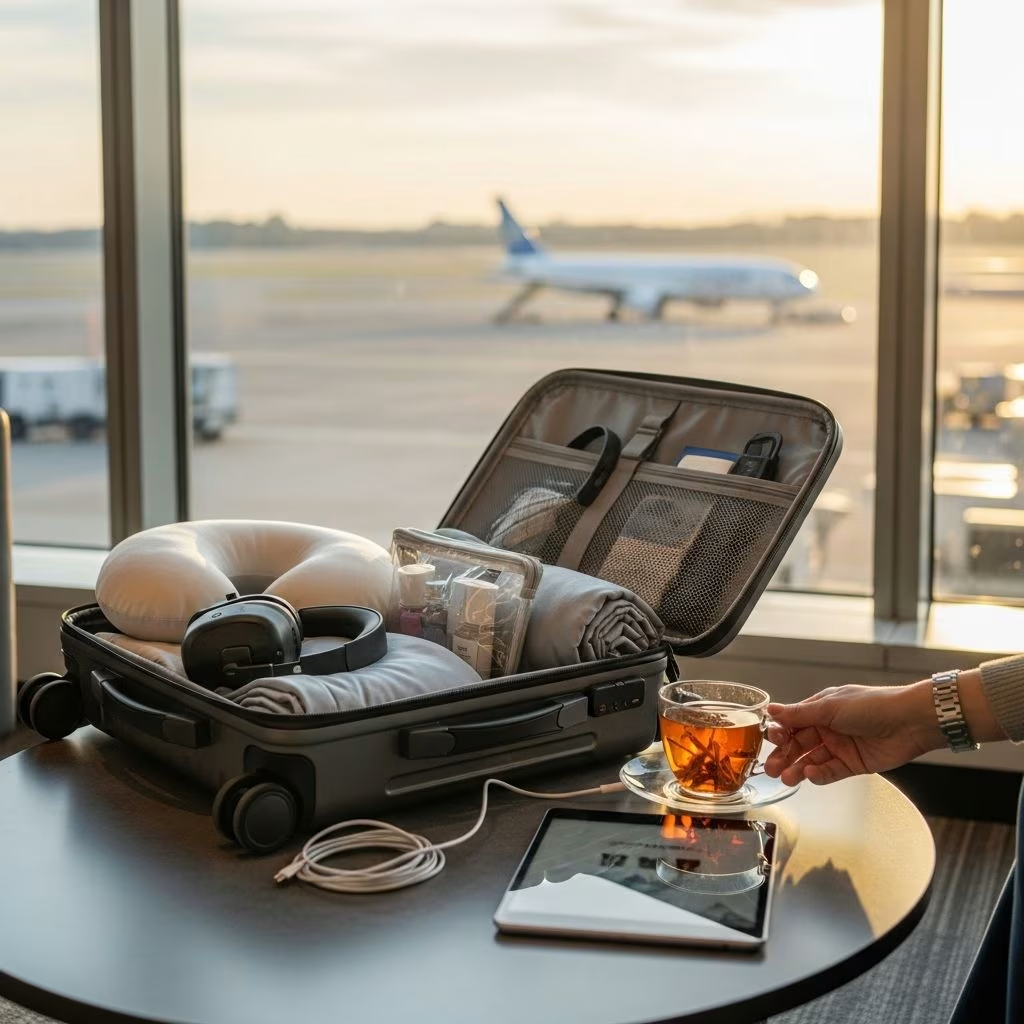 Travel Essentials
Extended air travel presents unique physiological and psychological challenges that demand strategic preparation and deliberate in-flight habits. Whether you’re crossing multiple time zones or enduring a 15-hour journey in economy seating, the difference between arriving depleted and stepping off the aircraft refreshed often comes down to implementation of evidence-based practices. This comprehensive guide addresses the multifaceted dimensions of long-haul flight survival, from pre-departure conditioning to in-flight maintenance protocols.
The preparation phase begins 24 to 48 hours before departure. Your body’s readiness for prolonged immobility significantly impacts your in-flight experience and post-arrival recovery. Rather than attempting to exhaust yourself to force sleep aboard the aircraft, engage in moderate physical activity such as gym workouts, brisk walking, or dynamic stretching routines during the days preceding your departure. This approach conditions your musculature for extended sitting while promoting natural circadian alignment without artificial sleep deprivation.
Equally important is ensuring adequate rest before travel. The counterintuitive strategy of sleep deprivation to guarantee airborne sleep often backfires, leaving you irritable, cognitively impaired, and unable to rest despite exhaustion. Prioritize 7-9 hours of quality sleep during the 48 hours preceding your flight to establish a stable physiological baseline.
Seat positioning represents one of the most consequential decisions affecting overall comfort during extended flights. Advance seat selection—possible through early online check-in or premium seat purchasing—gives you access to preferred locations before standard allocations. Understanding the advantages and disadvantages of different seat categories allows you to align selection with your personal priorities.
Window seats provide lateral support for rest and unobstructed views, though they necessitate disturbing seatmates for lavatory access. Aisle seats offer easier movement and space on one side, making them preferable for passengers requiring frequent restroom visits or experiencing claustrophobia. Middle seats should be avoided unless traveling with companions, as they provide neither wall support nor aisle access while maximizing crowding sensations.
Emergency exit row seats deliver exceptional legroom but come with restrictions: limited or absent recline functionality, restricted under-seat storage during takeoff and landing, and mandatory physical capability requirements. Bulkhead seats, positioned at cabin section boundaries, provide the most generous legroom available in economy class, though in-flight entertainment systems may be mounted between seats rather than on seat backs. Conversely, the row immediately in front of emergency exit rows offers minimal legroom without recline capability—an option to categorically avoid.
Beyond seat selection, research the specific aircraft operating your route. Modern aircraft incorporate enhanced seating ergonomics, superior in-flight entertainment systems, and improved lavatory facilities compared to older models. Airlines often specify aircraft types for given routes, enabling you to prioritize flights utilizing newer equipment.
Clothing choices dramatically influence in-flight comfort levels, yet many passengers prioritize appearance over functionality. Loose-fitting garments prevent abdominal and circulatory restriction during prolonged sitting. Waistbands that create pressure points, rigid denim, and form-fitting shirts generate cumulative discomfort across 8-15 hour durations.
Implement a thermal layering system accommodating the aircraft’s variable temperature environment. While cabin temperatures typically range from 68-72°F, individual sensitivity varies considerably, and thermal zones exist throughout the cabin. Layering enables dynamic adjustment without carrying excessive luggage or requiring lavatory changes. Select natural fibers or moisture-wicking synthetics that facilitate temperature regulation without compromising breathability.
Footwear represents an often-overlooked consideration. Complex laced shoes become frustrating during mid-flight removal and difficult to redon as feet naturally swell during flight. Slip-on styles, minimalist sandals, or compression socks facilitate easy removal while reducing foot edema. Avoid initially tight footwear that will become painfully constrictive as plantar tissues expand.
The aircraft cabin environment creates profound dehydration through ultra-low humidity levels—typically 10-20% compared to ideal 40-60% in terrestrial environments. Dehydration cascades through multiple physiological systems: mood deterioration, energy depletion, cognitive function impairment, skin integrity compromise, and headache onset. The difference between deplaning exhausted versus functional frequently traces directly to hydration status.
Proactive water consumption forms the foundation of in-flight hydration strategy. Drink water consistently throughout the flight, regardless of thirst sensation—thirst emerges as a delayed indicator of dehydration rather than a real-time physiological signal. Establish a routine of consuming 8 ounces of water every two hours. Concurrently, restrict alcohol and caffeine, both of which exacerbate dehydration through diuretic mechanisms.
Nutritional considerations extend beyond mere hunger satisfaction. High-sodium, processed airline meal options often intensify dehydration and create digestive sluggishness. Bringing nutrient-dense foods—nuts, dried fruit, fresh vegetables, and protein sources—provides superior nutritional profiles while offering consumption control. Request airline meal options that emphasize vegetables and lean proteins rather than starch-heavy alternatives.
Maintaining basic hygiene practices yields disproportionate psychological and physiological benefits during extended flights. A simple cleansing routine—brushing teeth, washing your face, and applying moisturizer—substantially elevates your sense of wellness and prevents the accumulated grime sensation that characterizes ultra-long flights.
Assemble a compact toiletry kit containing essentials: toothbrush and paste, facial cleansing wipes, moisturizer suitable for low-humidity environments, comb or brush, and deodorant. The cabin environment’s extreme dryness demands heightened skincare attention; apply hydrating moisturizer more frequently than terrestrial routines. Consider facial mist sprays designed for aircraft environments to combat persistent dryness affecting skin and nasal passages.
Hand hygiene requires particular attention aboard aircraft, where shared armrests, lavatory facilities, and tray tables concentrate pathogenic exposure. Antimicrobial wipes, hand sanitizer, and handwashing reduce infection risk from illness-causing organisms proliferating in confined quarters.
Prolonged immobility creates muscle stiffness, circulatory stagnation, and deep vein thrombosis risk—particularly concerning for passengers with predisposing conditions. Establish a movement protocol incorporating periodic walking, standing, and stretching throughout the flight duration.
Aisle ambulation serves multiple functions: promoting circulation, reducing muscle fatigue, accomplishing a change of scenery, and providing psychological relief from confinement. Walk the cabin length every 2-3 hours. Galley standing and stretching offer supplementary movement without exhausting limited aisle real estate during congested periods.
For seated passengers, consider inflatable footrests designed for economy seating—these raise feet to reduce lower leg edema while providing ergonomic support. Alternatively, foot hammocks suspend feet in elevated positions, though they risk disturbing forward-row passengers. Isometric leg exercises—calf raises, seat-based leg lifts, and glute contractions—promote circulation without requiring aisle access.
Electronic devices provide essential in-flight engagement, yet battery depletion transforms them from comfort sources into frustration catalysts. Charge all devices completely before departure and transport charging cables and portable power banks. In-flight power availability varies by aircraft; older planes offer minimal outlets while newer aircraft increasingly incorporate seat-back USB ports and wall outlets. A reliable external battery prevents mid-flight device failure during critical entertainment or work sessions.
Beyond entertainment functions, devices facilitate productivity—organizing travel photographs, writing travel journals, listening to podcasts, or consuming audiobooks. Strategic device use structures your flight experience, preventing monotony while mentally engaging your mind in meaningful activities.
Jet lag represents one of the most predictable consequences of rapid time zone transitions, yet strategic planning substantially reduces severity. The fundamental jet lag principle states: avoid sleeping at times that conflict with your destination’s circadian schedule. If you’ll land in the morning at your destination, avoiding sleep on the final flight segments primes your body for daytime engagement upon arrival, accelerating circadian adjustment.
Calculate your destination arrival time and work backward to determine optimal sleep windows during flight. Sleeping during times when your destination will experience nighttime reinforces proper circadian alignment, while sleeping during destination daytime hours actively conflicts with adjustment goals. This counterintuitive strategy—sometimes requiring wakeful hours despite exhaustion—demonstrates remarkable effectiveness in minimizing multi-day jet lag consequences.
Extended layovers present common scenarios requiring strategic management. Optimal layover duration spans 3-4 hours, permitting exploration and basic needs fulfillment without excessive time consumption. Shorter connections create stress and missed flight risks; excessive layovers create fatigue without meaningful rest benefits.
Critically evaluate cheap flight options incorporating multiple connections or excessive layovers—these often dramatically extend total travel duration while accumulating stress and fatigue. A direct 10-hour flight frequently proves superior to a cheap option with two connections extending the journey to 20+ hours. When faced with layovers exceeding 8-10 hours at connection hubs offering lounge access, consider airport hotels or lounge facilities enabling genuine rest rather than terminal-based waiting.
Set phone alarms approximately 60 minutes before boarding to ensure timely gate arrival, preventing the common tragedy of missed flights causing baggage offloading and scheduling catastrophes.
Maintain your seatbelt fastened throughout the flight, even during calm periods. Unexpected turbulence can manifest suddenly, and unrestrained passengers risk severe injury from contact with cabin structures or equipment. The seatbelt need not be uncomfortably tight, but it must remain consistently fastened.
Extended air travel need not constitute an endurance test compromising arrival wellness. Through systematic preparation addressing physical conditioning, strategic seat selection, thoughtful apparel choices, aggressive hydration, movement incorporation, and circadian-aligned sleep timing, you transform the long-haul flight from a survival challenge into a manageable—even occasionally enjoyable—experience. The cumulative effect of these evidence-based practices enables you to step off the aircraft refreshed, energized, and prepared to engage fully with your destination, rather than requiring recovery days from travel itself.
