

 Travel Essentials
 Travel Essentials

A comprehensive guide to traveling through Mongolia on a budget, covering accommodation, transportation, tours, and authentic experiences without premium price tags.
 Travel Essentials
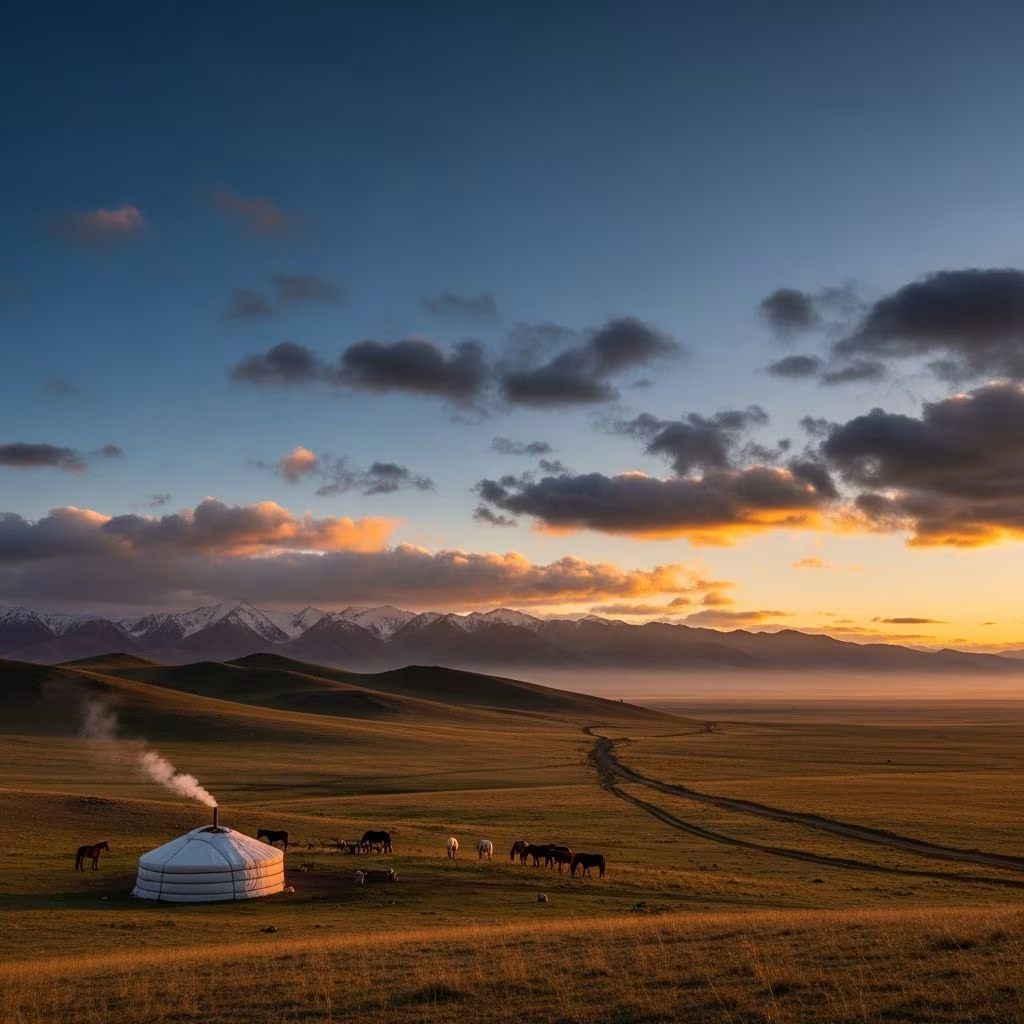
Mongolia stands as one of Asia’s final frontiers, offering boundless steppe landscapes, ancient cultural heritage, and nomadic traditions that captivate adventurous travelers. The perception that exploring this vast nation requires substantial financial resources, however, represents a significant misconception. With thoughtful planning and strategic decision-making, visitors can traverse Mongolia’s most compelling destinations while maintaining remarkably modest expenditures. This guide provides practical strategies for experiencing Mongolia’s wonders without exhausting your travel budget.
Mongolia’s expense landscape varies considerably depending on your travel style and comfort preferences. The country accommodates multiple budget tiers, allowing visitors to calibrate their spending according to personal priorities and available resources. Understanding these distinct cost categories helps travelers make informed decisions about how to allocate their funds most effectively.
Visitors committed to minimizing expenses can navigate Mongolia on approximately $25 to $50 daily. This category primarily applies to travelers remaining within Ulaanbaatar or combining limited regional travel with substantial time in the capital. Such budgets require disciplined spending habits and comfort with basic amenities. Accommodation costs average $11 to $22 nightly in hostel dormitories, while meals from local establishments typically cost $5 to $7.50 per day. This approach eliminates premium experiences but provides authentic cultural immersion and genuine interaction with local communities.
Travelers seeking moderate comfort alongside regional exploration typically spend $30 to $50 daily. This category incorporates private hostel rooms or basic guesthouse stays ($30 to $40 nightly), prepared meals at local restaurants, and selective participation in organized activities. Independent backpackers balance between free exploration and modest paid experiences, creating personal itineraries that emphasize self-directed discovery.
Visitors prioritizing comfort and convenience without pursuing luxury amenities generally allocate $100 to $150 daily. This budget accommodates budget hotel accommodations ($80 nightly), restaurant meals with beverages ($17 daily), guided excursions, and museum entrance fees. Mid-range travelers experience Mongolia with greater convenience, reduced logistical stress, and enhanced transportation options.
Where and how you sleep represents one of travel’s most substantial expenses. Mongolia offers diverse lodging options that align with various budget constraints and comfort preferences.
Ulaanbaatar hostels provide the most economical accommodation option, with shared dormitory beds ranging from $10 to $20 nightly. These establishments serve as crucial budget travelers’ hubs, offering not merely lodging but also valuable information networks, tour arrangements, and social communities. Hostels frequently coordinate group tours to major destinations, potentially reducing individual costs through bulk purchasing power. Staff members typically provide genuine recommendations grounded in recent traveler feedback rather than commercial interests.
Budget guesthouses present middle-ground accommodation, offering private rooms for two at approximately $20 to $60 nightly. These establishments, frequently family-operated, provide more intimate hospitality than impersonal hostels while maintaining affordability. Guesthouse owners often arrange transport and local experiences, leveraging community connections that tourists cannot independently access.
Traditional felt-covered dwellings called gers provide authentic Mongolian immersion, available from $40 nightly through guesthouse and tour operator arrangements. Ger accommodations vary considerably in amenities and comfort levels. Budget-oriented ger experiences prioritize authentic cultural exposure over modern conveniences, creating genuine connections with nomadic lifestyles. Higher-end ger camps incorporate modern facilities while maintaining traditional aesthetic elements.
Mongolian cuisine reflects the nation’s pastoral heritage, emphasizing meat-based preparations and dairy products. Strategic dining choices dramatically impact overall travel expenditure.
Local fast-food establishments serve khuushuur (deep-fried mutton-filled pastries), buuz (steamed dumplings), and other traditional items for approximately $1 per serving. These foods provide substantial nutrition at minimal cost, perfectly suited for budget-conscious travelers. Street markets and casual eateries offer authentic flavors without restaurant markup expenses.
Modest restaurants frequented by Mongolian workers serve complete meals for $5 per person. These establishments rarely cater specifically to tourists, maintaining authentic local character and pricing. A coffee costs $2 to $3, while beer at Ulaanbaatar establishments runs approximately $3 per pint.
Organized tours frequently include prepared meals, reducing overall dining expenses through bulk purchasing. Sit-down dinner experiences for two in Ulaanbaatar range from $20 to $60, encompassing everything from modest local establishments to moderately upscale venues. Budget travelers typically prepare simple meals or consume street food rather than restaurant dining.
Navigating Mongolia’s geography requires strategic transportation decisions that significantly affect both costs and travel experiences.
Mongolia’s provincial capitals connect through public minibus networks, offering the most economical intercity transportation. Routes typically serve major destinations including Kharkhorin, with one-way fares approximately $7. Minibus travel requires patience—vehicles depart only when sufficiently full—but provides authentic local interaction and minimal expense. Journeys lasting 14+ hours typically cost $20 to $45 per person, making public transport ideal for time-flexible budget travelers.
Using Mongolia’s capital as a base, visitors access popular destinations via public transport. Terelj National Park, Khövsgöl Lake, and Kharkhorin remain reachable through bus routes, enabling independent exploration without private transport costs. This strategy eliminates expensive vehicle hire while providing genuine local interaction unavailable to tour participants.
Exploring Mongolia’s remote regions typically requires four-wheel-drive vehicles with professional drivers. Driver daily rates remain fixed regardless of group size, making larger groups more economical. A solo traveler and a five-person group pay identical driver costs, creating strong incentives for joining existing groups or recruiting travel companions through online Mongolian expat communities.
Organized tours represent the primary mechanism for accessing Mongolia’s remote attractions, though pricing structures vary dramatically.
Ulaanbaatar’s budget accommodations offer the most economical tour options, typically costing $500 to $1,500 depending on duration and destinations. These operators follow standardized itineraries featuring the Gobi Desert, Kharkhorin, Terkhiin Tsagaan Nuur, and Khövsgöl Lake. Budget tour companies economize substantially, typically employing English-speaking Mongolian university students during summer break rather than professional guides. While less polished than premium offerings, these tours maintain reasonable quality and deliver authentic experiences.
Assembling larger tour groups significantly reduces per-person expenses through shared transportation and guide costs. Solo travelers face premium pricing, while five-person groups achieve substantially lower individual rates. Social media groups dedicated to Mongolia travel facilitate group formation among independent travelers seeking cost optimization.
Mid-tier tour operators provide all-inclusive seven to ten-day experiences for approximately $3,500 per person, covering accommodation, meals, transportation, and guides except international flights. While substantially more expensive than hostel tours, these packages eliminate logistical complications and provide professional-quality experiences.
Mongolia’s most compelling attractions remain accessible to budget travelers through strategic planning and resourcefulness.
| Destination | Budget Strategy | Approximate Cost |
|---|---|---|
| Khövsgöl Lake Hiking | Public transport from Ulaanbaatar; self-guided exploration | $25-50 |
| Terelj National Park | Bus day trip from capital; minimal entrance fees | $10-20 |
| Hustai National Park | Public transport access; self-guided visits | $15-25 |
| Kharkhorin Ancient Capital | Budget tour inclusion; independent bus access | $5-100 |
| Amarbayasgalant Monastery | Rural Murun city base; local transport | $10-30 |
| Gobi Desert Experience | Hostel group tour participation | $500-1500 |
Terelj National Park, Khövsgöl Lake, and Hustai National Park remain accessible via public buses from Ulaanbaatar. These destinations require minimal entrance fees while providing extraordinary natural beauty. Self-guided exploration costs virtually nothing beyond transport and basic sustenance.
Kharkhorin, Mongolia’s ancient capital, welcomes independent visitors via public transport for approximately $7 one-way. Amarbayasgalant Monastery can be accessed through the provincial city of Murun, allowing budget travelers authentic cultural immersion in less-touristed environments. Museum entrance fees in Ulaanbaatar typically range from $5 to $10, providing cost-effective cultural education.
Sustaining extended Mongolia travel on minimal budgets requires specific strategies beyond basic cost reduction.
Traveling during shoulder seasons (spring and autumn) rather than peak summer months can provide modest accommodation discounts while reducing tour participant competition. Winter travel substantially decreases prices but introduces significant logistical challenges and limited accessibility to remote regions.
Rigid schedules prevent cost optimization. Flexible travelers can depart Ulaanbaatar when sufficient tour groups form, reducing negotiation time and potentially accessing better rates. Willingness to adjust destinations based on existing groups and available pricing creates substantial savings.
Mongolia’s open landscape permits wild camping, effectively eliminating accommodation expenses for extended periods. Travelers comfortable with this approach can reduce daily costs dramatically. Purchasing groceries at local markets rather than restaurant dining provides additional savings, particularly for multi-day excursions.
Travel advisors recommend minimum seven days on the ground in Mongolia, with ten days providing more comprehensive experience. A one-week visit allows capital exploration plus one substantial regional excursion. Extended stays enable deeper cultural immersion and superior cost efficiency through relationship building with local communities.
Successful budget Mongolia travel requires advance planning. Researching hostels and guesthouses online before arrival helps identify properties offering quality tours and knowledgeable staff. Connecting with other budget travelers through Mongolia-focused social media groups facilitates group tour formation. Understanding basic Mongolian phrases and downloading offline maps enhances independent exploration capabilities while reducing reliance on paid guides.
Mongolia remains genuinely accessible to budget-conscious travelers willing to embrace authentic experiences over premium comfort. The combination of economical accommodation, inexpensive dining, and community-oriented hostels creates environments where travelers can explore extraordinary landscapes and engage with nomadic cultures without financial strain. With careful planning and flexible attitudes, Mongolia transforms from an apparently expensive destination into an affordable gateway to Central Asian adventure.
