

 Travel Essentials
 Travel Essentials

Comprehensive guide covering routes, booking tips, packing essentials, and activities for your dream Antarctica expedition from South America gateways.
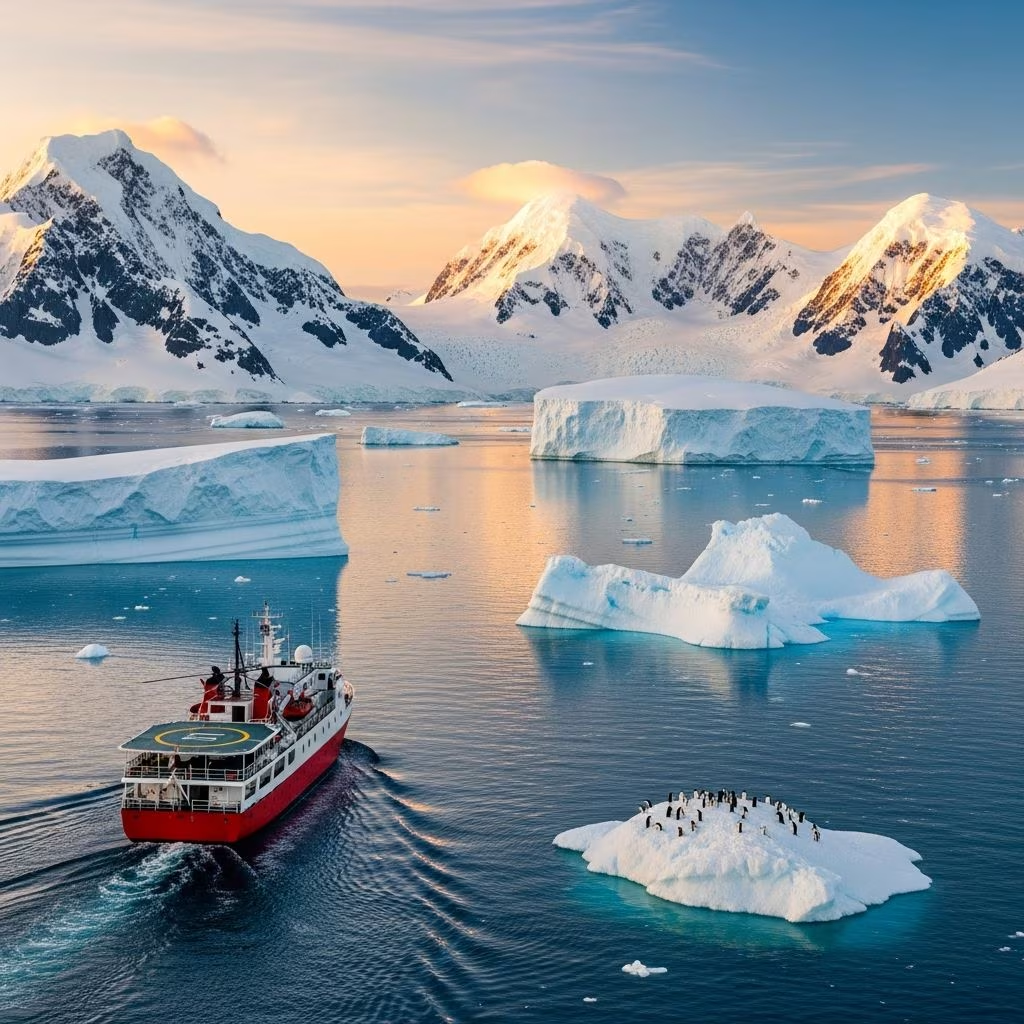 Travel Essentials
Traveling to Antarctica requires meticulous planning due to its remote location and extreme conditions, but it’s accessible via organized expeditions from South America. Most journeys begin in Ushuaia, Argentina, or Punta Arenas, Chile, offering sea crossings or flights to the Antarctic Peninsula and surrounding islands.
The journey starts with reaching key departure points in southern South America. Ushuaia, known as the world’s southernmost city, serves as the main hub for sea voyages, while Punta Arenas facilitates quicker air options. International flights connect major hubs like Santiago, Chile, or Buenos Aires, Argentina, to these ports via airlines such as LATAM, Delta, and United.
From North America, direct flights to Santiago operate from cities including Miami, New York, and Atlanta, followed by a short domestic hop to Punta Arenas. European and Canadian travelers similarly route through Santiago or Buenos Aires for seamless connections. Upon arrival, transfer to hotels for pre-departure briefings, where operators outline embarkation and safety protocols.
The traditional path involves sailing across the Drake Passage, a 600-mile stretch between Cape Horn and the Antarctic Peninsula. This 1.5 to 2-day crossing offers wildlife sightings like wandering albatrosses amid dramatic seas, though weather can bring rough conditions.
Expedition ships depart Ushuaia via the Beagle Channel, building anticipation as icebergs appear on the horizon. Smaller vessels provide flexibility to navigate narrow inlets inaccessible to larger liners, enhancing exploratory opportunities.
For those prone to seasickness or short on time, flights from Punta Arenas to King George Island bypass the passage entirely. These 2-hour charters land on the South Shetland Islands, where passengers board waiting ships for peninsula explorations.
Operators like National Geographic-Lindblad Expeditions integrate flights into itineraries, such as 8-10 day trips combining air travel with cruises. Return options vary, including flights back to Chile or sea voyages to Argentina. This method suits beginners seeking minimal disruption.
Select between expedition ships and traditional cruises based on priorities. Expedition vessels, carrying fewer passengers, emphasize Zodiac landings, kayaking, and hiking amid penguins and seals. They adhere to IAATO guidelines for minimal environmental impact.
Larger cruises focus on onboard amenities and coastal scenery without landings, departing from ports like Buenos Aires for 2+ week itineraries including Falklands or South Georgia. Compare options:
| Vessel Type | Capacity | Key Features | Best For |
|---|---|---|---|
| Expedition Ship | 100-200 | Landings, activities, expert guides | Adventure seekers |
| Large Cruise | 500+ | Entertainment, lectures, no landings | Social travelers |
| Fly-Cruise | 100-150 | Quick access, hybrid itinerary | Time-conscious |
The austral summer from November to March offers 24-hour daylight and accessible wildlife. Peak season (December-February) sees calving glaciers and penguin chicks, but higher crowds and costs. Shoulder months provide solitude and lower prices, with November featuring whale migrations.
Costs range from $6,000-$20,000+ per person for 10-14 days, covering meals, guides, and activities. Factors include vessel luxury, itinerary length, and cabin type. Book 12-18 months ahead for prime dates; flexible travelers snag last-minute deals.
Additional expenses: flights (~$1,500-$3,000 round-trip), gear rental ($500+), tips ($15/day). IAATO-member operators ensure regulated, sustainable trips—verify this before booking.
Layering is essential against temperatures from -10°C to 5°C (14°F to 41°F), wind, and wet landings. Mandatory items include waterproof boots, thermal base layers, fleece mid-layers, parka (often provided), hat, gloves, sunglasses, and sunscreen.
Avoid cotton; prioritize synthetics and wool. Operators supply expedition parkas and boots, reducing luggage needs.
Expect daily Zodiac cruises, shore walks, and lectures. Spot gentoo, Adélie, and chinstrap penguins; Weddell and crabeater seals; humpback and orca whales. Advanced options: kayaking, camping, snowshoeing, or scuba.
Itineraries target the Peninsula, South Shetlands, and occasionally South Georgia’s king penguin colonies. Respect biosecurity: clean gear to prevent invasive species.
No specific vaccines required beyond routine ones; consult CDC for updates. Ships carry medical staff; evacuation insurance is crucial. Follow U.S. State Department advisories for remote travel risks.
Tourists must remain with guides, avoiding wildlife disturbance. The Antarctic Treaty preserves the continent for peace and science—no independent travel allowed.
Yes, via IAATO-approved operators; no special permits needed for tourists. Healthy adults thrive; those with mobility issues check accessibility.
Typically 1.5-2 days each way, weather-dependent.
Yes, starting at $6,000/person for basics; luxury exceeds $25,000.
Opt for fly-cruise itineraries or meds like scopolamine patches.
Rarely; auroras favor winter darkness, when access is limited.
Extended trips (18-25 days) include Falklands’ birdlife, South Georgia’s elephant seals, or Ross Sea’s emperor penguins. Rare South Pole flights require fitness and premium budgets.
Plan with experts for custom routes matching interests like photography or citizen science.
