

 Travel Essentials
 Travel Essentials

Complete guide to using taxis in Japan, covering hailing methods, etiquette, payment options, and essential phrases for seamless travel.
 Travel Essentials
Traveling throughout Japan often requires efficient and reliable transportation solutions. While the country’s public transit system is world-renowned, taxis offer flexibility and convenience for many travelers. Understanding how to access, utilize, and pay for these services ensures a smoother travel experience across Japanese cities and regions.
Japan provides several straightforward methods for passengers to secure a taxi. Each approach offers distinct advantages depending on your location, time constraints, and comfort level with local systems.
One of the most reliable ways to obtain a taxi is through designated stands positioned throughout urban and semi-urban areas. These formal waiting areas are typically located at strategic transportation hubs and commercial centers.
Train stations represent prime locations for taxi stands, as they experience high passenger volumes throughout the day. Major shopping districts and tourist attractions also maintain organized stands where multiple taxis queue for passengers. Look for signage displaying “TAXI” or “タクシー” to identify these official locations.
When approaching a taxi stand, follow the established queuing system. Rather than selecting the closest available vehicle, board the taxi positioned at the front of the line. This practice reflects Japanese cultural norms regarding fairness and order, even when you are traveling alone. Wait your turn patiently, and a dispatcher or the queue system will direct you to your vehicle when appropriate.
For those not near a taxi stand, street hailing provides an accessible alternative. Taxis circulate throughout Japanese neighborhoods and commercial districts, making themselves highly visible to potential passengers.
To identify an available taxi while navigating city streets, observe the dashboard indicator. A red-illuminated plate displayed in the lower corner of the windshield signals that the taxi is vacant and accepting passengers. During evening and night hours, a light positioned on the vehicle’s roof serves the same purpose, changing appearance when the taxi becomes occupied.
Once you’ve spotted an available taxi, position yourself safely at the street edge and raise your hand to signal the driver. Maintain eye contact and wave deliberately to ensure the driver notices your intent. When the driver recognizes your signal, he will activate hazard lights and pull to the side of the road to collect you. Select a location with adequate space for the vehicle to stop safely, avoiding blind corners or areas with heavy traffic.
Smartphone applications have revolutionized taxi access in Japan, particularly benefiting international visitors unfamiliar with local phone systems. Several popular platforms provide real-time taxi hailing through intuitive interfaces.
The GO application stands out as the preferred choice for international travelers, offering extensive geographic coverage and a user-friendly design. GO provides access to Japan’s largest taxi network, making it available in most populated areas. Uber and DiDi function primarily as taxi-hailing services in Japan rather than ridesharing platforms, offering additional options in major urban centers.
Using these apps requires basic setup: download the application from your device’s app store, create an account, and enter your destination. The system then matches you with an available taxi and provides real-time tracking of the vehicle’s approach. This technology proves particularly valuable when language barriers might complicate phone-based reservations.
Traditional phone-based taxi reservations remain viable, though they present challenges for non-Japanese speakers. Most taxi companies operate their booking systems exclusively in Japanese, creating communication obstacles for international travelers.
Hotel and restaurant staff provide valuable assistance with taxi arrangements. Concierge services typically possess established relationships with local taxi companies and can request vehicles on your behalf. Be aware that booking through these services may incur a modest additional fee, though the convenience and professional communication often justify the cost. This option proves especially useful when you need a taxi at a specific time or from a location where hailing may be difficult.
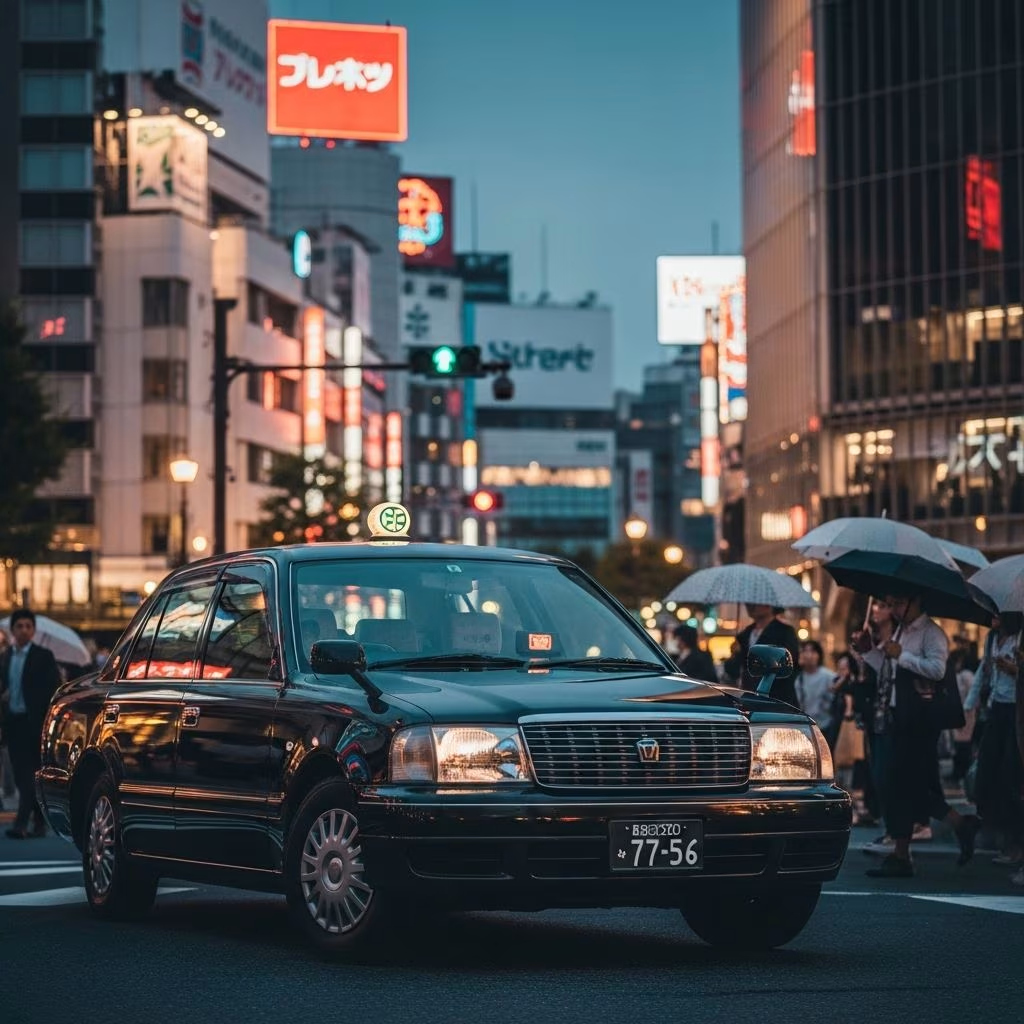
Japan’s taxis maintain consistent visual characteristics across all prefectures, making them easily recognizable whether you’re in Tokyo, Osaka, or rural areas. Each vehicle displays uniform identifying markers that convey availability and operational status.
| Visual Indicator | Meaning | When You’ll See It |
|---|---|---|
| Red dashboard plate | Taxi is available for passengers | During daytime hours |
| Green dashboard plate | Taxi is occupied or unavailable | When driver is transporting passengers |
| Roof light (illuminated) | Taxi is available for passengers | During evening and nighttime |
| Roof light (off) | Taxi is occupied or unavailable | When driver is transporting passengers |
All Japanese taxis display “TAXI” or “タクシー” on their sides, along with the company name and contact information. The vehicle’s roof features a lantern containing the company’s logo and display system. This standardization ensures passengers can quickly identify legitimate taxis throughout the country.
Japanese taxis incorporate specific design features and operational procedures that differ from those in many Western countries. Understanding these distinctions prevents awkward interactions and demonstrates cultural awareness.
One of the most distinctive features of Japanese taxis is the automated door system. The left rear door opens and closes electronically under the driver’s control. Passengers should not attempt to manually open or close this door, as the driver manages the operation remotely. When entering, simply step toward the open door and position yourself on the rear seat. The driver will close the door once you’ve settled. When exiting, allow the driver to open the door again rather than pushing it yourself.
This automated system serves practical purposes: it protects passengers from uneven street edges, prevents accidental contact with passing vehicles, and maintains the vehicle’s security and integrity. The driver’s control of door operations reflects the service-oriented nature of Japanese transportation culture.
Japanese taxi etiquette emphasizes respect for shared spaces and the driver’s professional environment. No smoking is permitted inside any taxi, a rule strictly enforced throughout the country. If you wish to consume food or beverages during your ride, politely ask the driver for permission first, though most drivers readily grant consent.
Tipping is neither expected nor accepted in Japan’s taxi industry. Unlike transportation services in many Western countries, Japanese taxi drivers receive competitive wages and provide service as a professional duty rather than in expectation of additional gratuities. Offering a tip may actually create discomfort, as it contradicts cultural norms around service employment.
Providing clear destination information proves crucial for successful taxi rides in Japan. The Japanese address system differs significantly from Western formats and confuses even local drivers unfamiliar with specific neighborhoods. Rather than relying solely on verbal directions, prepare multiple methods of communicating your location.
If you’re traveling to a major hotel or well-known tourist attraction, stating the establishment’s name in Japanese or English often suffices. For other destinations, write the address in Japanese characters if possible, or have the location pinned on your smartphone’s map application. Display this information to the driver before departing, allowing him to input the address into his GPS navigation system. This preparation prevents delays and ensures you reach your intended location efficiently.
While not all taxi drivers speak English, learning a few key phrases enables smooth communication about your destination and needs.
Some taxis in larger cities provide English guides or drivers with English-language capabilities. When using a taxi app or booking service, look for these options if you’re concerned about communication barriers. However, preparing the written address in Japanese or having it displayed on a map eliminates most language-related complications.
Japanese taxi fares operate on transparent, standardized systems overseen by local transportation authorities. Drivers are regulated to prevent fare inflation and ensure fair pricing for all passengers.
Most taxi rides throughout Japan are priced according to distance traveled, with the fare meter providing a real-time calculation. The meter begins recording charges once the taxi begins moving toward your destination, ensuring you pay only for actual distance covered.
Certain routes to major destinations operate on fixed-rate systems. Airport transfers to and from city centers often employ predetermined fares, eliminating meter-based calculations for these common journeys. Similarly, popular tourist destinations may have established fixed rates for convenience and predictability.
Late-night surcharges apply between 10 p.m. and 5 a.m., typically increasing fares by twenty to fifty percent depending on the local taxi company’s policies. This surcharge compensates drivers for working outside standard business hours and reflects the reduced availability of taxis during nighttime periods. Passengers traveling on highways will additionally pay any highway toll fees incurred during their journey, a cost added to the final fare.
Cash payments remain the most traditional and preferred payment method for Japanese taxis. Carry sufficient yen currency to cover your anticipated fare, as smaller establishments and older taxi companies may not maintain card-processing capabilities.
Most modern taxis, particularly in major metropolitan areas, accept major credit cards. However, inform the driver of your payment method before the ride concludes, allowing them to prepare the appropriate payment terminal or card-reader. Some taxi companies impose small surcharges for credit card transactions, so cash may prove more economical when feasible.
Yes. Japanese taxi drivers operate under strict regulatory oversight and professional licensing requirements. They utilize GPS navigation and fare meters to ensure direct routes and accurate pricing. Taking advantage of passengers is essentially non-existent in the Japanese taxi industry due to cultural and regulatory safeguards.
Yes. Through mobile applications like GO, Uber, and DiDi, you can schedule taxis for specific times. Hotel concierge services also accommodate advance reservations, typically requiring advance notice of several hours for optimal coordination.
Contact the taxi company immediately using any receipt or business card provided by the driver. Most Japanese taxi companies maintain comprehensive lost-and-found systems and make genuine efforts to return passenger belongings.
Taxi availability varies by location and time. During peak hours, taxis are abundant in urban areas. During late-night hours and in rural regions, availability may be limited. Booking ahead through apps or your hotel ensures vehicle availability regardless of demand.
While the fundamental principles of using taxis remain consistent throughout Japan, regional differences exist. Major cities like Tokyo, Osaka, and Kyoto offer extensive taxi networks with abundant vehicles and English-capable drivers. Smaller cities and rural areas have fewer taxis and less frequent English support, making advance booking and written Japanese destinations more important.
Understanding Japan’s taxi system empowers travelers to navigate the country confidently and efficiently. Whether you’re catching a taxi at a busy train station or hailing one from a quiet street, respecting local customs and preparing destination information ensures pleasant, straightforward journeys throughout your Japanese travels.
