

 Travel Essentials
 Travel Essentials

Discover how to travel to Maui responsibly after the 2023 wildfires, support local recovery, and engage meaningfully with communities rebuilding their lives.
 Travel Essentials
The 2023 wildfires that devastated Lahaina on Maui created one of the most challenging periods in the island’s recent history. In a single night, a community rich with cultural heritage and history faced unprecedented loss, claiming over 102 lives and causing billions in damages. Yet amid this tragedy, a powerful opportunity has emerged for travelers to become active participants in healing and recovery. This guide explores how visitors can engage with Maui in ways that respect the community’s grief while simultaneously supporting its economic and cultural renewal.
The August 2023 wildfires represented a watershed moment for Maui’s economy and society. The immediate aftermath saw tourism arrivals plummet by 70%, leaving countless workers without employment and local businesses struggling to survive. Survivors faced the dual trauma of losing their homes while simultaneously losing their livelihoods. The fires didn’t simply destroy buildings; they disrupted the economic engine that powers much of the island’s daily life.
What made this disaster particularly complex was that it emerged from decades of historical patterns. The island’s shift from plantation agriculture to tourism-dependent economy left behind dry, vulnerable landscapes. Water rights issues, agricultural abandonment, and systemic vulnerabilities created conditions that made the community especially susceptible to catastrophic wildfires. Understanding this context helps visitors grasp why their tourism choices matter so profoundly to Maui’s recovery trajectory.
Tourism is not optional for Maui’s recovery—it is essential. Unlike destinations where tourism represents one economic sector among many, Maui depends fundamentally on visitor spending. Following the fires, the island faced a critical choice: how to rebuild an economy while honoring those who suffered and died.
The data tells a compelling story. By mid-2024, visitor arrivals had rebounded to 75% of pre-fire levels, with hospitality employment recovering to 88% of previous numbers. This recovery didn’t happen by accident. It resulted from intentional strategies that positioned tourism as a tool for healing rather than exploitation. When visitors choose to travel to Maui now, they directly fund reconstruction efforts, support business owners struggling to reopen, and provide employment to community members rebuilding their lives.
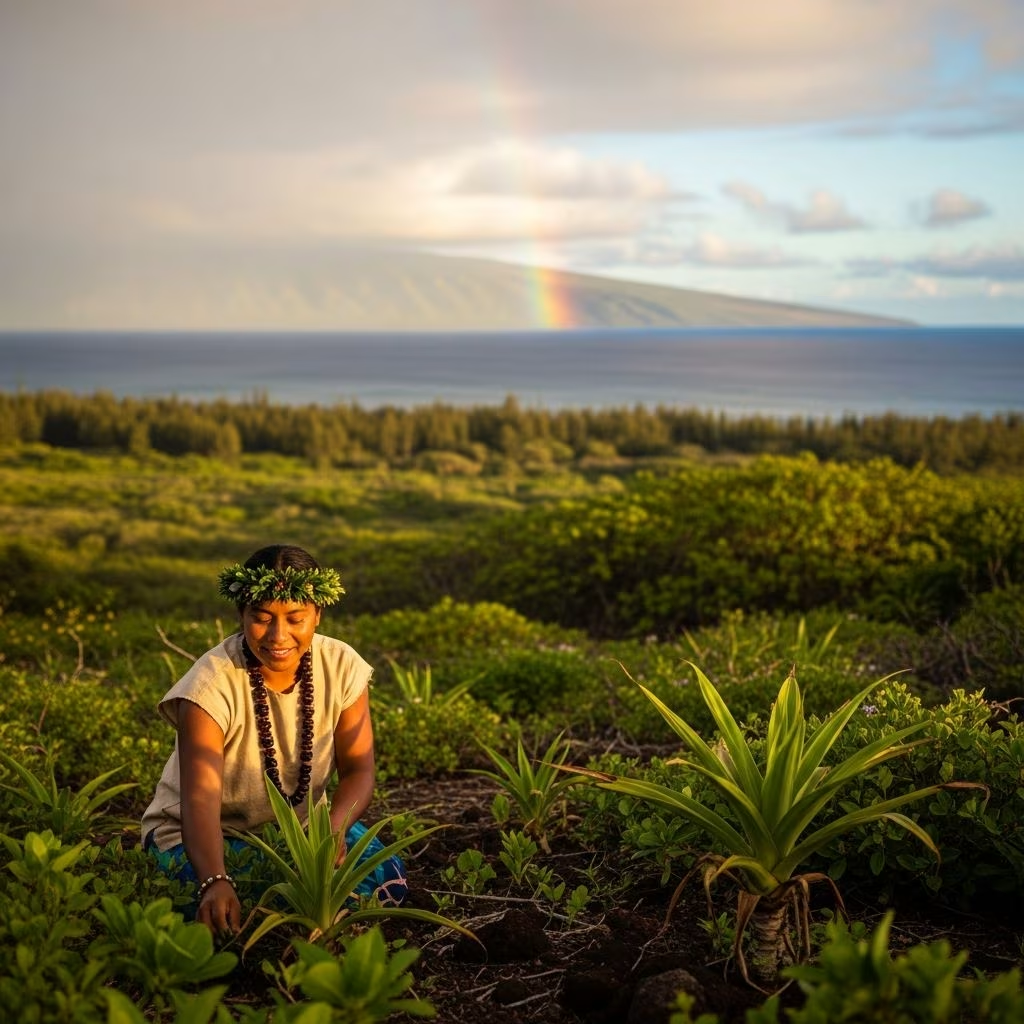
At the heart of Maui’s recovery strategy lies a concept drawn from Native Hawaiian culture: mālama. This untranslatable word encompasses the ideas of caring for, protecting, and showing reverence for both people and place. Unlike generic notions of responsible tourism, mālama offers a framework deeply rooted in the values of the community visitors are entering.
The Hawaii Visitors and Convention Bureau, working with community leaders, launched the “Mālama Maui” campaign to encourage this mindset among travelers. Rather than simply asking visitors to “be respectful,” the campaign explained why respect matters, how it manifests in concrete actions, and how visitors become part of a larger narrative of recovery. This philosophical approach has proven remarkably effective, transforming abstract ideas about responsible tourism into actionable commitments that residents have increasingly supported.
One of the most direct ways visitors contribute to recovery is through their spending choices. However, not all tourism spending benefits the community equally. Chain restaurants and large corporate hotels may offer convenience, but family-owned establishments return a higher percentage of revenue to local families and small business owners.
Prioritize dining at locally-owned restaurants run by residents who are rebuilding their operations. Purchase handicrafts directly from artisans rather than from mass-market tourist shops. Stay in locally-managed accommodations whenever possible. These choices might require slightly more research and planning, but they create meaningful economic multipliers throughout the community.
While the desire to help is admirable, some areas require recovery time and space. Fire-impacted zones, particularly areas where homes were destroyed and families are grieving, should be approached with sensitivity. Rather than treating disaster zones as attractions to photograph or document, visitors should ask themselves whether their presence adds value or reopens wounds for residents still processing trauma.
Tourism operators and local guides can direct visitors toward restoration projects, community centers, and cultural spaces where their presence actively supports recovery efforts. These locations welcome visitors and benefit from their participation, unlike areas still dealing with the immediate aftermath of loss.
Many visitors arrive with a genuine desire to contribute beyond mere tourism consumption. Legitimate volunteer opportunities exist for those wanting to participate in hands-on recovery work. Tree-planting initiatives, restoration of public spaces, fundraising events, and cultural preservation projects all benefit from visitor participation when organized through established community organizations.
Connect with established volunteer networks rather than attempting independent cleanup efforts. Organizations coordinating these programs understand community needs, can direct labor effectively, and ensure that volunteer work aligns with residents’ recovery priorities rather than well-intentioned but misguided outsider assumptions.
Maui’s recovery extends beyond economic metrics. The fires threatened not only lives and livelihoods but also cultural heritage and historical narratives. Tourism can either contribute to cultural erosion or support cultural preservation and revitalization, depending on how visitors approach local traditions and history.
Seek educational experiences that deepen understanding of Hawaiian culture, history, and the community’s resilience. Attend cultural events hosted by residents. Support museums and cultural centers working to preserve and interpret local heritage. Listen to community members’ stories rather than viewing them as tourist attractions. This approach transforms tourism from a transactional relationship into a genuine cultural exchange.
Maui’s vulnerability to wildfires was partly influenced by environmental degradation and water management issues. Visitors can support recovery by adopting practices that minimize environmental strain:
As Maui rebuilds, visitor behavior affects the pace and quality of recovery. Following traffic guidelines, respecting temporary road closures, and avoiding congestion in areas with limited emergency services all contribute to smoother reconstruction. These seemingly minor choices aggregate into significant impacts on community functioning.
The rebound in visitor arrivals and employment represents more than statistics. It reflects individual families returning to work, businesses reopening their doors, and communities regaining economic stability. The 75% rebound in visitor arrivals by mid-2024 translated directly into paychecks for workers, revenue for shop owners, and resources for community organizations supporting affected residents.
This recovery also altered residents’ perceptions of tourism itself. In the immediate aftermath, many residents viewed tourists with anger, seeing them as intrusive during profound grief. As tourism became reframed as recovery support rather than exploitation, resident attitudes shifted measurably. By focusing on mindful, community-benefiting travel, Maui demonstrated that tourism and community wellbeing need not be opposing forces.
| Travel Consideration | Responsible Approach | Community Impact |
|---|---|---|
| Accommodation Selection | Choose locally-owned guesthouses or smaller hotels | Revenue stays within community; jobs for local workers |
| Food and Dining | Eat at family-owned restaurants | Direct support for business owners rebuilding |
| Shopping | Purchase from local artisans and small shops | Income for craftspeople; cultural preservation |
| Activities | Select community-endorsed tours and experiences | Ensures tourism supports recovery priorities |
| Volunteering | Work through established organizations | Effective labor aligned with actual community needs |
| Media Documentation | Respect privacy; avoid disaster photography | Honors grieving community members |
Yes, when approached thoughtfully. The community has specifically requested tourism to support recovery. However, timing your visit with sensitivity—avoiding immediately fire-impacted areas and respecting ongoing grieving—remains important.
Prioritize direct spending at local businesses, choose locally-operated accommodations, and participate in community-approved volunteer programs. Avoid large chains where profits may not remain on the island.
Lahaina’s downtown core was heavily damaged and requires sensitive approach. Work with local guides to understand appropriate boundaries. Many areas are actively welcoming visitors and want their participation in recovery.
Contact established nonprofits and community organizations before arriving. They can direct you toward projects with actual labor needs rather than activities that might disrupt recovery efforts.
Tourism directly employs workers in hospitality, restaurants, transportation, and retail. By spending at local businesses, you create employment multipliers throughout the community.
Maui’s experience demonstrates that tourism, when approached with intention and cultural respect, becomes a powerful recovery mechanism. The community has opened itself to visitors not out of desperation but out of recognition that mindful tourism can support healing, preserve livelihoods, and honor both economic necessity and cultural values.
Future visitors to Maui carry the responsibility of maintaining this commitment to mālama. Each choice about where to stay, eat, spend money, and volunteer either reinforces or undermines the recovery narrative the community has collectively embraced. Traveling to Maui today means becoming part of a community story—not as passive observers of disaster recovery, but as active participants in renewal.
The fires of 2023 created tragedy that words cannot capture. Yet they also created an opportunity for visitors to engage with travel in deeper, more meaningful ways. By choosing responsible tourism practices rooted in respect, cultural awareness, and genuine community support, visitors transform their vacation into something far more significant than personal leisure—they become part of Maui’s ongoing journey toward healing and resilience.
