

 Travel Essentials
 Travel Essentials

Discover practical strategies for visiting Petra sustainably, from minimizing physical impact on ancient structures to supporting local communities ethically.
 Travel Essentials
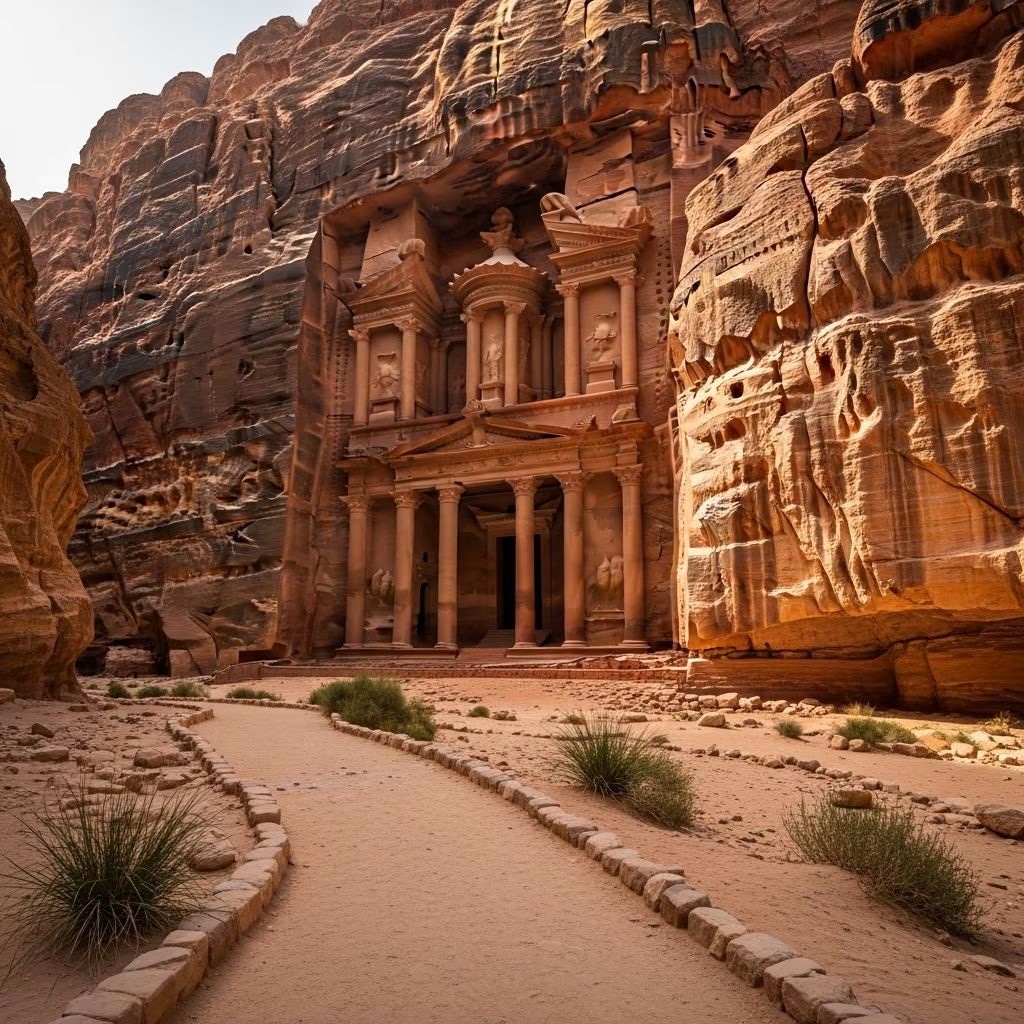
Petra stands as one of the world’s most extraordinary archaeological treasures, carved into rose-red sandstone cliffs in southern Jordan. This ancient Nabatean capital, now designated as a UNESCO World Heritage Site and recognized as one of the Seven Wonders of the World, attracts millions of visitors annually. However, the influx of modern travelers has created significant challenges for the site’s preservation and the wellbeing of local communities. Understanding how to visit Petra responsibly has become essential for anyone planning a trip to this remarkable destination.
The Nabateans who built Petra over two millennia ago never envisioned the scale of contemporary tourism. Modern visitors, equipped with specialized hiking boots and trekking equipment, inadvertently contribute to the deterioration of this fragile site. The cumulative effect of millions of footsteps pressing into ancient pathways creates erosion that threatens the structural integrity of the monuments. Additionally, the concentration of tourists during peak seasons strains the site’s water resources and local infrastructure, which must accommodate thousands of daily arrivals.
Recognizing these challenges is the first step toward becoming a conscientious visitor. By making informed choices during your Petra visit, you actively participate in conservation efforts and support the sustainability of this irreplaceable cultural heritage for future generations.
The monuments at Petra require careful stewardship to prevent accelerated deterioration. Several practical decisions can significantly reduce your environmental footprint while exploring the site.
Selecting the right shoes represents one of the most straightforward ways to minimize damage. Conventional trekking boots with aggressive tread patterns are specifically designed to grip terrain through deep indentation into soil and stone. At Petra, where countless visitors traverse the same pathways daily, this cumulative impact accelerates erosion and loosens ancient masonry. Instead, opt for lightweight shoes with softer, less pronounced treads. This simple choice reduces your contribution to the site’s physical degradation while remaining comfortable for extended walking.
Trekking poles with pointed metal tips, while beneficial for stability on challenging terrain, can inflict microscopic damage to ancient surfaces and pathways. Consider leaving pointed-end poles at home or selecting alternatives with rubber or protective end caps if stability assistance is necessary. This consideration becomes particularly important in heavily trafficked areas like the Siq, where the combination of pointed implements and millions of passes has already compromised the rock face in certain locations.
Resisting the urge to inscribe names, leave marks, or run fingers along ancient carvings protects irreplaceable historical records. Many visitors inadvertently contribute to degradation by climbing on structures that have remained standing for centuries. Photography and observation offer equally rewarding experiences without causing damage. Allow Petra to leave an impression on your memory rather than expecting to leave a physical mark on the site.
Many visitors utilize horse, donkey, or camel services to navigate Petra’s terrain, particularly for ascending to elevated destinations such as the Monastery or the High Place of Sacrifice. These animals serve important functions for local Bedouin communities, but their use requires ethical consideration.
When opting to ride, prioritize adult operators rather than children managing animals. Evaluate the visible health and condition of the animals before committing. Healthy animals demonstrate appropriate energy levels, clear eyes, and appropriate body condition for carrying passenger weight. Animals showing signs of distress, malnourishment, or exhaustion should not be used.
Established fare standards exist at the Petra Visitor Centre for all animal services. Paying the posted rate ensures operators receive appropriate compensation without pressure to rush additional trips or cut corners on animal welfare. Negotiating down fares, while appealing from a budget perspective, forces providers to compensate through excessive trips or reduced care standards. This practice undermines both animal welfare and fair labor practices for local workers.
Should you observe animal mistreatment or abuse, reporting incidents to the tourist police at the visitor center helps protect vulnerable animals. Documentation through photographs or video evidence strengthens these reports and demonstrates visitor commitment to ethical standards.
How and when you visit Petra significantly impacts both your experience and your environmental footprint.
Most visitors approach Petra through the iconic Siq, following the traditional route that concentrates foot traffic into narrow passages and chambers. The alternative “back door” entrance near the Monastery provides access via the Jordan Trail, a 675-kilometer network that spans the country. Arriving early at this less-popular approach virtually guarantees solitude while allowing exploration before typical daily congestion begins. This routing distributes visitor impact across a broader geographic area and provides a more intimate experience of the site’s expansive terrain.
While time constraints limit some visitors to brief tours, extending your Petra visit whenever feasible reduces cumulative pressure on local resources. Desert environments require daily replenishment of water supplies, creating significant logistical and environmental costs for each new arrival. The Jordan Pass, specifically the Jordan Expert version, permits three consecutive days of access, enabling visitors to explore at a relaxed pace and experience different sections during varying light conditions. Longer stays also provide opportunities for deeper cultural engagement and more meaningful interactions with local communities.
Local commerce represents an important economic component for communities surrounding Petra, but shopping choices significantly impact both local sustainability and conservation efforts.
Archaeological artifacts offered as souvenirs often derive from tomb looting and constitute illegal goods. Purchasing such items perpetuates theft from heritage sites and violates international cultural property laws. Authentic-appearing antiquities frequently originate from clandestine excavation rather than legitimate archaeological work, funding practices that damage irreplaceable historical records. Declining to purchase suspected looted items removes financial incentive for these destructive practices.
Colorful striped rocks, sand samples, and similar natural souvenirs literally remove material from Petra’s landscape. While individual items seem insignificant, aggregated across millions of visitors, this accumulates into substantial environmental degradation. Supporting local artisans through purchases of handmade crafts, textiles, or other produced goods generates economic benefit without extracting resources from the site itself.
Some shops operate under child labor arrangements, where young workers remain out of school to manage business operations. Patronizing these establishments encourages families to prioritize commercial activity over education, limiting children’s long-term opportunities and perpetuating economic cycles. Consciously selecting shops run by adult proprietors supports sustainable employment practices and community development.
Desert environments demand substantial water consumption, but how visitors address this need significantly impacts environmental sustainability.
Single-use plastic water bottles represent one of the most visible environmental problems affecting Petra. Bottles must be transported into the site through the already-strained supply chains, creating transportation emissions and requiring management systems for removal and disposal. Bringing a large reusable water bladder or hydration pack from home eliminates this waste stream entirely. Fill your container at accommodations before departing for the site, ensuring adequate hydration throughout your exploration.
The Bedouin tradition of black tea service provides excellent refreshment during site exploration. Many restaurants and cafes offer this cultural experience, combining hydration with cultural connection. Supporting these establishments contributes to local economies while reducing reliance on bottled water consumption. Request tea and other beverages in glasses or ceramic cups rather than disposable containers when possible.
Responsible tourism generates meaningful economic advantages for local populations when executed thoughtfully.
Employing local guides ensures that your spending directly benefits community members while providing access to knowledge that only residents possess. Guides from the area offer contextual understanding, cultural insights, and navigation expertise that enhance the visitor experience. Similarly, staying in locally-owned accommodations and dining at family-operated restaurants disperses tourism revenue across broader segments of the community rather than concentrating benefits among international corporations.
Organized tourism packages that partner with local operators, Bedouin communities, and regional businesses structure visitor spending to maximize community benefit. These arrangements often include transparent pricing and ethical labor practices, ensuring workers receive appropriate compensation and working conditions meet established standards.
Reaching Petra and navigating the site involves transportation choices that affect both personal experience and environmental impact. Utilizing organized group tours consolidates transportation, reducing individual vehicle emissions. Using the Petra Visitor Centre’s coordinated shuttle services for site access distributes visitor traffic more efficiently than individual vehicle transport. For travelers with mobility limitations, properly maintained animal services provide essential accessibility while compensating local workers fairly for their services.
Yes, when approached ethically. Select providers offering healthy animals, pay established rates without negotiation, and prioritize adult operators. This approach supports local livelihoods while ensuring animal welfare.
Minimum one full day allows exploration of major monuments. The three-day Jordan Expert Pass enables leisurely pacing, multiple route options, and deeper site engagement. Longer stays reduce per-visitor environmental pressure on water and infrastructure resources.
Handmade textiles, pottery, and crafts produced by artisans represent ethical choices. Avoid anything claiming to be ancient artifacts, natural landscape materials like colored rocks or sand, or items sold by working children.
Aggressive tread patterns and pointed-end poles cause cumulative damage to ancient surfaces and pathways. Lightweight shoes with soft treads and pole alternatives with protective end caps reduce this impact substantially.
Visiting Petra responsibly represents an achievable commitment that collectively makes substantial differences in site preservation and community wellbeing. Individual decisions—regarding footwear, animal service providers, souvenir purchases, and stay duration—accumulate into meaningful conservation outcomes. By engaging thoughtfully with this irreplaceable cultural heritage, you ensure that future generations inherit Petra in its full glory while supporting the communities whose stewardship makes preservation possible. Your visit becomes not merely a personal experience, but an active contribution to global cultural heritage conservation.
