

 Travel Essentials
 Travel Essentials

Learn how to visit the Great Barrier Reef responsibly, supporting conservation, Indigenous knowledge, and low-impact tourism choices.
 Travel Essentials
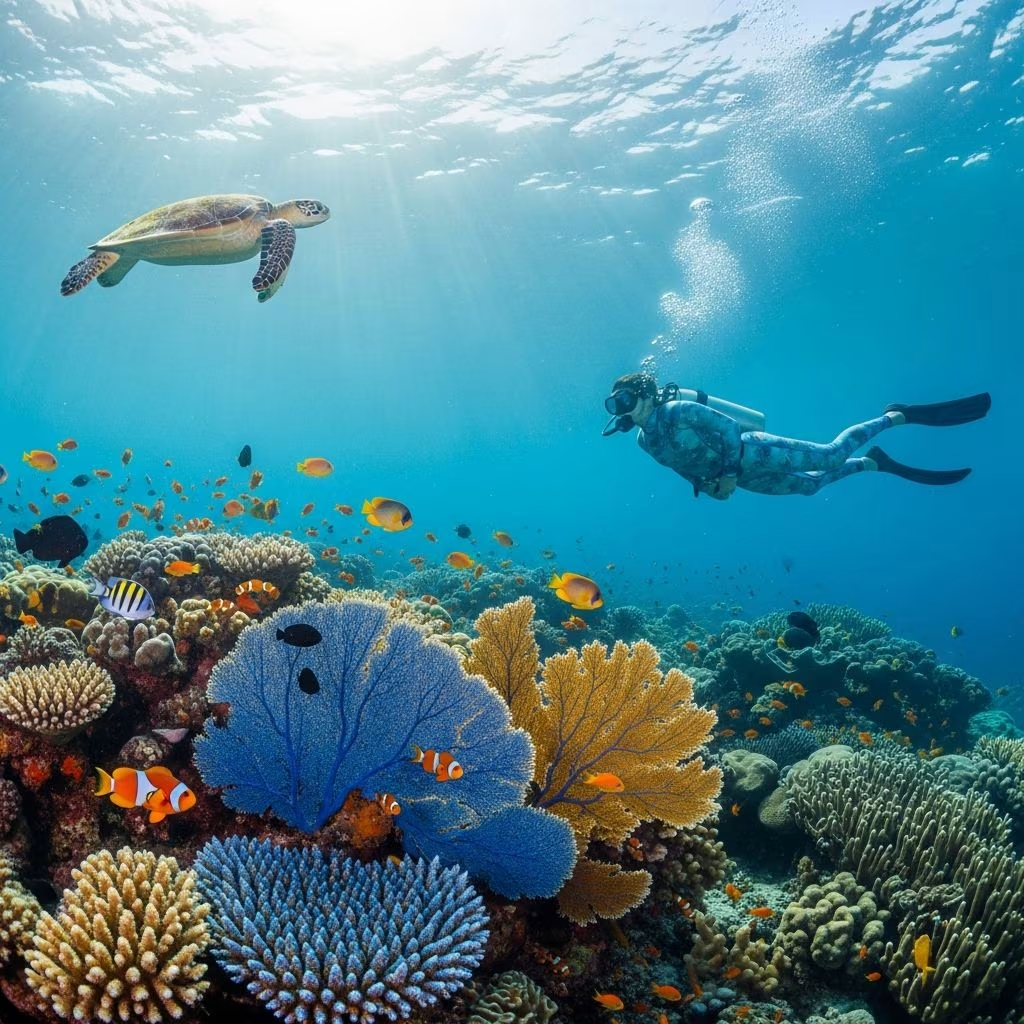
The Great Barrier Reef represents one of Earth’s most magnificent marine ecosystems, supporting thousands of species while holding profound cultural significance for Aboriginal and Torres Strait Islander peoples. This expansive coral system faces mounting pressures from climate change and environmental degradation, yet paradoxically, responsible tourism has emerged as a vital conservation tool. When visitors prioritize sustainable practices, their journeys become investments in reef protection rather than threats to its survival.
The Great Barrier Reef functions as more than a tourist destination—it serves as a critical ecological cornerstone. The reef sustains local communities through sustainable livelihoods and holds deep cultural value for Indigenous populations who have maintained connections to these waters for millennia. Tourism generates essential funding for ongoing research and restoration initiatives that combat climate change effects and support ecosystem resilience.
Smart visitor management has become fundamental to preserving this World Heritage site. The Great Barrier Reef Marine Park Authority implements national regulations designed to balance public access with environmental protection, reflecting broader principles of regenerative tourism where travel actively restores ecosystems and strengthens local communities.
Lodging choices significantly impact your reef visit’s environmental footprint. Multiple properties throughout the region have committed to renewable energy transitions and waste reduction initiatives. Lady Elliot Island, situated at the reef’s southern tip, pioneered plastic water bottle bans among Great Barrier Reef resorts and continues pursuing 100 percent renewable energy operations. The Elysian Retreat on Long Island in the Whitsundays became the region’s first solar-powered resort when opening in 2019, demonstrating how luxury accommodations can prioritize sustainability.
Mainland alternatives include Thala Beach Nature Reserve, located a brief 15-minute drive south of Port Douglas, which has gained recognition for regenerating former agricultural land into an eco-sensitive seaside lodge. Approximately 900 islands scattered throughout the reef system offer eco-friendly accommodation featuring renewable energy systems, reduced waste protocols, and sustainable construction materials that address environmental concerns inherent in travel infrastructure.
Food experiences contribute meaningfully to sustainable travel practices. Seek restaurants committed to ethical sourcing of local produce, such as Julaymba Restaurant at Daintree Ecolodge, which emphasizes regional ingredients and traditional preparation methods. These establishments reduce transportation-related carbon emissions while supporting local agricultural communities and Indigenous food sovereignty initiatives.
Restaurant selection reflects visitor values and directly influences demand for sustainable supply chains. By patronizing venues emphasizing local sourcing and seasonal menus, travelers amplify market signals encouraging broader adoption of conservation-friendly food systems throughout the region.
Tourism operators serve on the front lines of reef protection, with many undertaking site-specific actions to monitor and protect live coral cover. High-standard operators integrate educational components about reef preservation into travel experiences, while some actively participate in coral nursery operations and outplanting programs designed to boost coral abundance at specific reef locations.
Identifying reputable operators requires attention to established credentials and authentic conservation commitments. Passions of Paradise has gained widespread recognition as one of Australia’s most eco-conscious tour operators, featuring extensive awards, research initiatives, reef survey participation, and partnerships with the Australian Rainforest Foundation that plant 1,200 trees annually to offset carbon emissions. The organization offers coral planting and reef restoration opportunities conducted in partnership with the University of Sydney and Port Douglas’ Wavelength Reef Cruises.
Look for Master Reef Guides during visits—specialists providing current information and evidence-based recommendations for minimizing personal impact. Aboriginal and Torres Strait Islander-run activity operators, such as Dreamtime Dive & Snorkel in Cairns, share traditional wisdom about environmental stewardship and gentle engagement with natural systems.
| Certification Level | Description | Verification Method |
|---|---|---|
| Advanced Ecotourism | Highest eco certification attainable in Australia | Official Ecotourism Australia registry |
| Eco-Certified Nature Destination | Meets strict environmental selection criteria | Ecotourism Australia certification database |
| High Standard Operator | Integrates preservation education into experiences | Great Barrier Reef Marine Park Authority records |
| Guardian of the Reef Program | Blends science, Indigenous wisdom, and education | Partnership documentation and community references |
Tour modality significantly affects environmental impact. Integrating non-motorized marine activities—such as paddleboarding, kayaking, or sailing—into itineraries substantially reduces carbon emissions compared to high-speed motorized operations. These activities also enhance intimate reef engagement, allowing visitors extended time observing ecological processes and marine behaviors.
Every visitor to the Great Barrier Reef contributes to conservation through an environmental management charge (EMC) applied to reef tours. This mandatory fee supports various reef recovery projects, ensuring that tourism participation directly funds protection initiatives regardless of transportation modality chosen.
Non-scientists gain opportunities to contribute meaningfully to the reef’s long-term protection through citizen science projects, many accessible remotely. The free Eye on the Reef application invites visitors to log information about reef health, marine animal observations, incidents, and environmental conditions following snorkeling or diving experiences. Collected data informs sustainable reef management strategies and scientific research initiatives.
These participation opportunities transform visitors from passive consumers into active conservation stakeholders. By documenting observations systematically, tourists generate valuable ecological data while developing deeper understanding of reef dynamics and interconnected systems supporting marine biodiversity.
The Great Barrier Reef Marine Park Area operates under highly regulated conditions ensuring ongoing funding for protective projects. This regulatory environment reflects recognition that sustainable tourism requires structured management preventing overexploitation of sensitive ecosystems.
During unprecedented circumstances, such as pandemic-related closures, marine authorities activated tourism operator assets to deliver reef conservation and protection services. This innovative approach—the Tourism Reef Protection Initiative—represents a federally funded program contracting tourism operators to conduct reef protection services at high-value sites across the system. This unusual partnership between conservationists and private industry demonstrates how economic and environmental interests can align toward shared objectives.
Environmental management charges represent transparent mechanisms directing visitor expenditures toward reef protection. Revenue generated funds coral recovery projects, monitoring initiatives, restoration programs, and research addressing climate change impacts. Understanding this connection motivates visitors to view their participation as conservation investment rather than simple consumption.
Tourism provides vital funding mechanisms sustaining scientific research essential for developing reef resilience strategies. The industry’s economic contribution justifies regulatory frameworks restricting visitor numbers and mandating conservation protocols—restrictions that ultimately preserve the reef’s attraction and long-term viability.
Authentic sustainable tourism incorporates Indigenous perspectives and traditional ecological knowledge. Aboriginal and Torres Strait Islander peoples maintain timeless connections to reef environments accumulated over millennia. Visitor experiences incorporating traditional wisdom create pathways for cultural exchange while validating Indigenous stewardship approaches and supporting Indigenous-operated enterprises.
This integration reflects broader recognition that environmental conservation succeeds most effectively when respecting and incorporating perspectives of communities maintaining historical relationships with particular landscapes. Indigenous guides and operators provide contextual understanding impossible to access through Western scientific frameworks alone.
Responsible reef visitation begins before arrival through deliberate preparation decisions:
Physical contact with coral causes permanent damage to delicate polyp structures essential for reef health. Visitors should maintain distance from coral formations, avoid touching reef surfaces, and refrain from standing on substrate that harbors living organisms. Sunscreen contains chemicals that bleach corals; reef-safe alternatives minimize chemical stress on symbiotic relationships between corals and zooxanthellae.
Proper weighting for diving and snorkeling prevents accidental collisions with reef structures. Slow, deliberate movement through reef environments demonstrates respect for ecosystems while reducing visibility disruption affecting animal behavior and feeding patterns. These behavioral practices require minimal effort but produce substantial collective benefits when adopted by numerous visitors.
Tourism generates funding for marine park management and research through environmental management charges. Additionally, tourism operator participation in reef monitoring, coral nursery operations, and restoration activities directly contributes conservation labor. Economic incentives created by tourism justify regulatory frameworks protecting reef ecosystems.
Credible operators maintain Advanced Ecotourism Certification, participate in scientific research initiatives, limit daily visitor numbers, employ Master Reef Guides, integrate educational components into experiences, and engage in active restoration projects such as coral propagation.
Individual decisions collectively shape market demand for sustainable tourism practices. Operator revenue directly correlates with visitor choices regarding accommodation, dining, and activity selection. Widespread visitor adoption of sustainable practices increases operator profitability from conservation-focused business models, encouraging industry-wide sustainability transitions.
Regenerative tourism extends beyond minimizing harm to actively restoring ecosystems and strengthening local communities. Reef-focused regenerative tourism includes coral planting participation, citizen science contributions, Indigenous knowledge integration, and support for community-based conservation enterprises.
The Great Barrier Reef Marine Park Authority publishes funding allocation information and project updates. Visitor inquiries to marine park authorities or certified tour operators reveal specific reef recovery initiatives supported through collected charges.
Visiting the Great Barrier Reef represents a privilege carrying inherent responsibilities. This World Heritage ecosystem requires respectful engagement and intentional impact minimization. Travelers who embrace sustainable practices acknowledge their role in either supporting or hindering long-term reef resilience.
Sustainable reef tourism reduces pressure on fragile ecosystems while creating long-term benefits for local communities and Indigenous populations maintaining cultural connections to these waters. By traveling slowly, respecting natural systems, and consciously selecting conservation-aligned options, visitors transform their journeys into meaningful contributions protecting one of Earth’s most remarkable ecological systems for future generations.
