


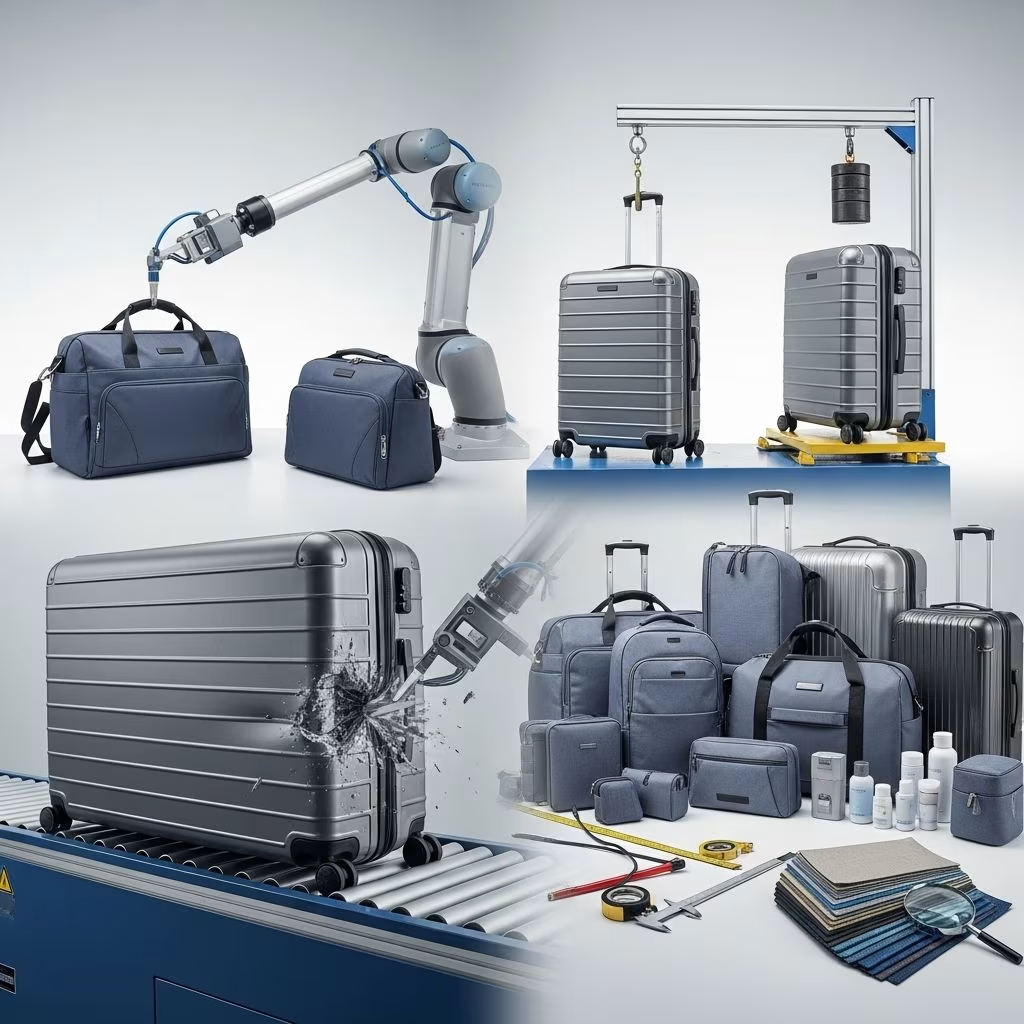
Selecting the perfect piece of luggage can make or break your travel experience. With countless options on the market, knowing which bags truly stand up to the demands of airports, roads, and rough handling is essential. At our testing lab, we put every suitcase through a battery of challenges designed to mimic the chaos of real travel. This guide reveals our step-by-step methodology, ensuring you get unbiased insights into what makes luggage exceptional.
Why Rigorous Testing Matters for Travelers
Travel isn’t gentle on gear. Bags endure everything from baggage carousel tumbles to overhead bin crunches. Poorly constructed luggage can lead to ripped seams, broken wheels, or shattered zippers mid-trip, turning vacations into ordeals. Our testing process simulates these scenarios over weeks, using specialized equipment and trained evaluators to score performance objectively.
By standardizing tests, we eliminate guesswork. Each bag faces identical stressors, allowing fair comparisons across brands and price points. Whether you’re a frequent flyer or occasional adventurer, understanding these methods empowers smarter purchases.
Setting Up the Testing Environment
Our state-of-the-art facility spans 5,000 square feet, equipped with industrial treadmills, drop towers, and climate chambers. We begin by inspecting each suitcase upon arrival: measuring dimensions, weighing empty and packed, and documenting materials like polycarbonate shells or ballistic nylon fabrics. Baseline photos capture any pre-test flaws.
Packing protocols are crucial for realism. We fill bags with standardized loads—20 pounds for carry-ons, 50 for checked—using clothes, shoes, toiletries, and souvenirs weighted to airline limits. This ensures tests reflect actual usage, not empty speculation.
Durability Under Impact: Drop and Tumble Trials
To assess shell resilience, we conduct high-impact drop tests. Suitcases are elevated 10 feet and dropped onto steel plates from multiple angles—corner-first, flat-side down, wheel-side impact. We repeat 50 times per bag, inspecting for cracks, dents, or deformation after each set.
- Corner drops: Target weak points where handles meet shells.
- Flat drops: Simulate baggage handler tosses.
- Wheel impacts: Test undercarriage strength.
Tumble drums follow, rotating bags 100 times at 30 RPM inside a padded barrel. This replicates conveyor belt mishaps, scoring wheels, zippers, and handles for post-tumble integrity.
Mobility Mastery: Treadmill and Cornering Challenges
Wheels and handles define daily usability. Our 30-minute treadmill test runs bags at 3.5 mph on inclines up to 15%, fully loaded. Evaluators note smoothness, noise, and stability over 5 miles total distance.
| Test Phase | Duration | Speed/Incline | Key Metrics |
|---|---|---|---|
| Flat Run | 10 min | 3.5 mph / 0% | Wheel spin, drag resistance |
| Incline Climb | 10 min | 3.5 mph / 10% | Handle comfort, tipping |
| High Incline | 10 min | 3.5 mph / 15% | Overall stability |
Cornering drills involve tight 90-degree turns on varied surfaces: carpet, tile, concrete. We measure turning radius and effort required, penalizing bags that snag or wobble.
Expansion and Compression: Volume Stress Tests
Modern luggage often features expanders. We pack to capacity, zip securely, then expand fully and re-zip 25 times. Compression tests squash bags under 200 pounds for 24 hours, checking rebound and shape retention.
Water resistance comes next: bags sit in simulated rain for two hours, sprayed at 5 gallons per minute. Interiors are examined for leaks, vital for electronics-laden travelers.
Handle and Zipper Endurance Evaluations
Retractable handles undergo 5,000 extend/retract cycles via automated machinery. We test pull strength to 100 pounds and ergonomic comfort during prolonged drags.
Zippers face 10,000 open/close cycles with jammed fabrics inside, plus tug-of-war pulls up to 75 pounds. Coil vs. chain zippers are compared for jam resistance and repairability.
Environmental Extremes: Temperature and Pressure
Climate chambers expose bags to -10°F for 48 hours and 140°F, cycling daily. We monitor material brittleness and expansion. For high-altitude simulation, a vacuum chamber drops pressure to 5,000 feet equivalent, testing latches and seals.
Packing and Unpacking Efficiency
Ten evaluators pack/unpack each bag five times, timing the process and rating organization. Features like compression straps or divided compartments earn points for speed and neatness.
- Carry-on: 22″x14″x9″ max, under 40L preferred.
- Checked: 28″ max height, 100L capacity.
Real-World Airport Simulations
Our mock airport gauntlet includes overhead bin insertions (50 reps), security tray slides, and carousel retrievals. Battered by padded “handlers,” bags prove gate-ready performance.
Scoring and Ranking Methodology
Each test contributes to a 100-point score:
- Durability: 30 points
- Maneuverability: 25 points
- Features/Usability: 20 points
- Weight/Capacity: 15 points
- Design/Aesthetics: 10 points
Thresholds determine ratings: 90+ Elite, 80-89 Excellent, etc. Ties break via reader polls.
Common Fail Points and Red Flags
Watch for thin wheels that flatten, flimsy zippers prone to teeth separation, or handles with excessive play. Overly rigid shells may crack; overly soft ones deform permanently.
Expert Insights on Long-Term Durability
Our lead tester, with 15 years in gear evaluation, notes hybrid materials like reinforced polycarbonate excel. Warranties matter—lifetime coverage signals manufacturer confidence.
Frequently Asked Questions
What makes your tests different from manufacturer claims?
We use independent, repeatable protocols exceeding brand specs, with no sponsorship influence.
How many bags do you test annually?
Over 150, covering budget to luxury segments.
Do you test wheeled duffels or backpacks?
Primarily hardside/softside rollers; others upon request.
Can I submit my luggage for testing?
Contact us for pro evaluations.
Are tests updated for new airline rules?
Yes, annually aligned with FAA/IATA standards.
Choosing Your Ideal Luggage Post-Test
Match bag to travel style: light packers favor featherweights; heavy loaders need robust frames. Prioritize multi-terrain wheels for cobblestones.
References
- Federal Aviation Administration Advisory Circular: Cabin Baggage — FAA. 2023-05-15. https://www.faa.gov/documentLibrary/media/Advisory_Circular/AC_121-32B.pdf
- International Air Transport Association Baggage Standards — IATA. 2025-01-10. https://www.iata.org/en/publications/store/baggage-standards/
- ASTM International Standard Test Methods for Luggage — ASTM. 2022-07-01. https://www.astm.org/d688-22.html
- U.S. Consumer Product Safety Commission Luggage Safety Guidelines — CPSC. 2024-03-20. https://www.cpsc.gov/s3fs-public/LuggageSafety.pdf

