

 Travel Essentials
 Travel Essentials

Discover how researchers are using wild grape species and advanced breeding techniques to create climate-resistant grapevines that can survive warming temperatures.
 Travel Essentials
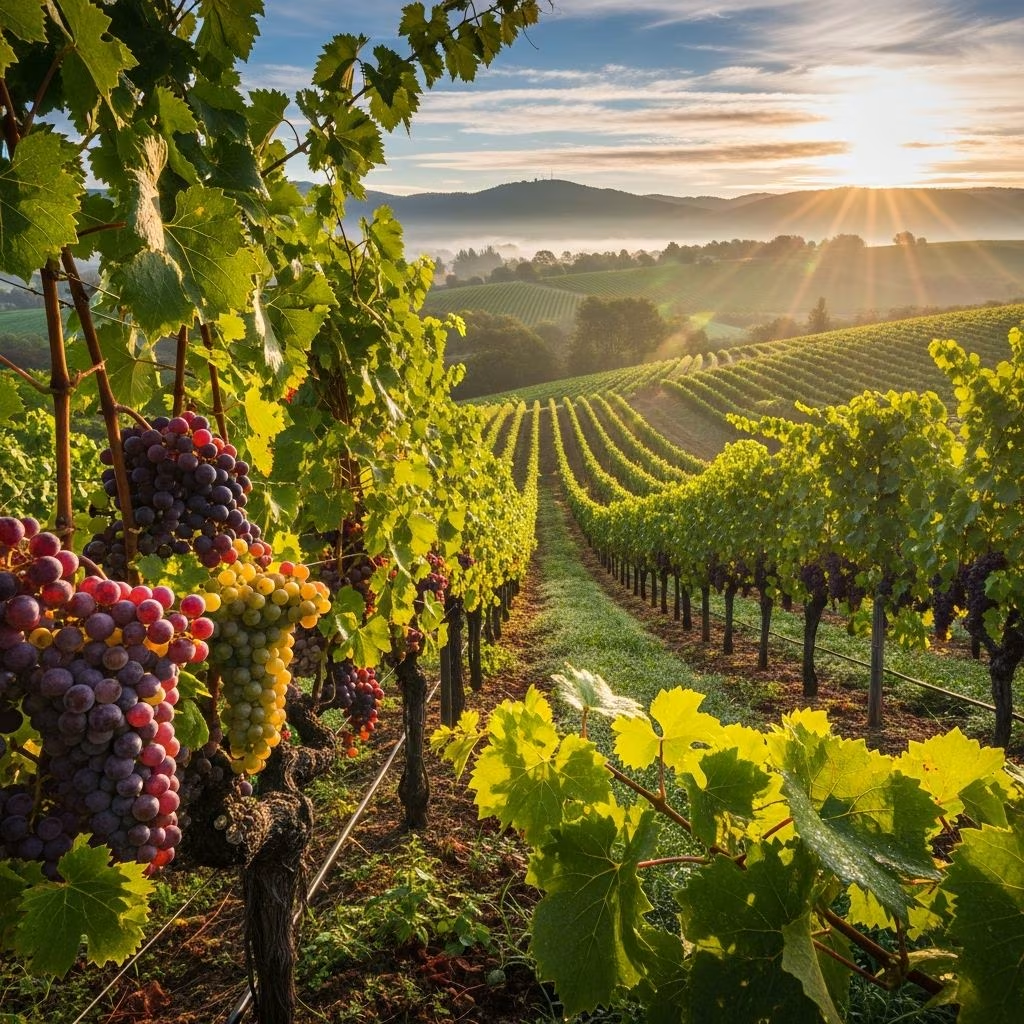
The wine industry faces an unprecedented challenge as rising global temperatures threaten traditional growing regions across Europe and beyond. Scientists and agricultural researchers are racing against time to develop grape varieties capable of thriving in warmer climates, turning to an unlikely solution: the genetic resources of wild grape species. This emerging field of climate-adaptive agriculture represents a critical intersection between conservation biology, plant genetics, and food security.
Grapevines have been cultivated for thousands of years, with modern wine production concentrated in specific geographic regions that offer ideal temperature and precipitation conditions. However, climate projections reveal a troubling future for these established vineyards. Research utilizing advanced climate modeling techniques predicts that by 2080, suitable growing regions for Vitis vinifera—the primary grape species used for wine and table grapes—will shrink dramatically, with potential losses reaching 1.5 million square kilometers under high-emission scenarios.
The timing of grape harvests has already begun shifting measurably. Analysis of historical harvest records spanning 400 years demonstrates that in European wine regions such as France and Switzerland, grape harvests began occurring significantly earlier during the latter half of the 20th century. Before 1980, earlier harvests were typically associated with warmer and drier spring and summer conditions. However, from 1981 onward, climate-driven warming has caused harvests to advance even in years without drought conditions, fundamentally altering the relationship between climate patterns and harvest timing.
This shift carries profound implications for wine quality. In cooler wine-growing regions traditionally associated with premium production, earlier harvests driven by excessive heat rather than optimal ripeness can compromise the chemical composition of grapes, affecting flavor profiles and overall wine characteristics.
While cultivated grape varieties struggle under stress, wild grape species demonstrate remarkable resilience to extreme climate conditions. Species such as Vitis rotundifolia and Vitis davidii exhibit exceptional adaptability to temperature fluctuations and environmental pressures, showing robust survival rates under climate scenarios that would devastate traditional vineyards.
The genetic advantages possessed by these wild relatives include:
These characteristics accumulated over millennia of natural selection in challenging environments represent an invaluable genetic library for modern plant breeding programs. By systematically incorporating these traits into cultivated varieties through controlled breeding, researchers can enhance the climate resilience of commercial grape production without sacrificing the quality characteristics consumers expect.
Contemporary plant breeding approaches combine traditional horticultural techniques with modern genomic analysis to accelerate the development of climate-adapted varieties. Researchers from leading agricultural institutions, including the Agricultural Genomics Institute at Shenzhen and collaborating universities, employ maximum entropy modeling to predict which wild species possess the most valuable traits for future growing conditions.
The integration of wild grape genetics into commercial cultivation follows multiple pathways:
Direct hybridization programs: Creating crosses between cultivated and wild species to combine the quality characteristics of established varieties with the resilience traits of wild relatives. This requires careful selection to maintain the organoleptic properties—flavor, aroma, and color—that define premium wines.
Rootstock development: Using wild species as rootstocks upon which cultivated varieties are grafted. This approach allows producers to benefit from the wild species’ environmental stress tolerance while maintaining the fruit quality of traditional varieties. Rootstocks play a crucial role in determining a plant’s ability to access water, tolerate soil conditions, and resist diseases.
Genomic selection: Utilizing DNA sequencing and bioinformatic analysis to identify specific genes responsible for climate resilience traits. Marker-assisted selection accelerates breeding timelines by enabling breeders to identify promising offspring without waiting for plants to reach maturity.
Beyond genetic approaches, vineyard management techniques offer immediate relief from climate-related stress. Research conducted at the University of California demonstrates that modifying trellis systems can substantially reduce the damaging effects of extreme heat on grape cultivation.
Traditional VSP (vertical shoot positioning) trellising concentrates vine canopies in ways that expose fruit to direct solar radiation. High-wire trellis systems, approximately 5.5 feet tall, allow foliage to create a natural shade effect over developing grapes. This architectural modification reduces direct sunlight exposure while maintaining adequate airflow to prevent fungal diseases—a critical balance in vineyard management.
The benefits of modified trellis systems include:
Rather than viewing climate change as an insurmountable obstacle, some researchers propose strategic relocation of grape varieties to regions where conditions remain suitable for their cultivation. Analysis of diverse grape varieties reveals that reshuffling geographic distribution could reduce potential production losses by approximately fifty percent under moderate warming scenarios and by one-third even under severe warming projections.
This strategy acknowledges that while traditional wine regions may become marginal for premium production, emerging regions at higher latitudes and altitudes may develop ideal conditions. Countries such as England, Scandinavia, and regions in eastern Europe and Canada are already beginning to establish vineyards as temperature patterns shift favorable conditions northward and upward in elevation.
However, geographic redistribution involves complex considerations:
| Consideration | Implications |
|---|---|
| Cultural and economic heritage | Wine regions carry centuries of tradition and regional identity; relocation disrupts established economic structures |
| Terroir authenticity | Wine quality depends on specific soil, climate, and environmental conditions; new regions produce different character profiles |
| Infrastructure development | Establishing viticulture in new regions requires significant investment in processing facilities and distribution networks |
| Consumer perception | Premium wines command prices based on established reputation; emerging regions must build credibility over time |
| Environmental impact | Expanding viticulture into new ecosystems requires careful environmental assessment and potential habitat considerations |
Research investigating eleven major wine grape varieties reveals that crop diversity serves as a fundamental adaptation strategy. Varieties studied include cabernet sauvignon, chardonnay, pinot noir, riesling, and sauvignon blanc, among others, each with distinct phenological characteristics and stress response patterns.
By cultivating multiple varieties suited to different climate scenarios, wine producers can maintain production resilience. Some varieties thrive under conditions that stress others, creating a portfolio approach to climate adaptation. This diversity also preserves the genetic resources needed for future breeding innovations and maintains the complexity of flavors that characterize quality wine production.
Climate projections indicate significant stress beginning within the next two decades, with dramatic changes accelerating through 2080. However, grapevines require 3-4 years to reach productive maturity, and breeding new varieties typically requires 15-20 years of development and testing. This compressed timeline necessitates immediate action in research and vineyard infrastructure adaptation.
Careful breeding can minimize quality differences, though grape chemistry is inherently influenced by growing conditions. Warmer-climate grapes typically develop different aromatic and flavor profiles. However, emerging regions experiencing temperature increases may produce wines with characteristics intermediate between historical and warm-climate profiles, potentially offering novel organoleptic experiences.
Yes. Trellis system modifications, irrigation management, canopy manipulation, and rootstock selection offer practical immediate interventions. Additionally, experimental plantings of diverse varieties or wild grape hybrids allow producers to evaluate performance on their specific properties before major commitment to new cultivars.
Government support through research funding, regulatory frameworks for new varieties, subsidies for infrastructure conversion, and international agreements on geographic designation protections proves essential. Policy frameworks must balance traditional wine region protection with support for emerging production areas.
The development of climate-resilient grapes represents a complex challenge requiring integration across multiple disciplines and stakeholder groups. Agricultural scientists contribute genomic expertise and breeding methodology. Vineyard managers provide practical knowledge about production constraints. Winemakers ensure that adaptation strategies maintain quality standards. Policy makers establish frameworks enabling innovation while protecting heritage regions. Consumers, through purchasing preferences, ultimately drive market incentives for climate-conscious production.
Success requires substantial investment in long-term research programs, farmer education, infrastructure modification, and international cooperation. The wine industry, representing significant economic value globally and cultural importance across many societies, possesses sufficient incentive to mobilize this effort.
As climate change continues reshaping agricultural landscapes worldwide, the lessons learned from viticulture adaptation extend beyond wine production. The strategies being developed—harnessing wild species genetics, implementing management innovations, strategically relocating crops, and maintaining diversity—offer insights applicable to numerous agricultural systems facing climate stress. The global food security challenge demands similar adaptive approaches across staple crops including cereals, legumes, and tree crops.
