

 Travel Essentials
 Travel Essentials

Delve into the controversial use of toad venom for cancer treatment and folk healing in China, balancing potential benefits against severe poisoning cases.
 Travel Essentials
Traditional Chinese medicine has long harnessed the potent secretions of toads for therapeutic purposes, blending ancient wisdom with modern scrutiny. These glandular extracts, rich in bioactive compounds, promise relief from ailments like cancer but carry lethal risks when mishandled.
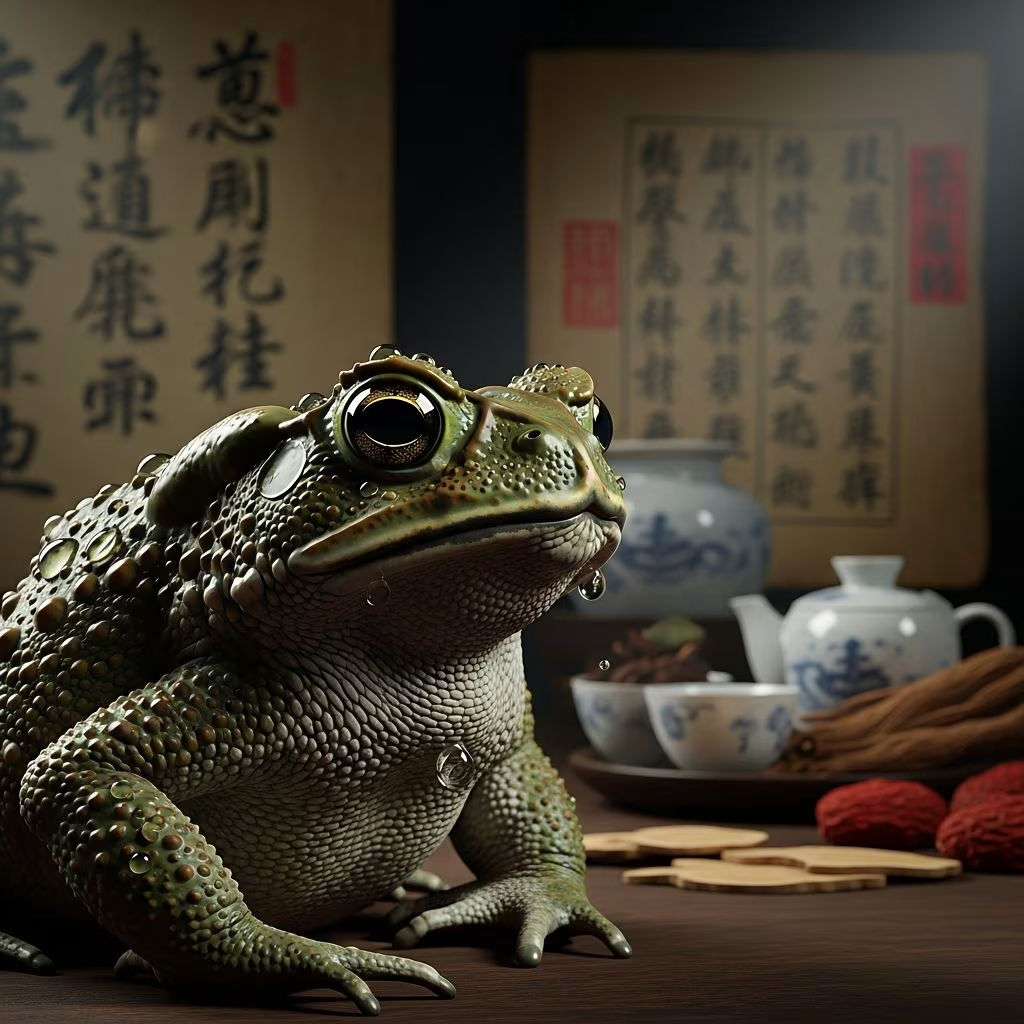
Documented in classic texts such as the Bencao Gangmu (Compendium of Materia Medica), toad venom has been valued for centuries. Known as Chansu or HuachanSu, it derives from the parotoid glands of toads in the Bufo genus, particularly Bufo bufo gargarizans. Healers prized it for detoxifying swellings, countering toxins, and invigorating the spirit.
Early applications targeted boils, carbuncles, and other inflammations. The venom’s drying process into a powder, then reconstitution for injection or ingestion, formed the basis of treatments. Over time, its reputation expanded to include hallucinogenic and spirit-awakening effects, reflecting a holistic approach to health.
Huachansu, a standardized toad venom extract, has drawn attention for potential anti-cancer properties. Clinical trials in China since the 1970s reported response rates of 10% in advanced hepatocellular carcinoma and 16% in lung cancer patients.
U.S. researchers at The University of Texas M.D. Anderson Cancer Center tested escalating doses from 10 to 90 mL/m²—up to eight times China’s standard 15 mL/m². Among 15 patients with liver, lung, or pancreatic cancers, 73% experienced only mild toxicities. Notably, 40% of liver cancer cases showed stable disease for a median of six months, with one achieving a 20% tumor reduction lasting over 11 months. No severe cardiac issues emerged.
| Dose Level (mL/m²) | Patient Cancers | Key Outcomes |
|---|---|---|
| 10-90 | Hepatocellular, NSCLC, Pancreatic | Stable disease in 40%; low toxicity |
| Standard China (15) | Hepatocellular, Lung | 10-16% response rates |
These findings suggest tolerable safety at high doses, though mechanisms remain under study. Compounds like bufadienolides may target cancer cells selectively.
Despite benefits, toad venom’s digitalis-like substances mimic heart medications, causing severe intoxication. Symptoms include nausea, vomiting, dizziness, weakness, and potentially fatal arrhythmias.
Ingestion of crude preparations amplifies dangers. A 19-year-old woman suffered life-threatening effects after eating cooked toad eggs, previously tolerating toad soup. She presented with numbness and collapse, highlighting even eggs’ toxicity.
Grade 1-2 toxicities predominate in trials, but unsupervised use escalates risks.
Tragic cases underscore misuse perils. In 2013, a Chinese woman died and her husband fell critically ill after boiling toads for liver cirrhosis and cancer. Toxins overwhelmed their systems despite curative intent.
Earlier, four children aged 7-11 perished in Taishan City from toad soup, a stark reminder of pediatric vulnerability. These incidents fuel calls for regulation, as desperation drives unverified home brews.
Traditional processing involves drying parotoid secretions, dissolving in water for injection, or boiling whole toads into soup. Chan Su appears in heart tonics like Kyushin or aphrodisiacs, often unregulated.
Risks heighten with:
Commercial Huachansu undergoes purification, reducing impurities versus folk soups.
China integrates toad venom into pharmacopeia, with ongoing trials. Internationally, agencies like the FDA scrutinize imports due to poisoning reports. No Western approvals exist, limiting access to research settings.
Recent investments, like $13 million in traditional remedies, signal revival amid vitamin skepticism. Yet, experts urge evidence-based validation over folklore.
| Use Type | Form | Benefits Claimed | Risks |
|---|---|---|---|
| Cancer Therapy | Huachansu injection | Tumor stabilization | Mild GI issues |
| Folk Healing | Toad soup/eggs | Detox, anti-swelling | Death, cardiac arrest |
| Tonics/Aphrodisiacs | Chan Su pills | Energy boost | Digoxin-like toxicity |
Scientists isolate active bufadienolides for targeted therapies, minimizing toxicity. Preclinical data show anti-proliferative effects on cancer lines, paving for phase trials. Combining with chemotherapy enhances efficacy without proportional side effects.
Pharmacogenomics may predict responders, personalizing use. Wildlife conservation concerns arise, as overharvesting threatens Bufo populations.
A refined extract from toad skin glands used in TCM for cancer, with low toxicity in trials.
No evidence supports it; multiple deaths prove it’s hazardous.
Only under medical supervision with standardized products like Huachansu.
Cardioactive steroids overload the heart, resembling digoxin overdose.
Yes, focusing on purified compounds for oncology.
While toad venom exemplifies TCM’s innovative potential, cases like the man’s severe reaction to soup—nausea, collapse—warn against self-medication. Consult professionals, prioritize clinical data, and respect nature’s potency. Bridging tradition and science could unlock safer applications, but caution remains paramount.
