

 Travel Essentials
 Travel Essentials

Learn essential rights for travelers facing ICE at US airports: remain silent, refuse searches, record interactions, and know when to seek legal help.
 Travel Essentials
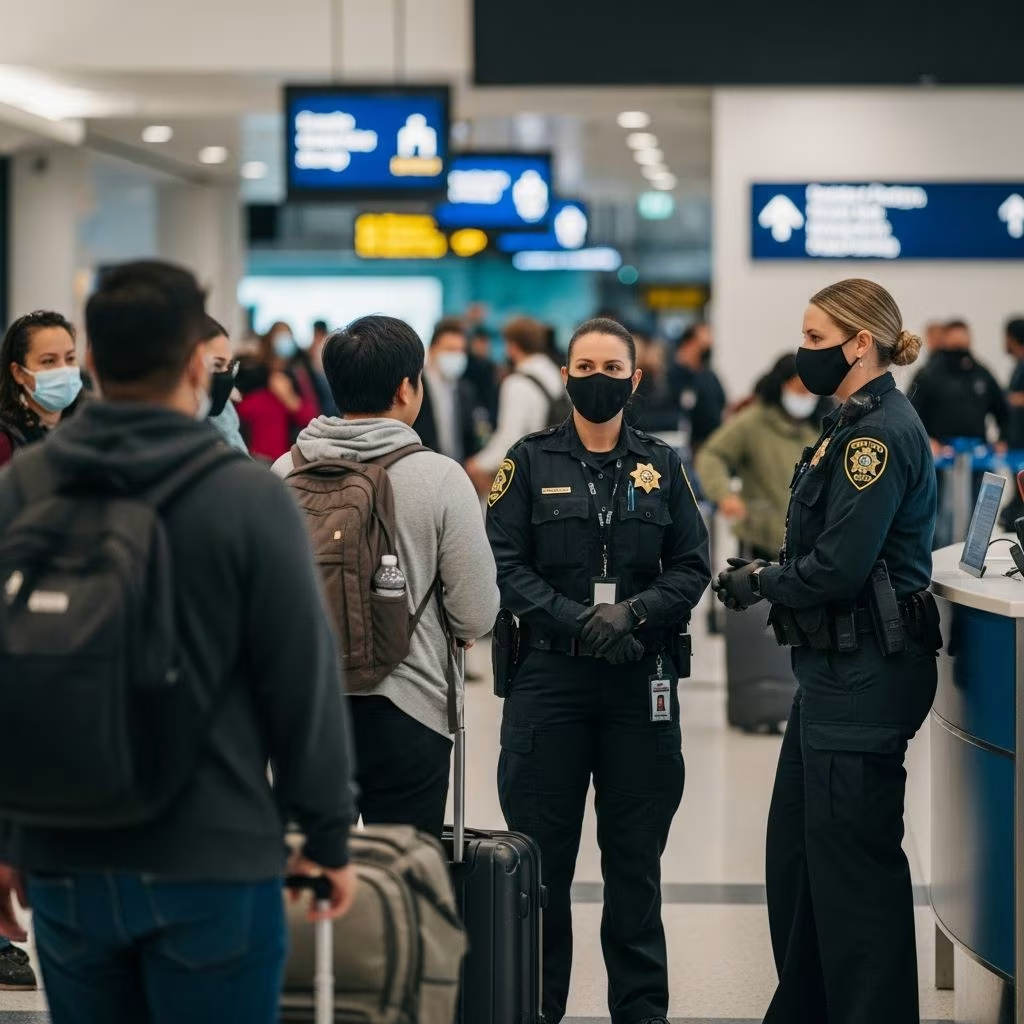
Encounters with Immigration and Customs Enforcement (ICE) agents at US airports have become more common, especially with recent deployments to assist TSA during high-traffic periods. Travelers, regardless of citizenship, need to understand their protections to avoid unnecessary delays or violations. This guide outlines key legal rights, drawing from constitutional principles and federal guidelines.
ICE agents, part of the Department of Homeland Security, focus on immigration enforcement. Unlike TSA officers, who prioritize aviation security, ICE can investigate immigration status. In airports, they may support checkpoints but must adhere to the Fourth Amendment against unreasonable searches and the Fifth Amendment right to silence.
Airports are public spaces with reduced privacy expectations, particularly at international terminals treated as border equivalents. Domestic travelers retain fuller protections. Recent 2026 announcements highlight ICE’s auxiliary roles, yet past actions show questioning on status occurs.
Yes, ICE can initiate contact, similar to any officer. A consensual encounter allows walking away. To detain, they require reasonable suspicion of immigration violations—not race, ethnicity, or appearance alone.
U.S. citizens and lawful residents should carry ID like passports or green cards if over 18. Undocumented individuals need not disclose status.
| Item | Search Rules | Citizen Rights | Non-Citizen Rights |
|---|---|---|---|
| Bags/Luggage | Warrantless if selected objectively post-TSA | Refuse consent; delays possible | Similar, but border rules apply internationally |
| Phone/Computer | Legal at borders without suspicion | Manual review ok; forensic needs warrant (disputed) | Full access possible; refuse risks seizure |
| Person/Body | Pat-down with cause; strip rare | Demand same-gender officer | Enhanced screening common |
Refuse consent verbally: “I do not consent to searches.” Devices at international points face ‘functional border’ scrutiny, allowing content checks without warrants. Back up data beforehand.
The First Amendment supports filming public-duty officers in airports, though as nonpublic forums, restrictions for ‘reasonable’ disruption prevention apply (e.g., blocking lines).
Post online cautiously; verify facts to avoid misinformation.
TSA focuses on threats to flights; answer safety questions but not status. ICE probes immigration. If unclear, ask agency affiliation. DACA or visa holders: Carry proof but silence if detained.
Traffic stops en route: Confirm if ICE; provide status docs if lawful, silence if not.
Post-incident: Contact experienced immigration attorney via directories.
Yes, via Federal Tort Claims Act (FTCA) for injuries, wrongful detention, or damage by federal agents. Complex exceptions exist; success requires proof. Bivens actions possible for constitutional breaches. Consult specialists promptly.
Non-citizens entering: Limited rights at ports; secondary inspection common. Families: Minors have protections; request child-appropriate handling. LGBTQ+ or activists: Racial profiling illegal; document patterns.
Prepare: Power of attorney for family, emergency contacts, digital wills for devices.
No mandatory carry for citizens, but advisable for quick resolution. Lawful non-citizens: Yes, over 18.
U.S. citizens: Birth certificate unnecessary; state no docs needed. Others: Show if lawful; silence otherwise.
Administrative warrants yes for immigration; criminal needs judicial. Brief detention ok with suspicion.
Expect searches; passwords not compelled, but refusal delays. Encrypt data.
Protected unless disruptive; challenge orders politely.
Empowerment comes from knowledge. While ICE enforces laws, constitutional safeguards apply. Stay informed as policies evolve in 2026.
