

 Travel Essentials
 Travel Essentials

Discover Iceland's premier national parks: Thingvellir, Snaefellsjokull, and Vatnajokull. Highlights include waterfalls, glaciers, canyons, and UNESCO sites perfect for hiking and wildlife viewing.
 Travel Essentials
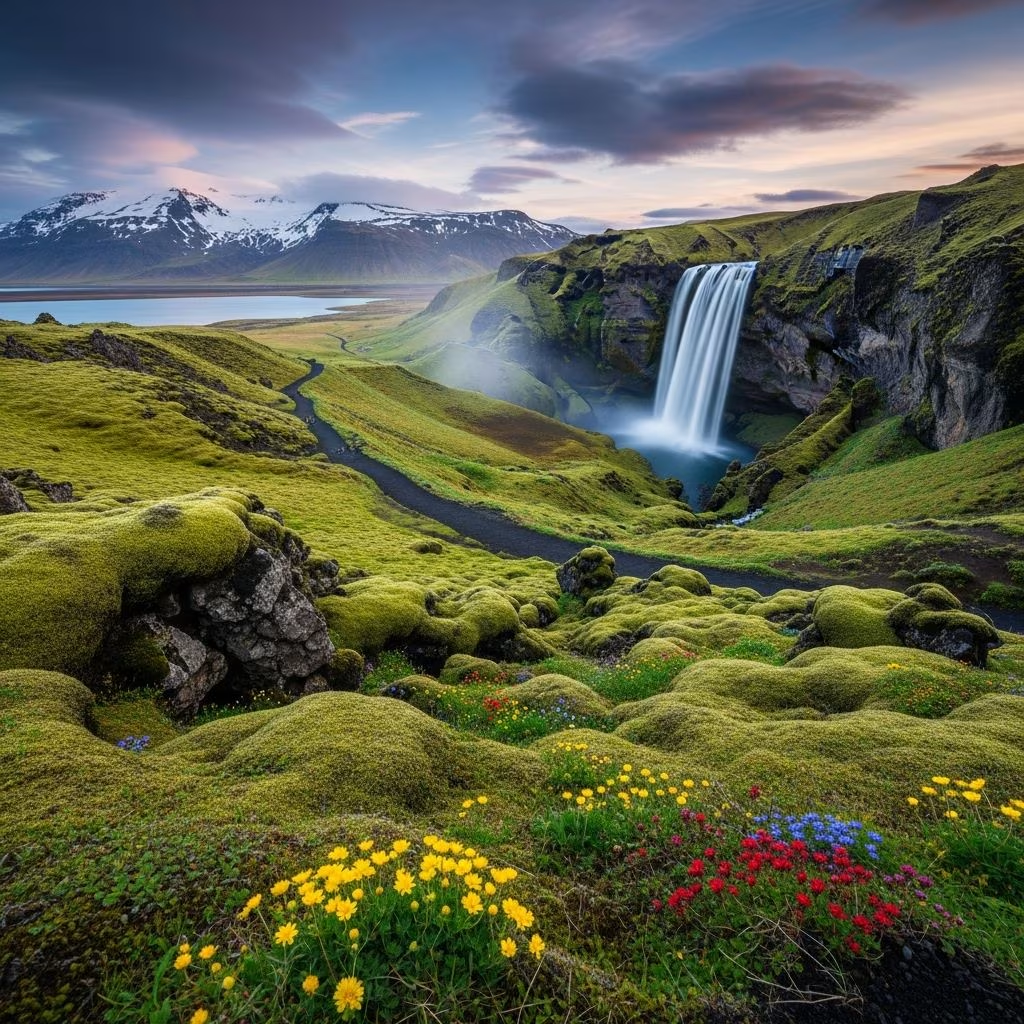
Iceland’s national parks protect some of the world’s most dramatic landscapes, where fire and ice collide in spectacular fashion. These protected areas span glaciers, volcanoes, canyons, and rift valleys, offering hikers, photographers, and nature lovers unparalleled access to raw natural beauty. With three main parks—Þingvellir, Snæfellsjökull, and Vatnajökull—they cover diverse terrains from coastal cliffs to inland ice caps, each telling a unique story of geological and historical significance.
Established in 1930, Þingvellir holds the distinction of being Iceland’s oldest national park and a UNESCO World Heritage Site since 2004. Spanning about 24,000 hectares in southern Iceland, it sits astride the Mid-Atlantic Ridge, the divergent boundary between the North American and Eurasian tectonic plates. This unique positioning creates visible fissures and a rift valley that draw geologists from around the globe.
The park’s Þingvallavatn Lake, covering 84 square kilometers, adds serene beauty to the rugged terrain. Visitors can explore Almannagjá ravine, a dramatic fault line where ancient parliamentary assemblies once convened from 930 to 1973. Key attractions include Öxarárfoss waterfall, with its cascading waters over basalt columns; Silfra fissure, famous for crystal-clear snorkeling between continents; and Lögreggberg, or Law Rock, a historic assembly site. The park also features Þingvellir Church and the Prime Minister’s summer house, blending cultural heritage with nature.
Hiking trails weave through moss-covered lava fields and alongside bubbling streams, ideal for all skill levels. Birdwatchers spot gyrfalcons and ravens, while the area’s tectonic activity underscores Iceland’s dynamic geology. Just 45 minutes from Reykjavík, it’s an accessible first stop for many travelers.
Covering roughly 183 square kilometers on the Snæfellsnes Peninsula, Snæfellsjökull National Park is often called “Iceland in miniature” for packing diverse features into a compact area. Created in 2001, it encircles the iconic Snæfellsjökull glacier-capped volcano, standing 1,446 meters tall and immortalized in Jules Verne’s Journey to the Center of the Earth.
From Reykjavík, the drive takes about 2.5 to 3 hours, revealing mesmerizing coastal and volcanic scenery. Highlights include Lóndrangar basalt sea stacks rising dramatically from the ocean; Djúpalónssandur black pebble beach with its lifting stones testing Viking strength; and Vatnshellir Cave, a lava tube offering guided tours into underground wonders. Bird cliffs teem with puffins and seabirds, while rocky coves and lava plateaus provide endless photo ops.
The park reaches the coast, unique among Iceland’s parks, showcasing marine life alongside glaciers and fishing villages. Guided hikes to the glacier summit offer panoramic views, but weather can change rapidly—always check forecasts. A visitor center near Malarrif provides maps and facilities.
Vatnajökull National Park, founded in 2008, dwarfs the others at over 12,000 square kilometers—more than 13% of Iceland’s landmass. Named for its massive ice cap, it merges former parks like Skaftafell (1967) and Jökulsárgljúfur (1973), protecting 30 outlet glaciers, active volcanoes, and vast wilderness.
In the south, Skaftafell features Svartifoss waterfall framed by hexagonal basalt columns, Hundafoss, and Mágnúsarfoss. Trails lead to Hvannadalshnjúkur, Iceland’s highest peak at 2,110 meters on Öraefajökull volcano. Baejarskáðaskógur forest offers rare woodland hikes amid glacial valleys.
Jökulsárlón glacial lagoon, with floating icebergs, is a must-see, especially at dawn or dusk. Nearby Diamond Beach sparkles with ice chunks on black sands. Boat tours navigate the lagoon, revealing blue ice caves in winter.
Jökulsárgljúfur boasts Dettifoss, Europe’s most powerful waterfall; Selfoss; Hafragilsfoss; and Ásbyrgi Canyon, a horseshoe-shaped wonder mythically linked to Odin’s horse. Ódáðahraun’s volcanic desert contrasts lush areas, while Laki craters recall the 1783 eruption.
The park’s diversity—from Bárðarbunga volcano to Holuhraun lava field—highlights fire-ice interplay. Remote sections like Askja caldera require 4×4 vehicles and permits.
Iceland’s parks demand preparation: pack layers, sturdy boots, and download offline maps. Entry is free, but fees apply for tours or camping. Summer (June-August) offers midnight sun; winter brings northern lights but shorter days.
| Park | Size (sq km) | Drive from Reykjavík | Top Activity |
|---|---|---|---|
| Þingvellir | 240 | 45 min | Snorkeling Silfra |
| Snæfellsjökull | 183 | 2.5-3 hrs | Glacier hike |
| Vatnajökull | 12,000+ | 5-7 hrs | Ice lagoon boat |
Rent a 4×4 for gravel roads; respect “leave no trace” principles. Guided tours enhance safety in glaciers or caves.
These parks safeguard arctic foxes, reindeer, seals, and seabirds. Vatnajökull hosts rare gyrlfalcons; Snæfellsjökull, puffins. Climate change threatens glaciers—visit responsibly to aid preservation efforts.
Three main ones: Þingvellir, Snæfellsjökull, and the expansive Vatnajökull.
Yes, covering over 14% of Iceland and featuring the continent’s biggest ice cap by volume.
Designated sites only; permits required in Vatnajökull for backcountry.
Summer for accessibility; winter for auroras, but roads may close.
Yes, with easy trails at Þingvellir and Skaftafell suitable for kids.
These parks encapsulate Iceland’s essence—pristine, powerful, and ever-changing. Plan meticulously for a trip blending adventure and awe.
