

 Travel Essentials
 Travel Essentials

Explore how museums at historic Indian boarding schools illuminate the trauma of forced assimilation and the resilience of Native survivors via artifacts, oral histories, and interactive displays.
 Travel Essentials
Across the United States, museums embedded within the remnants of former Indian boarding schools are emerging as vital centers for truth-telling and cultural reclamation. These institutions collect survivor testimonies, display haunting artifacts, and educate visitors on the U.S. government’s century-long campaign to erase Native identities. By centering Indigenous voices, they transform sites of profound trauma into beacons of resilience and recovery.
From the 1870s through the mid-20th century, the federal government operated over 400 boarding schools designed to ‘civilize’ Native children by severing them from their heritage. Children as young as five were ripped from families, transported to remote facilities, and punished for speaking their languages or practicing traditions. This system inflicted physical beatings, emotional isolation, and cultural annihilation, leaving scars that echo through generations.
Investigations reveal nearly 1,000 child deaths at these schools, with unmarked graves at 65 sites across 74 locations. Physical abuse was rampant, alongside reports of sexual violence and neglect. The policy, rooted in the 1819 Civilization Fund Act, aimed to dismantle tribal societies by targeting the young, training them for menial labor while banning all traces of ‘Indianness’.
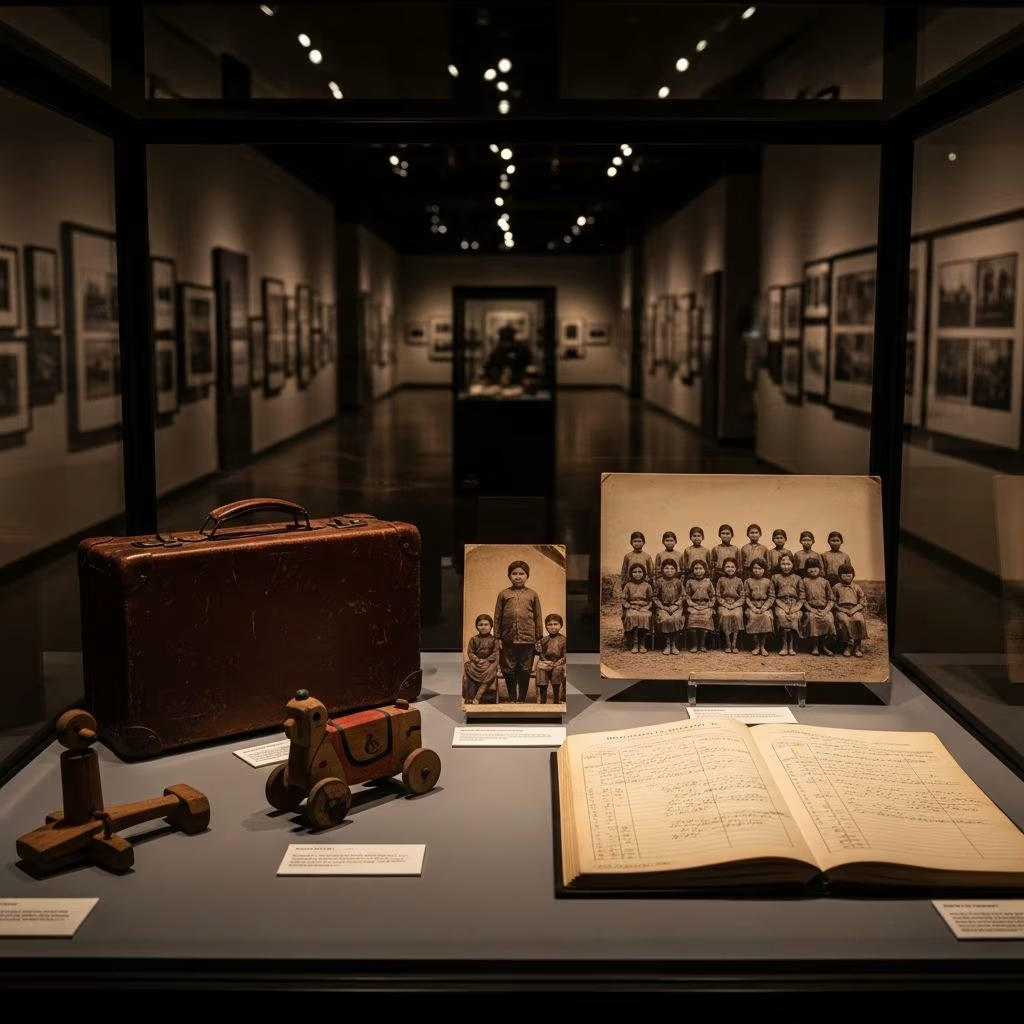
Today’s museums at these locations prioritize personal narratives over sterile history. Exhibits feature photographs, student-crafted items, and video interviews that humanize the statistics. For instance, traveling shows like Away From Home: American Indian Boarding School Stories showcase individual tales of heartbreak alongside acts of defiance, highlighting how students adapted, resisted, and ultimately reshaped the institutions meant to destroy them.
These displays reveal nuanced responses: some students escaped, others formed secret support networks fostering ‘Pan-Indian’ solidarity, laying groundwork for sovereignty movements.
In 2021, U.S. Interior Secretary Deb Haaland launched the Federal Indian Boarding School Initiative, marking the government’s first formal acknowledgment of this history. Two investigative reports detailed the scale of abuse and mortality, while a ‘Road to Healing’ tour gathered survivor accounts nationwide. A $3.7 million grant to the National Native American Boarding School Healing Coalition funds an archive of video oral histories, complemented by an interactive database of school sites.
Partnering with the Smithsonian National Museum of Natural History, the project aims for public access, ensuring stories reach beyond tribal communities. Final site visits in 2024 targeted Utah and Hawaii, closing loops on Pacific Islander experiences.
| Museum/Institution | Key Exhibit | Focus Areas | Duration/Status |
|---|---|---|---|
| The James Museum | Away From Home | Survivor art, photos, resistance stories | Jan 28–Mar 16 (past); traveling |
| Heard Museum | Away From Home (updated Boarding School exhibit) | Longest-running U.S. boarding school display since 2000 | Ongoing |
| Schingoethe Center, Aurora University | Away From Home | Assimilation policies, generational impacts | Opens Jan 28, 2025 |
| Autry Museum | Native American Boarding School Oral/Visual Stories | Alumni interviews (Shelton, Smith, etc.) | Permanent archive |
These venues integrate art by boarding school attendees, whose works reflect trauma’s lasting imprint. Chief Curator Emily Kapes notes how such pieces alongside documents amplify generational effects.
Boarding schools intended total remake, but Native ingenuity prevailed. Students organized clandestine language classes, crafted cultural symbols in plain sight, and built intertribal bonds that outlasted the regime. Graduates spearheaded reforms, entering politics and founding civil rights groups. Today, the few remaining schools—now tribally controlled—teach heritage languages and ceremonies, inverting the original mission.
Exhibits delve into these dynamics: escape attempts, creative accommodations, and faith-fueled perseverance. A photography book from the Heard Museum compiles diverse author insights, underscoring multifaceted responses.
The oral history push represents a milestone: first systematic collection of survivor voices. Funded federally, it documents systemic abuses while honoring resilience. Interactive maps plot schools’ timelines, from 1819 origins to 20th-century shutdowns, aiding research and remembrance.
Challenges persist—many elders have passed without sharing—but coalitions ensure legacies endure. Public sharing via Smithsonian collaborations promises broader education, urging national reflection.
Travelers seeking meaningful journeys find these museums profound. The Heard Museum in Phoenix offers immersive permanence; The James in St. Petersburg pairs art with history; Aurora University’s center debuts fresh installations. Each invites reflection on America’s hidden past.
Plan visits with cultural sensitivity—many sites hold graves, ceremonies. Entry fees support preservation; virtual tours expand access.
These museums catalyze healing, funding language revitalization and therapy. They challenge textbooks, embedding truth in public memory. As tribes reclaim narratives, exhibits foster pride, countering shame imposed long ago.
Generational trauma manifests in health disparities, but storytelling rebuilds bonds. Federal commitments signal policy shifts, potentially aiding reparations.
What were Indian boarding schools?
Government-run facilities from 1819–1970s that forcibly assimilated Native children, banning languages and cultures.
How many deaths occurred?
Interior reports confirm nearly 1,000, with graves at 65+ sites.
Are these museums still operating?
Yes, many host permanent or traveling exhibits focused on survivor stories.
What’s the Federal Indian Boarding School Initiative?
Launched 2021 by Deb Haaland; includes reports, tours, and oral archives.
Can anyone visit?
Most are public; check schedules for traveling shows like Away From Home.
How do these sites aid healing?
By archiving voices, educating outsiders, and supporting tribal recovery efforts.
Museums at boarding school sites are not mere repositories—they are active reclamation projects. By weaving survivor threads into national fabric, they ensure ‘never again’ resonates. Visitors leave transformed, carrying forward calls for justice and cultural vitality.
