

 Travel Essentials
 Travel Essentials

Discover the 10.6-mile Indianapolis Cultural Trail, linking six cultural districts with bike paths, public art, gardens, and bike-share stations for an immersive downtown adventure.
 Travel Essentials
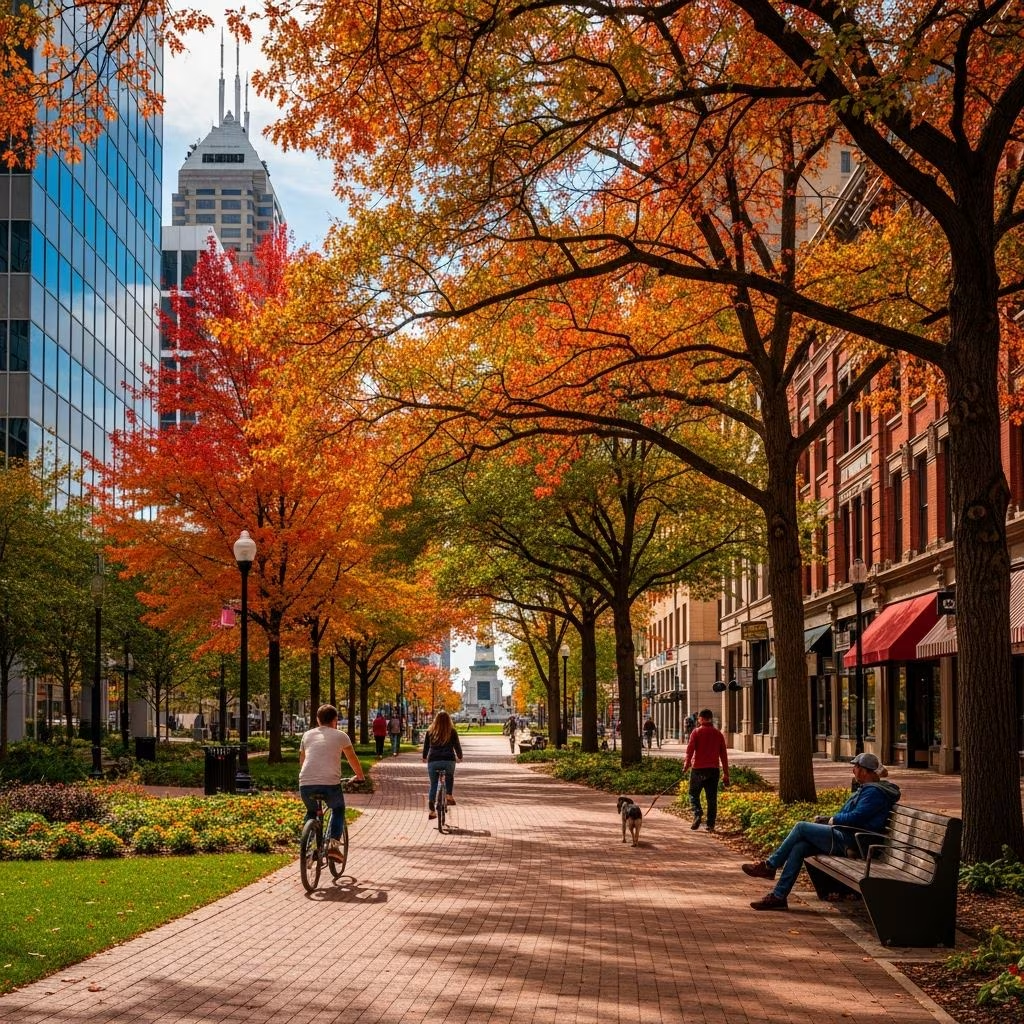
The Indianapolis Cultural Trail stands as a transformative urban pathway, weaving together the heart of Indiana’s capital city into a cohesive tapestry of culture, nature, and accessibility. Spanning over 10 miles, this dedicated network invites cyclists, pedestrians, and families to traverse downtown’s most dynamic neighborhoods without the hassle of vehicular traffic. Launched as a visionary project, it has evolved into a vital artery for both locals and visitors, fostering healthier lifestyles and deeper connections to the city’s rich heritage.
What began as an ambitious initiative to revitalize downtown Indianapolis has blossomed into one of the nation’s most celebrated pedestrian and cycling infrastructures. Officially opening in phases around 2013, the trail quickly garnered international acclaim, with urban planning experts hailing it as a bold leap forward in city design. Today, it stretches 10.6 miles, linking six distinct cultural districts: Mass Ave, Market East, Fountain Square, Canal and White River State Park, Indiana Avenue, and the Wholesale District.
Funded through private philanthropy rather than public taxes, the trail’s maintenance and expansions underscore a model of community-driven urban enhancement. Recent extensions have integrated additional greenways, such as connections to the Fall Creek Greenway and White River Wapahani Trail, adding interpretive panels, stormwater gardens, and enhanced pedestrian signals. These upgrades include thousands of perennials, new benches, bike racks, and even decorative pavers that guide users intuitively along the route.
Annual visitor numbers exceed one million, encompassing commuters on bikes, families with strollers, and sports enthusiasts heading to games at nearby venues like those for the Colts or Pacers. This popularity reflects not just utility but a deliberate design prioritizing safety, beauty, and inclusivity.
The trail’s brilliance lies in its seamless integration with Indianapolis’s cultural fabric. Starting from points like White River State Park or the Monon Trail connection, users embark on a loop that showcases each district’s unique personality.
Each segment is marked by distinctive blue-painted lanes and special pavers, ensuring effortless navigation even for first-timers. The flat terrain and frequent crossings—equipped with pedestrian-activated signals—make it welcoming for all skill levels.
Beyond connectivity, the trail is an open-air gallery and botanical showcase. Over 200 public art installations dot the path, from monumental sculptures to interactive light displays. Gardens dedicated to peace advocates feature native plantings and reflective benches, creating serene pockets amid urban hustle.
Stormwater management planters double as aesthetic elements, filtering runoff while blooming with perennials and shrubs. These features not only beautify but educate, with plaques detailing local history, ecology, and the trail’s development. Travelers often pause at spots like the American Legion Mall or University Park, where architecture meets greenery in harmonious displays.
| District | Art Highlight | Green Feature |
|---|---|---|
| Mass Ave | Street murals and galleries | Urban tree canopies |
| Canal Walk | Sculptures along water | Stormwater gardens |
| Fountain Square | Interactive installations | Native shrub beds |
| Indiana Ave | Historical interpretive art | New tree plantings |
This table summarizes standout elements, illustrating how art and nature are thoughtfully distributed.
Cycling dominates the trail experience, thanks to the Indiana Pacers Bikeshare program. With over 525 bright yellow bikes at 50+ stations, rentals are affordable and app-based, allowing spontaneous adventures. Stations cluster around hotels, arenas, and transit hubs for maximum convenience.
Routes vary by interest:
Safety is paramount: separated lanes, ample lighting, and driver awareness at crossings minimize risks. E-bikes are available for those seeking assistance on slight inclines.
For curated insights, join weekly guided tours from April to October. These relaxed bike or walking excursions—typically Saturdays—cover the full trail, delving into neighborhood histories, art backstories, and architectural gems. Proceeds support trail upkeep, ensuring sustainability.
Specialty options cater to themes like foodie trails linking eateries or history-focused walks highlighting Indiana Avenue’s jazz era. Self-guided alternatives thrive with free maps at indyculturaltrail.org, plus QR codes for audio narratives.
To maximize enjoyment:
Families appreciate wide paths and playground-adjacent stops, while fitness buffs link to the Monon for marathon training.
In an era of car-centric cities, the Indianapolis Cultural Trail exemplifies sustainable transport. It reduces congestion, promotes physical activity, and boosts local economies by funneling foot traffic to businesses. Studies from urban advocacy groups praise its role in enhancing livability, with ripple effects to connected greenways.
As expansions continue, the trail solidifies Indy’s reputation as a bike-friendly destination, drawing comparisons to global icons like Boston’s Freedom Trail but with a modern, multi-modal twist.
Yes, access is completely free. Bike rentals via Pacers Bikeshare start at low hourly rates.
Walking averages 3-5 hours; biking 1-2 hours, depending on stops.
Yes, frequent at parks, markets, and stations.
Absolutely, on a leash in designated areas.
Some sections have cover; check forecasts and opt for indoor-linked tours.
Yes, flat paths and short segments make it family-friendly.
