

 Travel Essentials
 Travel Essentials

Discover India’s most captivating stepwells—from Chand Baori’s geometric precision to Rani-ki-Vav’s carvings—and the stories beneath them.
 Travel Essentials
Beneath the surface of India’s ancient landscapes lie some of the world’s most extraordinary architectural achievements. Stepwells, known locally as baolis, vavs, and jhalras, represent a unique fusion of functional engineering and artistic brilliance. These vertical water structures descend deep into the earth, featuring intricate staircases that allow access to underground water sources while providing cooling refuge during scorching summers. The construction of stepwells flourished across India from the 6th century onwards, with peak development occurring during the 11th to 16th centuries. Today, these monuments stand as testaments to the sophisticated understanding of water management, architectural design, and community gathering spaces that characterized ancient and medieval Indian civilization.
Stepwells emerged across India with particular concentration in specific regions. The southwestern areas of Gujarat became the epicenter of stepwell construction around 600 AD, from where the practice spread northward to Rajasthan and eventually to other parts of northern and western India. Gujarat and Rajasthan remain the primary repositories of these architectural treasures, hosting the most significant and well-preserved examples. While stepwells also appear in Delhi, Karnataka, and Telangana, the states of Gujarat and Rajasthan contain the highest concentration of monumental structures, making them essential destinations for travelers interested in this distinctive form of heritage architecture.
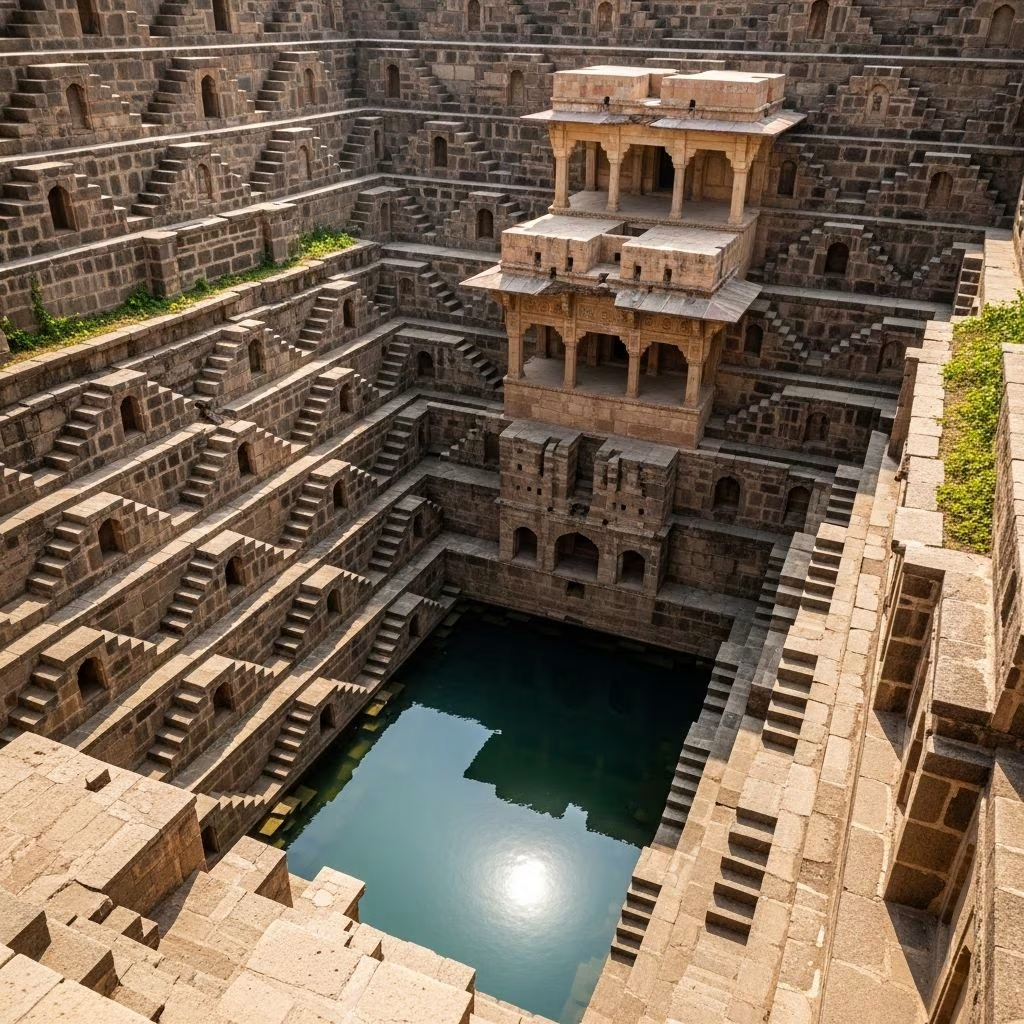
Located in the village of Abhaneri in Rajasthan, approximately two hours’ drive from Jaipur, Chand Baori represents perhaps the most visually striking stepwell in all of India. This architectural marvel was constructed during the 9th century by King Chanda of the Nikhumb dynasty, initially serving as a water reservoir and community gathering place for both local inhabitants and nobility. What distinguishes Chand Baori from other stepwells is its extraordinary scale and mathematical precision. The structure descends 13 stories deep—approximately 100 feet into the ground—featuring an astonishing 3,500 narrow steps arranged in perfectly symmetrical patterns. These steps create an intricate criss-cross formation reminiscent of a faceted diamond, descending toward a central tank measuring 35 meters across.
The sheer magnitude and geometric perfection of Chand Baori have captured global attention far beyond academic circles. The stepwell has served as a filming location for numerous Bollywood productions and international cinema, appearing in high-profile Hollywood movies that have showcased its striking visual geometry to worldwide audiences. This prominence in popular culture has transformed Chand Baori into one of the most recognizable stepwells internationally. Visitors traversing the narrow steps experience both the technical achievement of medieval engineering and the aesthetic vision of architects who understood how to manipulate space, light, and symmetry to create spaces of profound visual impact.
Situated on the banks of the River Saraswati in Patan, Gujarat, Rani-ki-Vav stands as the supreme example of stepwell architecture and stands as India’s sole UNESCO World Heritage Site dedicated to a stepwell. Constructed in 1063 by Rani Udayamati, the wife of Chaulukya king Bhimdev I, this stepwell was built as a memorial to her deceased husband. The monument emerged from the once-powerful Chaulukya kingdom, which governed extensive territories across Gujarat and Rajasthan during the 11th century. Rani-ki-Vav represents not merely a functional water extraction system but rather a profound artistic statement combining engineering sophistication with sculptural excellence.
The stepwell descends through successive tiers covered entirely with intricate carved details depicting deities, particularly Vishnu, alongside elaborate ornamental motifs that demonstrate the exceptional skill of medieval stonemasons. What makes the current preservation state particularly remarkable is that the monument’s survival owes itself to an historical accident. A natural disaster filled the stepwell with silt during the 13th century, essentially placing it into suspended animation. When archaeologists rediscovered and excavated the structure in the 1940s, the protective silt layer had preserved the original carvings with minimal degradation. The UNESCO recognition acknowledges both the monumental scale of the superstructure and the unparalleled intricacy of the sculptural elements adorning nearly every exposed stone surface.
While Adalaj Stepwell in central Gujarat cannot rival the scale of Rani-ki-Vav or the geometric drama of Chand Baori, this 15th-century structure represents a masterpiece of stonemason artistry in a more intimate scale. The stepwell functions as a jewel-box of architecture, featuring column-supported arcades arranged around a central octagonal well shaft. Every surface displays intricate carved embellishments including delicate floral patterns, elephant motifs, depictions of deities, and ornamental designs showcasing the refinement possible in stepwell design. The aesthetic philosophy underlying Adalaj emphasizes quality and intricacy over sheer scale, creating a space that rewards close observation and detailed appreciation of carved elements.
Remarkably, one of India’s most impressive stepwells exists not in a remote historical site but rather amidst the bustling commercial streets of New Delhi, situated near Connaught Place. Agrasen Ki Baoli represents Islamic architectural traditions applied to stepwell design, displaying stepped tiers of arches decorated with stucco ornamentation and featuring niches originally intended for ceremonial lanterns that illuminated after-dark activities. The structure was commissioned by Daulat Khan, an influential official within Delhi’s Lodi Dynasty government, during the early 16th century. This stepwell features more than a hundred carefully constructed steps and was built using distinctive rock stones protected by the Archaeological Survey of India. The existence of such a significant monument in India’s capital city, though often overlooked by tourists focused on more famous attractions, demonstrates how stepwell construction extended throughout the Indian subcontinent rather than remaining confined to specific regions.
Beyond the most celebrated examples, India contains numerous other stepwells offering distinct architectural or historical significance:
The development of stepwell architecture follows a discernible historical trajectory. Initial Hindu artisans viewed stepwell construction as an art form, developing distinctive aesthetic approaches. However, stepwell construction reached its zenith during Muslim rule spanning the 11th to 16th centuries, when Persian and Islamic design principles merged with Indian architectural traditions. This synthesis produced the most elaborate and monumental examples, combining Hindu sculptural traditions with Islamic geometric precision and decorative approaches. The resulting structures transcended purely utilitarian functions, becoming community gathering places where temperature remained consistently cool, social interactions occurred, and religious ceremonies were performed. This multifunctional purpose explains the elaborate decoration of spaces that purely functional concerns would not justify.
| Stepwell | Location | Depth/Floors | Best Time to Visit |
|---|---|---|---|
| Chand Baori | Abhaneri, Rajasthan (2 hours from Jaipur) | 13 stories / 100 feet | October to March |
| Rani-ki-Vav | Patan, Gujarat | 7 levels | October to March |
| Adalaj Stepwell | Central Gujarat | Multiple tiers | October to March |
| Agrasen Ki Baoli | New Delhi (Connaught Place) | 100+ steps | October to March |
| Toorji Ka Jhalra | Jodhpur, Rajasthan | Multiple levels | October to March |
Many stepwells face deterioration from centuries of exposure and changing water availability patterns. Recent years have witnessed significant conservation initiatives aimed at restoring these architectural treasures. The Toorji Ka Jhalra in Jodhpur and Moosi Rani Sagar stepwell in Alwar have undergone comprehensive cleanup and restoration, successfully attracting both tourist interest and local community engagement. The Bansilalpet stepwell in Hyderabad represents an innovative approach to heritage preservation through adaptive reuse, transforming the structure into a performance venue that generates revenue while maintaining public engagement with the monument. These revival efforts demonstrate that stepwells need not remain exclusively as historical artifacts but can serve living cultural functions within contemporary Indian society.
Travelers interested in experiencing India’s stepwells should plan visits during the cooler months from October through March, when temperatures remain pleasant for exploring these often-unshaded underground structures. The majority of significant stepwells concentrate in Gujarat and Rajasthan, making regional itineraries practical. Many stepwells, particularly those in major tourist destinations, remain accessible year-round, though summer visits require early morning or late afternoon timing to avoid extreme heat. Proper footwear with strong grip proves essential, as ancient stone steps often become slippery, particularly in deeper sections where moisture accumulates. Photography enthusiasts should arrive during early morning hours when direct sunlight illuminates the intricate carvings without creating harsh shadows.
Stepwells function as ingenious responses to specific environmental and social challenges. In regions experiencing seasonal or unpredictable rainfall, these structures provided reliable water access by descending to underground water tables. The stepped design served multiple purposes beyond water extraction: the steps themselves became gathering spaces where communities convened for social, commercial, and religious purposes. The cool temperatures maintained underground created natural refuge during extreme heat. The architectural emphasis on carved decoration transformed purely functional structures into spaces of aesthetic significance, reflecting the cultural values of their patrons and builders. Understanding these multifunctional aspects helps visitors appreciate stepwells as sophisticated cultural achievements rather than merely ancient wells.
The geometric perfection and visual drama of stepwells, particularly Chand Baori’s criss-cross pattern descending into shadow, create exceptional photography opportunities. The interplay of light and shadow across carved surfaces changes throughout the day, offering different visual experiences from dawn through dusk. Many stepwells have gained increased international exposure through social media, attracting photography enthusiasts seeking compelling images. This renewed interest has paradoxically aided conservation efforts by generating tourist revenue supporting maintenance and restoration initiatives.
India’s stepwells represent far more than historical curiosities or functional water extraction systems. These structures embody the sophisticated engineering knowledge, aesthetic vision, and community values of ancient and medieval Indian civilizations. From Chand Baori’s geometric drama to Rani-ki-Vav’s sculptural elegance, each stepwell tells stories of the cultures that created them while continuing to inspire wonder in contemporary visitors. Their preservation and revival ensure that future generations can experience these underground marvels and understand the depth of India’s architectural heritage.
