

 Travel Essentials
 Travel Essentials

Explore India’s ancient stepwells—architectural marvels that once solved water scarcity and still dazzle with intricate carvings and design.
 Travel Essentials
Stepwells, known as baolis or vavs in local languages, represent some of India’s most ingenious responses to water scarcity. These multi-level structures descend into the earth, providing access to groundwater while doubling as social and artistic hubs. Predominantly found in the arid states of Rajasthan and Gujarat, they date back over a millennium, blending functionality with breathtaking artistry.
Stepwells emerged around 600 AD in Gujarat’s southwestern regions, spreading northward to Rajasthan and beyond during Hindu and later Muslim rule from the 11th to 16th centuries. Constructed during dry seasons, they collected rainwater in underground reservoirs, with symmetrical flights of steps ensuring year-round access even as water levels fluctuated. Beyond utility, these sites fostered community gatherings, religious rituals, and even royal ceremonies, their walls adorned with sculptures of deities, flora, and fauna.
In Rajasthan’s deserts and Gujarat’s semi-arid plains, stepwells were lifelines. Kings and queens commissioned them as acts of piety or memorials, turning necessity into grandeur. Today, many stand as testament to medieval hydrology and craftsmanship, some revived for tourism.
Rajasthan boasts some of the deepest and most visually striking stepwells, often nestled in remote villages or bustling cities.
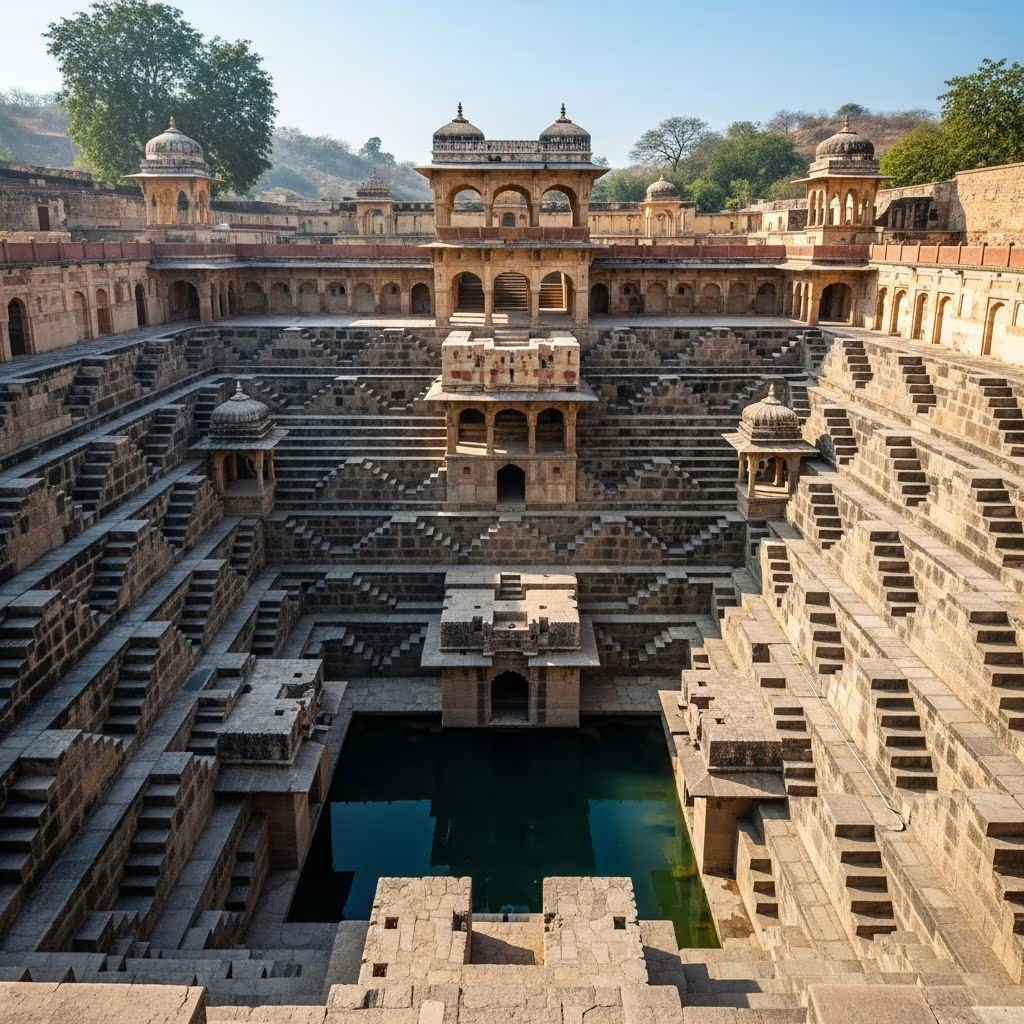
In the village of Abhaneri, about 90 km from Jaipur, lies Chand Baori, one of India’s largest and deepest stepwells. Built between 800-900 CE by King Chanda of the Nikumbh dynasty, it plunges 13 stories (30 meters) with 3,500 precisely arranged steps in a hypnotic crisscross pattern. The sheer scale and symmetry evoke a diamond’s facets, making it a favored filming location for Bollywood and Hollywood productions.
Adjacent Harshat Mata Temple adds spiritual allure. Visit early morning to avoid crowds; entry is free, but guides offer context for INR 100-200. Combine with a Jaipur day trip—it’s a 2-hour drive.
Amid Jodhpur’s blue-painted streets, Toorji Ka Jhalra, built in 1740 by Queen Gulab Rai, has been meticulously restored. Its wide platform and carved pavilions once hosted festivals; today, it’s a serene spot for photos and reflection. Recent cleanups have boosted tourism, drawing locals for evening events. Reach it on foot from the clock tower; no entry fee.
Gujarat excels in ornate stepwells, many UNESCO-recognized for their sculptural finesse.
The grand Rani-ki-Vav in Patan, constructed in 1063 by Queen Udayamati for her husband King Bhimdev I, is India’s only UNESCO-listed stepwell. Buried by silt until the 1940s, its re-excavation revealed over 1,000 intricate carvings of Vishnu avatars, celestial beings, and daily life scenes across tiered galleries. Spanning 20 meters deep, it’s a sculptor’s dream, best visited at sunset for golden hues. Entry: INR 30; 2 hours from Ahmedabad.
Near Gandhinagar, the 15th-century Adalaj Ni Vav blends Hindu and Islamic styles. Commissioned by Queen Rudabai, its octagonal shaft features filigree arches, elephant friezes, and floral stencils around a central well. Five stories of sandstone corridors invite exploration; lanterns once lit nocturnal rituals. Free entry; pair with Akshardham Temple, 20 km away.
Overshadowed yet elegant, Rudabai Stepwell nearby boasts carved galleries and an octagonal design, offering a quieter alternative.
While Rajasthan and Gujarat dominate, stepwells dot other regions.
In bustling Connaught Place, Agrasen Ki Baoli (14th century) descends 100+ steps amid 60 arched pavilions. Legend ties it to Maharaja Agrasen; it’s protected by the Archaeological Survey of India. Monsoon visits reveal ghostly waters. Entry: INR 20; Metro access.
Stepwells vary but share traits: stepped corridors (to 20+ levels), vaulted galleries for shade, and deity carvings for sanctity. Gujarat’s vavs emphasize vertical drops with pavilions; Rajasthan’s baoris prioritize breadth. Hydraulically, they used gravity-fed channels; artistically, motifs reflect eras—Hindu icons pre-11th century, Islamic arches later.
| Stepwell | Depth (Stories) | Key Feature | Location |
|---|---|---|---|
| Chand Baori | 13 | 3,500 symmetric steps | Abhaneri, Rajasthan |
| Rani-ki-Vav | 7-8 | Vishnu sculptures | Patan, Gujarat |
| Adalaj Ni Vav | 5 | Octagonal shaft, carvings | Adalaj, Gujarat |
| Agrasen Ki Baoli | 5 | Arched colonnades | Delhi |
| Toorji Ka Jhalra | 4-5 | Restored pavilions | Jodhpur, Rajasthan |
Best time: October-March for mild weather. Wear sturdy shoes for uneven steps; avoid monsoons due to slippery conditions and full reservoirs. Many are free or low-cost (INR 10-50); hire ASI-approved guides for history. Respect no-climbing rules for safety and preservation. Photography thrives at dawn/dusk.
Many stepwells silted over time, but initiatives in Jodhpur and Alwar have revived sites like Toorji Ka Jhalra, combating water scarcity. Community cleanups and tourism fund maintenance, blending heritage with sustainability.
A stepwell is an underground water storage with steps leading to groundwater, common in dry Indian regions.
Chand Baori at 13 stories/30m.
Yes, its UNESCO status and carvings make it unmissable.
Some have barriers; check locally and avoid low light.
Thousands historically; hundreds survive, concentrated in Gujarat/Rajasthan.
