

 Travel Essentials
 Travel Essentials

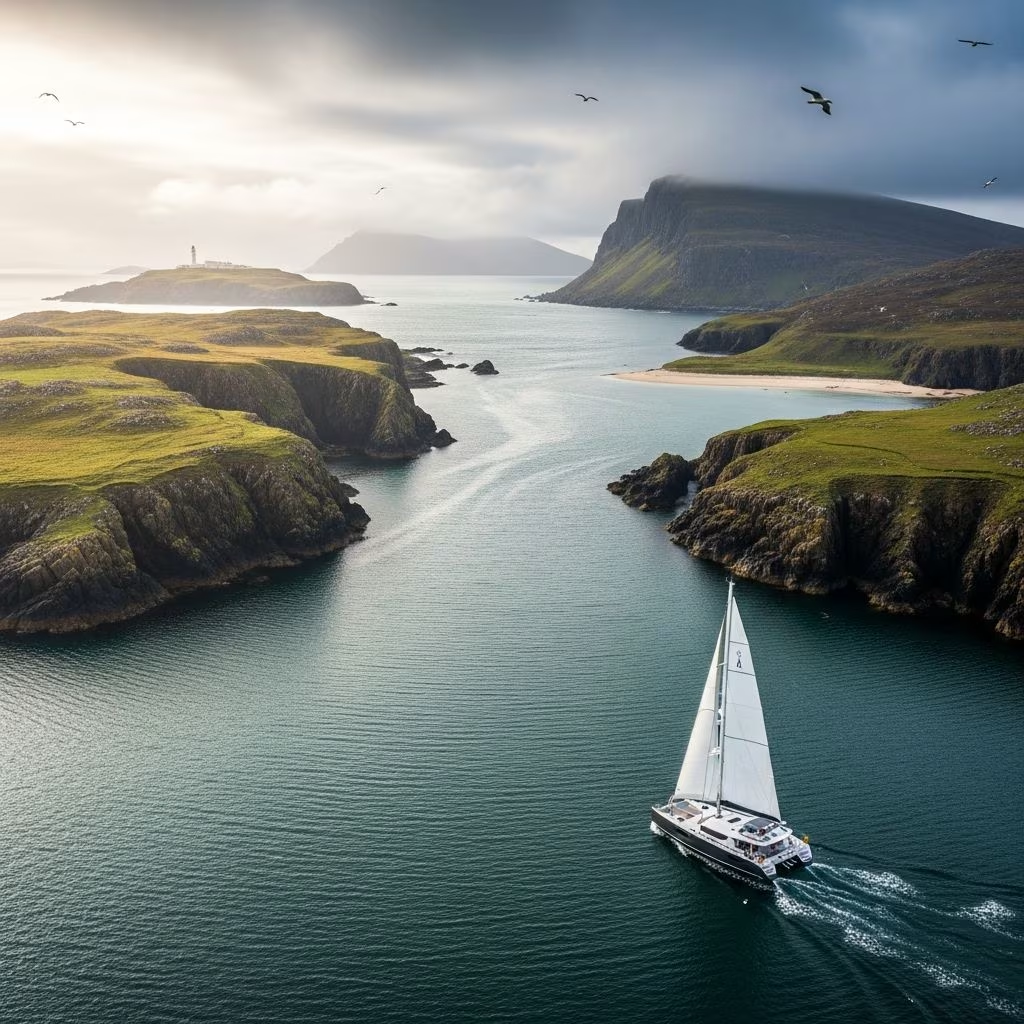
Experience the rugged beauty of Scotland's Inner Hebrides with guided sailing adventures, combining maritime exploration with access to secluded islands and pristine landscapes.
 Travel Essentials
The Inner Hebrides represent one of Europe’s most compelling destinations for travelers seeking to combine nautical exploration with immersion in untamed natural landscapes. Located off the western coast of Scotland, these islands have captivated adventurers for centuries with their dramatic geology, rich cultural heritage, and abundant wildlife. A sailing expedition through these waters offers an experience fundamentally different from traditional tourism, providing access to remote locations unreachable by conventional transportation and allowing visitors to engage directly with the archipelago’s wild character.
The Inner Hebrides comprise a collection of islands scattered across the Atlantic, each possessing distinctive characteristics shaped by geological forces and maritime culture. The region’s environment presents both remarkable opportunities and legitimate challenges for sailors. The waters surrounding these islands experience dramatic tidal variations, unpredictable weather patterns, and strong currents that demand respect and expertise from anyone navigating these waters. This challenging environment, however, contributes directly to the islands’ pristine condition and remoteness, as the difficult sailing conditions have historically limited development and tourism pressure.
The landscape visible from the deck of a sailing vessel differs markedly from land-based perspectives. Approaching the islands by water reveals topographical features and geological formations that remain hidden from standard viewpoints, offering photographers, nature enthusiasts, and geology aficionados entirely novel perspectives on the environment. The shifting light conditions across open water, combined with the dramatic mountain silhouettes and coastal formations, create constantly changing visual experiences throughout each day.
The coastal town of Oban serves as the primary gateway for most Inner Hebrides sailing expeditions. Positioned on Scotland’s western seaboard, Oban has developed extensive maritime infrastructure, including multiple sailing operators, provisioning facilities, and experienced local crews familiar with regional conditions. The town itself merits exploration before or after sailing adventures, offering traditional Scottish hospitality, local restaurants specializing in seafood, and cultural attractions reflecting the region’s maritime heritage.
Travel logistics to Oban are straightforward for most visitors. The town connects via road to Scotland’s major population centers, with regular coach services and car rental options available. For international travelers, Glasgow International Airport lies approximately two hours’ driving distance, providing convenient access to North American, European, and international flights. The journey from metropolitan areas to the sailing departure point typically requires one full day, allowing travelers to arrive fresh and prepared for their maritime adventure.
Sailing expeditions throughout the Inner Hebrides follow variable routes determined primarily by weather conditions, tidal patterns, and specific operator itineraries. Most week-long voyages encompass between 30 and 50 nautical miles of sailing, incorporating multiple island stops and varied anchorages. The flexibility inherent in sailing—contrasting sharply with rigid ferry schedules or predetermined cruise itineraries—allows skippers to adjust routes in response to weather developments, ensuring both safety and optimal experience.
Common destinations appearing in most Inner Hebrides sailing itineraries include:
Typical sailing expeditions establish a deliberate daily rhythm contrasting sharply with shore-based tourism. Most days begin with morning briefings addressing weather conditions, tidal patterns, and the day’s planned route. Sailing itself occupies substantial portions of daylight hours, with crews and guests actively participating in vessel operation, navigation, and sail management. Evening hours typically involve anchoring in secure locations, followed by onboard meals featuring locally sourced provisions.
Modern sailing expeditions throughout the Inner Hebrides employ various vessel types, ranging from traditional gaff cutters displacing 60 feet or more to smaller sailing yachts accommodating intimate groups. These vessels combine traditional sailing aesthetics with contemporary safety systems, navigation technology, and creature comfort provisions. Regardless of vessel type, successful sailing expeditions demand active participation from guests—this represents fundamentally different tourism from passive observation or guided tours.
The Inner Hebrides support remarkably diverse wildlife populations adapted to maritime and island environments. Seabirds, particularly seabirds including white-tailed eagles, red-billed choughs, and various seabird colonies, inhabit cliff faces and coastal areas throughout the islands. Marine mammals including seals, dolphins, and occasionally whales frequent the waters between islands, with sightings more probable during summer months when breeding and feeding activities intensify.
Passengers aboard sailing vessels enjoy privileged vantage points for wildlife observation. The approach of a sailing yacht generates minimal noise and disturbance compared with motorized vessels, allowing closer approaches to sensitive wildlife and less behavioral disruption. Experienced skippers and crew members provide contextual information regarding observed species, local ecology, and conservation efforts protecting vulnerable populations.
The Inner Hebrides possess layered historical significance spanning prehistoric settlement through contemporary Gaelic culture. Archaeological sites distributed across multiple islands document human habitation extending back millennia. Medieval castles, monastic settlements, and Viking-era artifacts demonstrate the islands’ historical importance as centers of political power, religious authority, and maritime commerce. Contemporary island communities maintain Gaelic language traditions, cultural practices, and social structures distinct from mainland Scottish culture.
Sailing expeditions frequently incorporate visits to historically significant locations, though the maritime approach inherently restricts extensive exploration. Skippers familiar with local history provide narrative context regarding observed landmarks, abandoned settlements, and cultural sites visible from anchorages. For travelers particularly interested in historical dimensions, combining sailing expeditions with land-based guided tours on specific islands deepens engagement with this cultural heritage.
Successfully completing Inner Hebrides sailing expeditions requires realistic assessment of personal fitness levels and maritime experience. While professional sailing operators manage vessels safely, guests participate actively in vessel operation, including sail handling, deck work, and navigation tasks. Physical demands vary among operators and specific expeditions, but participants should expect regular activity throughout daytime hours, often under challenging weather conditions.
Most reputable operators impose minimal formal sailing experience requirements, emphasizing instead physical fitness, adaptability to maritime conditions, and willingness to follow safety protocols. Comprehensive safety briefings precede all sailing activities, and professional crews maintain continuous supervision over guest participation. Participants experiencing seasickness should prepare with appropriate medications or remedies prior to departure.
Sailing throughout the Inner Hebrides remains possible year-round, with seasonal variations significantly affecting experience quality and operational viability. Summer months (June through August) offer extended daylight, relatively moderate weather patterns, and maximum accessibility to remote locations. Spring and autumn seasons provide favorable sailing conditions with fewer crowds, though daylight hours reduce substantially. Winter sailing requires experienced participants and involves abbreviated daylight periods, aggressive weather systems, and challenging navigation conditions.
Weather impacts sailing itineraries substantially. Responsible operators prioritize safety over itinerary adherence, potentially modifying planned routes, extending harbor stays, or adjusting sailing durations in response to developing weather systems. Prospective participants should approach sailing expeditions with flexibility regarding specific destinations, understanding that actual itineraries vary from pre-planned routes based on real-time conditions.
Sleeping arrangements aboard sailing vessels vary significantly among different operators and vessel types. Smaller sailing yachts may feature limited cabin space requiring close proximity among guests, while larger vessels offer more spacious accommodations. All professional sailing operators maintain rigorous standards for sanitation, safety, and basic comfort provisions. Guests should anticipate modest accommodations compared with conventional hotels, emphasizing functionality and maritime appropriateness rather than luxury amenities.
Onboard meals feature prominently in the sailing experience, typically prepared by crew members or professional cooks utilizing freshly provisioned ingredients. Many operators emphasize locally sourced foods, featuring Scottish seafood specialties, dairy products, and produce. Dietary restrictions can typically be accommodated with advance notice, though the maritime environment limits dietary diversity compared with shore-based dining.
Inner Hebrides sailing expeditions represent moderate to premium pricing for adventure travel, with weekly expeditions typically ranging from £1,500 to £4,000 per person depending on vessel type, season, operator reputation, and inclusions. Comprehensive packages generally incorporate vessel accommodation, all meals, professional instruction, safety equipment, and fuel costs. Some operators separate certain costs, requiring clarification regarding what specific pricing includes.
Assessing value requires considering included versus additional expenses. Premium operators often include specialized equipment, expert instruction, and access to remote locations justifying higher costs. Budget-conscious travelers might explore half-day or full-day sailing excursions (approximately £50 per person) as entry points before committing to multi-day expeditions.
Most Inner Hebrides sailing operators welcome guests with minimal or no sailing experience, emphasizing instead basic fitness levels, adaptability, and willingness to participate actively. Professional crews provide all necessary instruction and maintain safety supervision throughout expeditions.
Essential packing includes layered clothing suitable for maritime conditions, waterproof outerwear, sturdy footwear, personal medications, sun protection, and any specific items required for seasickness management. Operators typically provide lifejackets and safety equipment.
Physical demands vary among operators, but participants should expect regular activity throughout daytime hours, often under challenging conditions. Realistic self-assessment regarding fitness levels and adaptability to maritime environments remains essential.
Age requirements vary among operators, with some accommodating younger children while others recommend minimum ages. Prospective family participants should confirm specific operator policies regarding children’s participation and associated safety considerations.
Professional operators prioritize safety above itinerary adherence, potentially modifying routes or extending harbor stays during adverse weather. Participants should approach sailing with flexibility regarding specific destinations and activities.
Successful Inner Hebrides sailing expeditions depend substantially on thorough preparation and realistic expectations. Researching specific operators, reviewing detailed itineraries, confirming experience requirements and physical demands, and arranging appropriate travel logistics constitute essential preparation elements. Consulting with experienced sailors or previous expedition participants provides valuable insights regarding operator quality and realistic expectations.
Participants should arrive well-rested, hydrated, and mentally prepared for active participation. Familiarizing yourself with basic maritime terminology and safety protocols before departure accelerates onboard integration and enhances overall experience satisfaction. Approaching the expedition with openness to unexpected developments, appreciation for maritime conditions, and flexibility regarding specific outcomes promotes psychological readiness for this distinctive adventure.
Inner Hebrides sailing expeditions consistently generate profound and lasting impacts on participants. The combination of challenging maritime environment, stunning natural landscapes, professional instruction, and intimate group dynamics creates transformative experiences. Many participants report enhanced confidence, deepened environmental appreciation, and sustained interest in maritime culture following their expeditions. The experience transcends conventional tourism, offering genuine adventure and meaningful engagement with Scotland’s maritime heritage and natural environment.
