

 Travel Essentials
 Travel Essentials

Discover essential techniques for capturing breathtaking interior photos using natural light, optimal angles, precise styling, and minimal editing to showcase spaces authentically.
 Travel Essentials
Capturing the essence of indoor spaces requires more than pointing and shooting; it demands an understanding of light dynamics, spatial awareness, and deliberate framing. Whether documenting your home for social media, real estate listings, or personal portfolios, these strategies transform ordinary rooms into visually compelling narratives.
Natural light serves as the cornerstone of effective indoor photography, providing a clean, even illumination that artificial sources often distort. Begin by extinguishing all overhead fixtures and lamps, which introduce unwanted yellow casts and erratic shadows that muddy the scene’s true colors.
Position yourself during optimal times: early mornings or late afternoons yield soft, diffused light ideal for interiors. Overcast conditions act as a natural softbox, eliminating harsh beams that create distracting contrasts through windows. Open curtains fully and clear window obstructions to maximize influx, relocating vignettes to sun-facing spots if needed.
Angle selection dictates how viewers perceive depth and scale in a room. Employ ‘hip-level’ shooting for wide shots, aligning the lens at waist height to replicate human eye level, fostering a grounded, immersive perspective rather than the distorted eye-level norm.
Adopt one-point perspective by aligning with the farthest wall, straightening converging lines for a balanced, professional appearance. Vary orientations: capture horizontals for landscapes, verticals for portraits, and squares for platform-specific crops.
| Angle Type | Purpose | Best Use Case |
|---|---|---|
| Waist Height Wide | Natural eye-level feel | Full room overviews |
| Doorway Framing | Added depth layers | Hallways or adjacent spaces |
| Corner Low | Dramatic emphasis | Highlighting furniture clusters |
Steady your device on a tripod to eliminate shake, especially in lower light, and clean lenses meticulously to avoid haze.
Clarity in composition ensures every element contributes without clutter. Define objects distinctly—no overlaps or hidden edges that confuse the eye. A vase must read as such from every vantage, demanding angle tweaks per setup.
Layer vignettes thoughtfully: foreground interest draws viewers in, midground anchors the scene, background provides context. Incorporate quiet narratives like a draped throw or leaning plant to evoke lived-in warmth.
Styling elevates photography from snapshot to showcase. Focus on emotional pockets: a nook with an open book or foliage arching toward light captures ambiance. Collaborate with space owners to highlight design intent, using light to sculpt mood—soft for coziness, directional for drama.
Arrange furniture mindfully, ensuring placements enhance flow without blocking key features. Test compositions iteratively, shooting multiples to select the most harmonious.
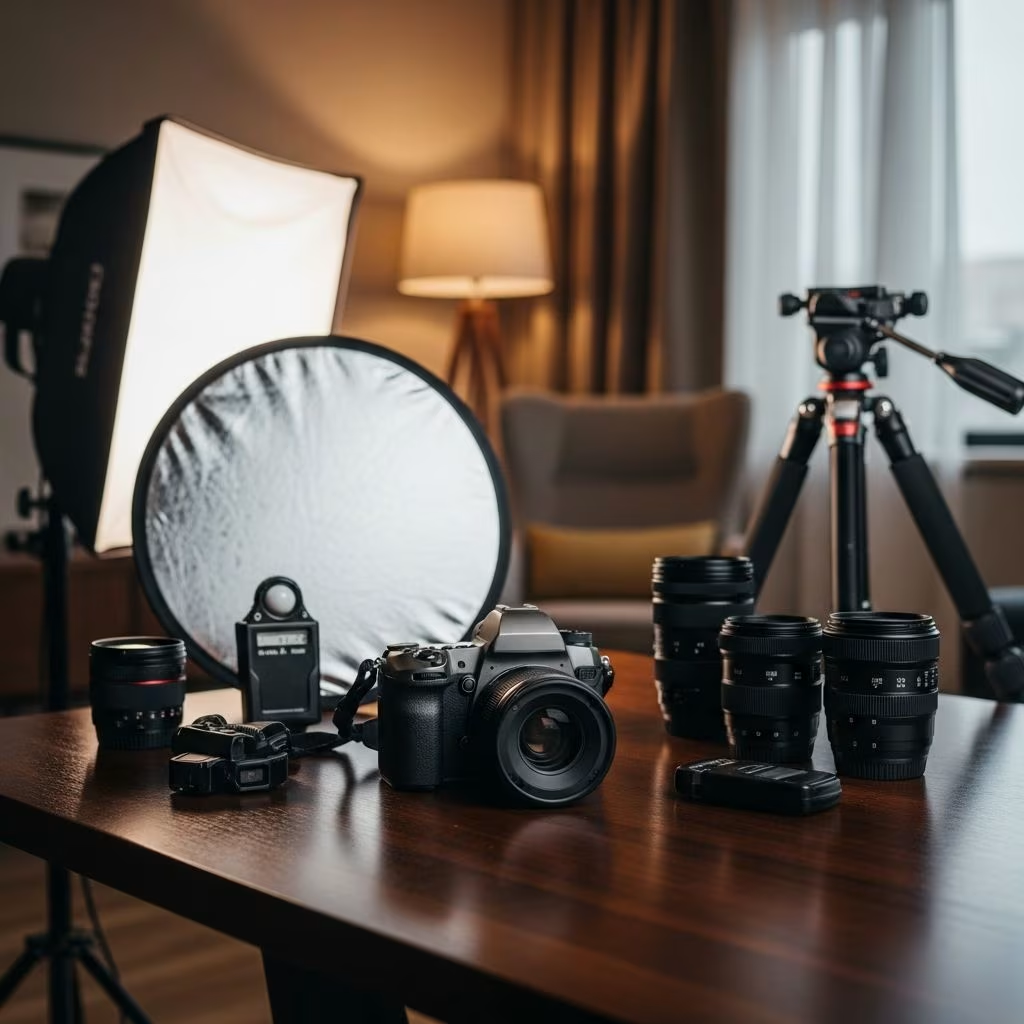
Start simple: smartphones suffice with apps for manual control, but DSLRs/mirrorless with wide-angle lenses (24-35mm) excel for distortion-free rooms. Tripods ensure consistency; polarizing filters cut glare on glossy surfaces.
Key settings: ISO 100-400, f/8-f/11 aperture, shutter speeds 1/60s or slower on tripod. Shoot RAW for editing flexibility, preserving details in shadows and highlights.
Post-processing polishes without overhauling. Boost brightness and contrast judiciously, desaturate for natural tones, and sharpen for definition. Tools like Lightroom straighten lines, clone distractions, and balance white balance to true-life hues.
Avoid heavy filters; authenticity trumps stylization. Batch-edit for cohesion across a series.
For pro results, customize lighting per composition—supplement natural with off-camera flash matching daylight temperature to avoid mixes. Bracket exposures for HDR merging in high-contrast scenes.
Post-shoot, curate selects emphasizing variety: overviews, details, lifestyles. This portfolio approach showcases spaces comprehensively.
Use reflectors to bounce light into shadows or schedule for peak daylight. Flash tuned to ambient Kelvin (around 5500K) fills without color shifts.
Shoot straight-on or use lens correction tools in software like Photoshop’s Adaptive Wide Angle.
Snapseed for quick tweaks, Lightroom Mobile for precise control.
Overcast wins for even diffusion; sunny requires diffusion panels or timing avoidance.
Essential for low light and consistency, but stabilized modes work for casual shoots.
