

 Travel Essentials
 Travel Essentials

2026 travel faces rising geopolitical, health, and cyber risks. Learn how to plan ahead, protect travelers, and stay resilient worldwide.
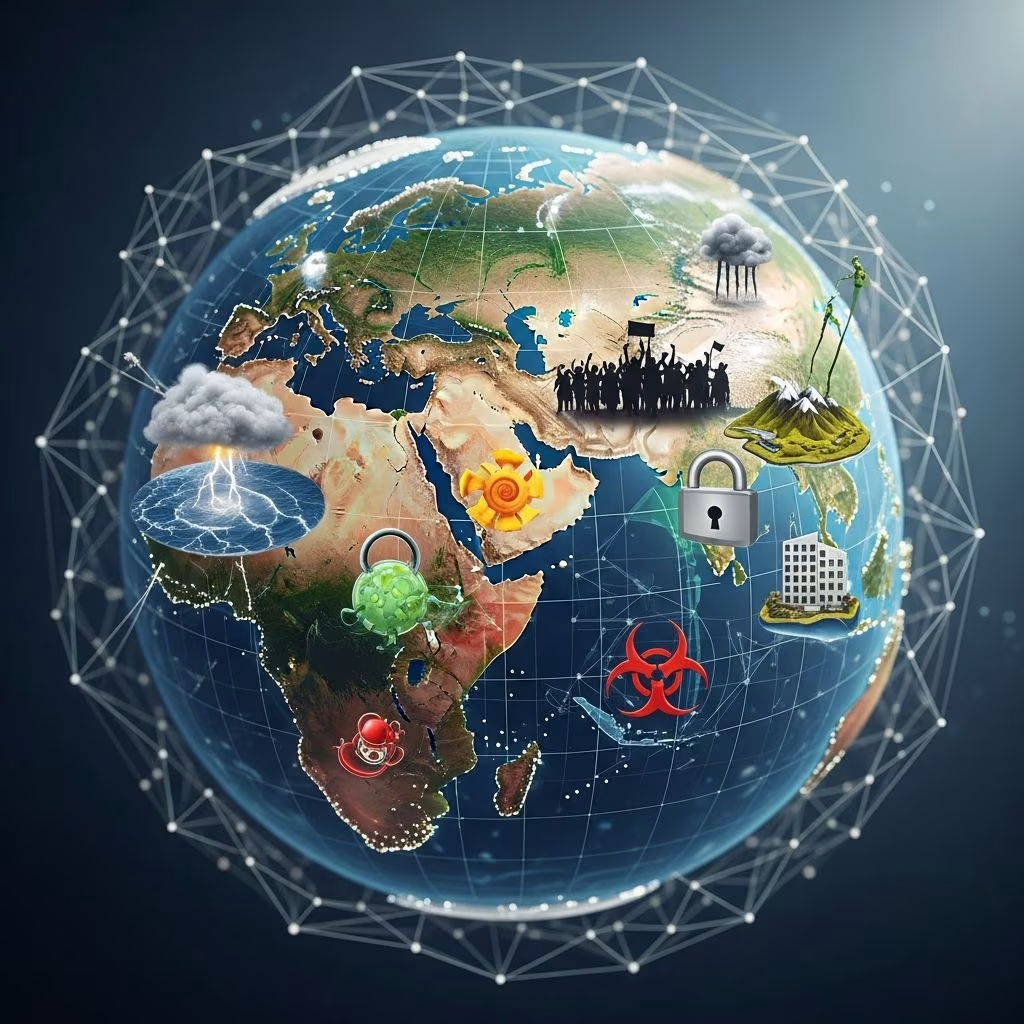 Travel Essentials
In 2026, the landscape of international travel is marked by unprecedented levels of uncertainty, driven primarily by geopolitical instability and evolving health threats. Organizations and individual travelers alike face a complex web of risks that demand proactive planning and resilience. Drawing from the latest assessments, this article delves into the critical findings of the International SOS Risk Outlook 2026, offering actionable insights to safeguard journeys across the globe.
Uncertainty has become the defining characteristic of the global environment in 2026, with a striking 66% of organizations reporting a significant increase over the past year. This escalation stems from a confluence of factors, including persistent geopolitical tensions, supply chain disruptions, and emerging health concerns. For travelers, this means heightened vigilance is essential, as traditional risk models no longer suffice in predicting disruptions.
Security risks dominate the 2026 outlook, with geopolitical tensions, terrorism, and cyber threats emerging as focal points. The International SOS thematic report on security issues provides a detailed breakdown, urging organizations to prioritize threat assessments and resilience-building measures.
| Risk Category | Primary Concerns | Impact on Travel |
|---|---|---|
| Geopolitical Tensions | Regional conflicts, trade disputes | Border closures, flight cancellations |
| Terrorism | Increased incidents in urban areas | Heightened security checks, event disruptions |
| Cyber Threats | Data breaches, infrastructure attacks | Travel app vulnerabilities, payment system failures |
| Organized Crime | Smuggling, extortion | Risks in high-tourism zones |
These challenges are not uniform; regional variations demand tailored strategies. For instance, Asia-Pacific travelers should monitor on-demand expert briefings for localized insights.
Beyond security, medical risks remain a cornerstone of travel safety. The Risk Map from International SOS offers real-time ratings for countries, integrating medical and security data to guide decisions. Emerging infectious diseases, mental health strains from prolonged uncertainty, and access to care in remote areas are pivotal concerns.
The global picture reveals stark regional differences. Europe’s stability contrasts with Middle Eastern volatility, while Africa’s resource-driven conflicts add layers of complexity. The Risk Outlook’s interactive tools allow users to drill down into specific destinations, reflecting updated ratings as of 2026.
To counter these risks, International SOS advocates for a ‘beyond preparedness’ mindset, emphasizing pulse checks and rapid response frameworks. Travelers should integrate the following into their planning:
Organizations can enhance resilience by investing in employee training on crisis management and cyber hygiene, as detailed in the security challenges report.
The Risk Outlook identifies decision-making as a core challenge, with the pace of preparedness determining outcomes. In scenarios of sharp uncertainty, delaying action amplifies vulnerabilities. Recommendations include scenario planning and cross-functional teams to simulate disruptions.
Decision-makers must shift from reactive to anticipatory strategies, using data-driven insights to stay ahead of emerging threats.
Digital tools are transforming travel safety. AI-powered risk maps and mobile apps deliver instant notifications, while blockchain enhances secure data sharing for health records. However, cyber threats necessitate robust defenses, including VPN usage and phishing awareness.
Reflecting on recent events, supply chain snarls in Southeast Asia and cyber incidents in Europe underscore the need for diversified travel options. One organization mitigated losses by activating remote work protocols, saving significant costs and maintaining operations.
While 2026 presents formidable challenges, trends suggest a trajectory toward greater interconnectivity and resilience. Climate impacts may join the top risks, intertwining with security and health domains. Staying informed through annual outlooks will be key.
Geopolitical instability, noted by 47% of organizations, leads as the primary concern.
Visit the International SOS website for the interactive open-access Risk Map with current country ratings.
Opt for policies with medical evacuation and political risk coverage; standard plans may fall short.
Middle East and parts of Africa feature extreme ratings due to ongoing conflicts.
Monitor daily in volatile areas, using official sources for accuracy.
