

 Travel Essentials
 Travel Essentials

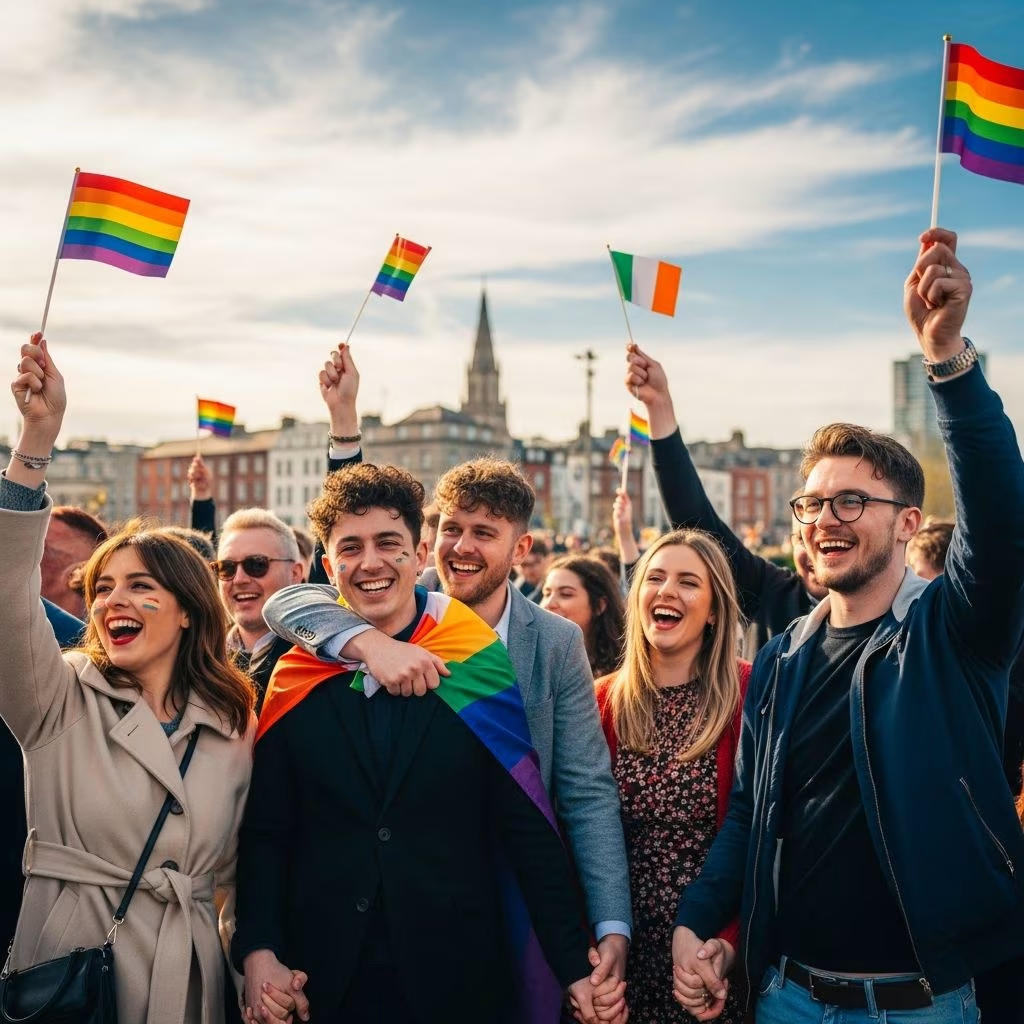
Ireland became the first nation to legalize same-sex marriage through popular vote. Learn how couples celebrate love with newfound legal recognition and creative traditions.
 Travel Essentials
When Ireland voted to legalize same-sex marriage on May 22, 2015, it became a watershed moment not just for the nation, but for LGBTQ+ communities worldwide. Ireland distinguished itself as the first country to approve marriage equality through a popular referendum rather than legislative decree alone. This democratic affirmation resonated deeply, sending couples rushing to marriage registries across the country to formalize their unions. The impact extended far beyond courthouses—it fundamentally transformed how Irish society celebrates love, created new opportunities for creative wedding ceremonies, and inspired couples from around the globe to travel to Ireland to wed.
The path to marriage equality in Ireland was not instantaneous but rather the culmination of years of advocacy, strategic organizing, and gradually shifting public attitudes. Organizations like the Gay and Lesbian Equality Network (GLEN) and Marriage Equality worked methodically to build support for legal recognition of same-sex partnerships. Their efforts began with securing civil partnerships in 2010, which granted same-sex couples many—though not all—of the rights afforded to married couples. These partnerships represented meaningful progress but fell short of full equality, particularly in tax benefits and social recognition.
The constitutional amendment passed with 66.4 percent support, a supermajority that reflected Ireland’s transformation from a predominantly Catholic nation with restrictive marriage laws to a society embracing inclusivity and human rights. President Michael D. Higgins signed the Thirty-fourth Amendment of the Constitution of Ireland on August 29, 2015. The Marriage Act 2015 followed shortly after, passed by the Oireachtas on October 22 and signed into law on October 29, giving the constitutional change legislative teeth.
The first same-sex civil marriage ceremonies took place on November 17, 2015—just one day after the law officially entered force on November 16. This rapid transition demonstrated the pent-up demand and celebration among couples who had been waiting for legal recognition. The statistics tell a compelling story: in the first year alone, 1,082 same-sex couples married in Ireland, averaging 21 same-sex weddings per week. This remarkable volume illustrated not merely legal compliance but genuine joy and long-anticipated celebration.
For couples who had already formalized their relationships through civil partnerships, marriage equality created both opportunity and important procedural considerations. The new law did not automatically convert existing civil partnerships into marriages; instead, it offered couples the option to transition if they desired. This distinction proved important for those satisfied with their civil partnership status, as these arrangements remained valid and unaffected by the new legislation.
Couples wishing to upgrade their civil partnership to marriage needed to contact their nearest Civil Registry Office. The transition process involved providing notice of intention to marry, though couples in existing Irish civil partnerships benefited from an expedited procedure. Rather than the standard three-month notice period required for new marriages, civil partnership holders could utilize a fast-track five-day notice provision. This streamlined approach reflected recognition that these couples had already been through legal processes and paperwork; the five-day fast track acknowledged their previous commitment while enabling rapid formalization of their new marital status.
Interestingly, couples with civil partnerships recognized in other countries faced different requirements. If they wished to marry in Ireland, they needed to provide three months’ notice rather than five days. This distinction served administrative purposes, as international civil partnership documentation required additional verification and processing time. Once married, the civil partnership would automatically dissolve, with marriage becoming the sole legal status.
For couples who had already married abroad before the Irish law took effect, no additional action was necessary. Ireland automatically recognized same-sex marriages performed in other jurisdictions as of November 16, 2015. This reciprocal recognition extended to couples from nations that had previously legalized same-sex marriage, creating an immediate legal framework for international couples relocating to Ireland.
The legalization of same-sex marriage opened creative possibilities for reimagining Irish wedding traditions. Without prescribed gender roles or expectations tied to centuries of heteronormative ceremony conventions, couples gained unprecedented freedom to design celebrations reflecting their individual personalities, values, and visions.
One significant area of innovation involved wedding party composition and roles. Research indicated that less than half of same-sex couples opted to include traditional wedding parties at all. For those who did, the concept evolved dramatically. Rather than the standard configuration of bridesmaids and groomsmen, couples developed entirely custom arrangements. Some chose attendants based solely on emotional closeness rather than gender presentation. Others eliminated gendered titles entirely, instead assigning roles based on what made sense for their particular relationships and support networks.
The speeches and toasts traditionally offered during receptions also underwent transformation. In conventional Irish weddings, the father of the bride typically initiated remarks, followed by the groom and best man. Same-sex couples rewrote this script entirely. Both sets of parents might speak if present and willing. Close friends could offer toasts. The couples themselves might deliver individual speeches or jointly narrate their relationship journey. Some abandoned speeches altogether in favor of musical performances, open-mic tributes, or other forms of expression that felt more authentic to the couple’s personality and values.
Ceremonial vows themselves became subject to creative reimagining. While civil ceremonies retained certain legal phrases necessary for validity, couples could customize most of their vows with their chosen registrar or celebrant. Humanist ceremonies offered even greater flexibility, permitting nearly complete customization of language, readings, and symbolic elements. This freedom allowed couples to articulate their own definitions of commitment, partnership expectations, and future aspirations rather than defaulting to inherited formulations.
Irish law provided same-sex couples with distinct ceremonial options, each offering different atmospheres and customization possibilities. Understanding these pathways helped couples select the approach most aligned with their preferences and beliefs.
Civil Ceremonies represented the most straightforward option, conducted by civil registrars with legal efficiency. These ceremonies were brief, formal, and focused on the legal requirements establishing marriage. Couples could incorporate some personal elements but typically within parameters defined by registration requirements.
Humanist Ceremonies appealed to couples seeking spiritual or philosophical depth without religious affiliation. Conducted by humanist celebrants, these ceremonies permitted extensive customization of language, readings, music, and symbolic rituals. Humanist ceremonies could incorporate cultural traditions, personal stories, or philosophical frameworks reflecting the couple’s worldview.
Symbolic Ceremonies encompassed religious services, including those conducted by progressive faith communities affirming LGBTQ+ relationships. Some religious denominations and individual clergy members embraced same-sex couples, offering wedding ceremonies within spiritual frameworks. These ceremonies combined legal validity with spiritual significance, particularly important for couples whose faith remained central to their identity.
Does marriage equality apply throughout all of Ireland? Same-sex marriage is legal throughout the Republic of Ireland following the 2015 constitutional amendment and subsequent legislation. However, Northern Ireland, which operates under different legal jurisdiction, maintains separate marriage laws.
Can international same-sex couples marry in Ireland? Yes, Ireland welcomes international couples seeking to marry. Couples should contact a Civil Registry Office to understand specific requirements based on their citizenship and previous relationship status.
What happens to existing civil partnerships under the new law? Civil partnerships remain valid and are not automatically affected by marriage equality legislation. Couples may choose to remain in civil partnerships or transition to marriage as preferred.
Are there any restrictions on who may marry? Same-sex couples enjoy the same marriage rights and restrictions as opposite-sex couples, including requirements regarding age, existing marriages or civil partnerships, and familial relationships.
Ireland’s achievement marked it as the eighteenth country worldwide to legalize same-sex marriage and the eleventh in Europe. More significantly, Ireland became the first to accomplish this through democratic referendum, a distinction carrying profound symbolic weight. The popular vote demonstrated not merely legislative decision-making but genuine societal transformation and public embrace of equality principles.
The referendum victory contradicted pessimistic predictions about Catholic-majority nations and same-sex rights. International observers noted that Ireland’s success suggested changing generational attitudes even in traditionally conservative societies. Young Irish voters particularly drove the referendum results, signaling that younger generations worldwide increasingly viewed marriage equality as a basic human right deserving legal recognition.
Beyond legal frameworks, Ireland’s marriage equality revolution generated substantial tourism and cultural interest. Couples traveled internationally specifically to marry in Ireland, attracted by the nation’s romantic landscapes, welcoming legal environment, and growing reputation as an LGBTQ+-friendly destination. This phenomenon enriched both the Irish economy and the broader cultural narrative surrounding the country’s transformation.
The immediate surge in same-sex weddings following legalization reflected pent-up demand but also represented something deeper: the desire for social recognition and celebration of relationships previously relegated to legal limbo. As years passed since 2015, same-sex marriages became integrated into Irish social fabric as ordinary expressions of commitment rather than novelties or political statements.
Wedding vendors, venue operators, and celebration professionals across Ireland adapted their services to welcome and affirm same-sex couples. This evolution extended beyond mere tolerance to genuine celebration, with many professionals proactively ensuring their materials, language, and service offerings reflected inclusivity. Irish wedding culture became demonstrably more creative and flexible across all couples, regardless of sexual orientation, as the rigid conventions historically enforced through heteronormative frameworks gradually dissolved.
The establishment of marriage equality in Ireland validated decades of advocacy by LGBTQ+ organizations and demonstrated the power of strategic organizing combined with evolving social attitudes. The nation’s journey from civil partnerships to marriage equality to celebration of diverse wedding expressions illustrated how legal change catalyzes cultural transformation. Ireland’s experience continues inspiring advocates globally while providing a model of how democratic processes can advance human rights and dignity.
