

 Travel Essentials
 Travel Essentials

Explore essential customs and social expectations for navigating Irish culture, from humor and hospitality to pub traditions and respectful communication.
 Travel Essentials
Ireland possesses a rich cultural identity shaped by centuries of history, storytelling, and a distinctive approach to social interaction. Whether you’re visiting for the first time or planning an extended stay, understanding the unwritten social codes can significantly enhance your experience and help you build genuine connections with the Irish people. This guide explores the fundamental principles that underpin Irish society and provides practical insights into navigating social situations with confidence and respect.
The Irish approach to social engagement centers on genuine connection rather than formality. Irish society values straightforward communication where people tend to say what they mean without excessive corporate politeness or rigid hierarchies. This directness, however, is always tempered with warmth and friendliness, creating an environment where people feel comfortable being themselves.
When meeting someone new, Irish people typically appreciate sincere interest in getting to know them as individuals. Rather than exchanging business cards and surface-level pleasantries, conversations often quickly move into more personal territory. This doesn’t mean being intrusive, but rather showing genuine curiosity about people’s lives, experiences, and perspectives.
Conversation forms the backbone of Irish social culture. The Irish are known for their gift of storytelling and their ability to find entertainment in everyday occurrences. However, effective conversation in an Irish context requires understanding several key principles:
Perhaps no single element defines Irish social interaction more than humor. The Irish possess a distinctive comedic sensibility that combines wit, wordplay, self-deprecation, and observational comedy. Understanding how humor functions in Irish society is crucial for anyone seeking to integrate into social circles.
Irish humor often includes sarcasm and light teasing directed at friends and acquaintances alike. This isn’t meant to wound or diminish; rather, it represents a form of affection and acceptance. When someone makes a humorous comment at your expense in an Irish social setting, it typically indicates they’ve accepted you into their inner circle and feel comfortable enough to jest with you. Responding with your own wit and good-natured comeback is expected and appreciated.
However, humor has boundaries. Making jokes at someone’s expense regarding serious personal matters, sensitive cultural issues, or deep insecurities crosses the line from playful banter into rudeness. The key is reading the social context and understanding the distinction between lighthearted teasing among friends and inappropriate commentary.
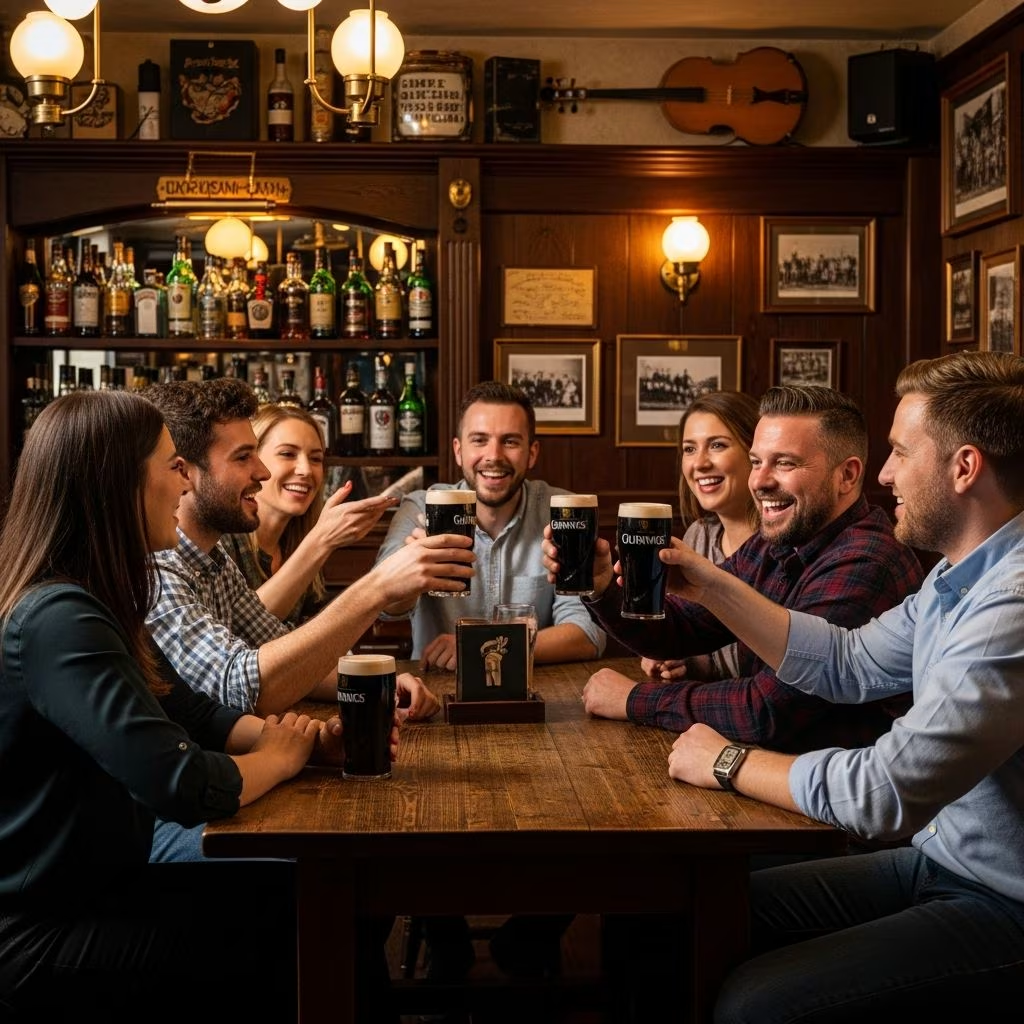
Pubs represent far more than drinking establishments in Irish society; they function as community centers, social hubs, and gathering places where genuine human connection occurs. Understanding pub etiquette is therefore essential to comprehending Irish social norms.
One of the most distinctive pub traditions involves the practice of buying rounds. When a group of people drinks together, members typically take turns purchasing beverages for the entire group. This system serves multiple social functions: it ensures equitable contribution, prevents anyone from bearing disproportionate expense, and creates a rhythm of reciprocal obligation that reinforces group cohesion.
The mechanics are straightforward. If you’re part of a group of four people, one person buys drinks for everyone. Once those drinks are consumed, another person becomes responsible for the next round. This continues until the group decides to leave or disbands.
Key considerations for round participation include:
Pub seating often becomes precious during busy evenings. Even if a seat appears unoccupied, never assume you can simply claim it. The proper approach involves asking those already seated nearby whether the seat is reserved or in use. This simple courtesy prevents conflicts and demonstrates respect for others’ space.
Similarly, when standing at the bar, maintain awareness of those around you. Don’t position yourself directly in front of someone engaged in conversation or block access to the bartender for other patrons.
Pub dress codes remain relatively relaxed in Ireland. Casual clothing such as jeans paired with a nice shirt proves perfectly acceptable for most venues. However, this doesn’t mean appearing disheveled or excessively casual. Clean, presentable clothing demonstrates respect for the establishment and fellow patrons. Notably, worn-out footwear or visibly dirty garments might attract unwanted attention or judgment.
Whether dining in restaurants, cafés, or private homes, certain behavioral expectations apply across Irish culture.
In formal dining environments, Irish restaurants typically feature table service. Staff members take orders, deliver food, and attend to patrons throughout the meal. Treating service staff with politeness and respect isn’t merely courteous; it’s an essential component of Irish social expectations. Thanking your server, using “please” when making requests, and maintaining civil tone throughout your meal are standard practices.
Regarding gratuity, while tipping isn’t mandatory, leaving 10-12% of the bill is appreciated and increasingly common, particularly in establishments in larger cities or tourist areas. This shows appreciation for good service without creating an obligation.
Basic table manners form part of everyday Irish conduct. These include:
Being invited to an Irish home represents a meaningful gesture. Reciprocating this hospitality involves several considerations. Bringing a small gift—such as chocolates, biscuits, flowers, or a bottle of wine—shows appreciation for the host’s effort and investment. Upon arrival, it’s thoughtful to offer removing your shoes, particularly if the home appears designed for this practice. Before departing, always thank your host explicitly for their generosity and hospitality.
While English is the primary language throughout Ireland, the Irish language (Gaeilge) holds cultural significance and official status. Making effort to learn and use basic Irish phrases demonstrates respect for Irish cultural heritage and often delights locals.
Essential phrases include greetings like “Dia dhuit” (hello) and “Slán” (goodbye), as well as “Go raibh maith agat” (thank you) and “Sláinte” (cheers). Even attempting these phrases, particularly when slightly mispronounced, typically receives encouragement and appreciation rather than criticism.
Regarding accent imitation, attempting an Irish accent without genuine familiarity often comes across as disrespectful or mocking. The Irish recognize authentic accents and generally respond negatively to unconvincing imitations. If you’re not a native speaker, it’s preferable to speak in your natural accent than to adopt an exaggerated or inaccurate Irish one.
Irish social culture maintains certain physical and psychological boundaries. Standing too close when conversing can create discomfort. Maintaining an appropriate distance—roughly an arm’s length—allows for comfortable conversation without invading personal space.
Additionally, avoid asking deeply personal questions early in relationships. While Irish people can be friendly and open, they appreciate relationships that develop gradually. Questions about family, relationships, finances, or personal struggles should emerge naturally as connections deepen rather than appear forced into initial conversations.
Respecting queuing practices represents another fundamental boundary. Never skip ahead in a queue regardless of circumstances. This simple practice reflects your respect for others’ time and fairness.
The Irish often employ colorful language that includes profanity, particularly in informal settings. However, this doesn’t mean such language is universally appropriate. Context matters significantly. Profanity among friends in a pub differs substantially from language used in professional or formal settings.
If you’re unfamiliar with social conventions in a particular context, it’s safer to err on the side of formality until you understand what’s acceptable. Observing how established members of the group communicate provides guidance on what language norms apply.
Irish social culture tends to resist excessive formality and rigid hierarchical structures. In workplace settings, relationships between supervisors and employees, or colleagues at different organizational levels, typically remain more casual than in many other cultures. Using first names, even with senior colleagues or authority figures, is common and expected in many contexts.
This informality shouldn’t be mistaken for lack of respect or professionalism. Rather, it reflects a cultural preference for viewing people as individuals first and their positions second. An effective leader in an Irish context often builds influence through personality, competence, and genuine relationships rather than through formal authority alone.
Beyond major social situations, everyday interactions involve their own etiquette considerations. Holding doors open for those behind you, saying hello to neighbors or classmates, and maintaining quiet in libraries and on public transportation reflect basic Irish courtesy. A particularly distinctive Irish habit involves thanking bus drivers—a practice that demonstrates appreciation for service and community connection.
Similarly, raising your hand in acknowledgment when a driver allows you right-of-way shows reciprocal courtesy on Irish roads. These small gestures accumulate to create a culture of mutual respect and consideration.
Irish people generally appreciate sincere apologies and acknowledgment of mistakes. A straightforward “I’m sorry, I didn’t mean to offend” typically suffices. Most Irish people value authenticity over perfection and understand that cultural misunderstandings occur. Demonstrating genuine remorse usually resolves minor social missteps.
These topics can be discussed, but approach them with sensitivity. Irish people hold strong opinions about historical events and contemporary political issues. Listen more than you speak initially, and avoid making definitive statements about sensitive subjects unless you have substantial knowledge. When in doubt, ask open-ended questions that invite perspective rather than making statements that might come across as ignorant or insensitive.
Respond with good humor and your own witty comeback if possible. Irish teasing among friends signifies acceptance and familiarity. Responding with defensiveness or taking the comments personally typically signals that you don’t understand the cultural dynamic and can create awkwardness. However, if someone’s comments cross into genuine insult territory, it’s appropriate to politely indicate that you find it offensive.
While Irish culture values punctuality in professional and formal settings, social gatherings often embrace a more relaxed approach. Being 10-15 minutes late to a dinner party might be perfectly acceptable, whereas arriving late for a business meeting would be considered disrespectful. Always prioritize punctuality unless explicitly told otherwise by the host or organizer.
Any attempt to speak Irish is generally well-received, even if your pronunciation is imperfect. Most Irish people appreciate the effort regardless of execution. However, if you’re genuinely interested in learning, seeking instruction from native speakers yields better results than attempting to pick up phrases without guidance.
Understanding Irish social customs ultimately centers on recognizing the cultural values that underpin them. The Irish prioritize authentic connection, genuine kindness, and humor as tools for navigating life. They tend to resist pretension, value loyalty among friends, and appreciate those who can laugh at themselves while maintaining self-respect.
By approaching Irish interactions with curiosity, humility, and willingness to engage authentically, you position yourself to build meaningful relationships and develop genuine appreciation for Irish culture. The Irish welcome visitors and newcomers who demonstrate respect for their customs while remaining true to themselves.
