

 Travel Essentials
 Travel Essentials

A practical safety overview for Americans traveling to Egypt, including current advisories, high-risk areas, health concerns, and travel precautions.
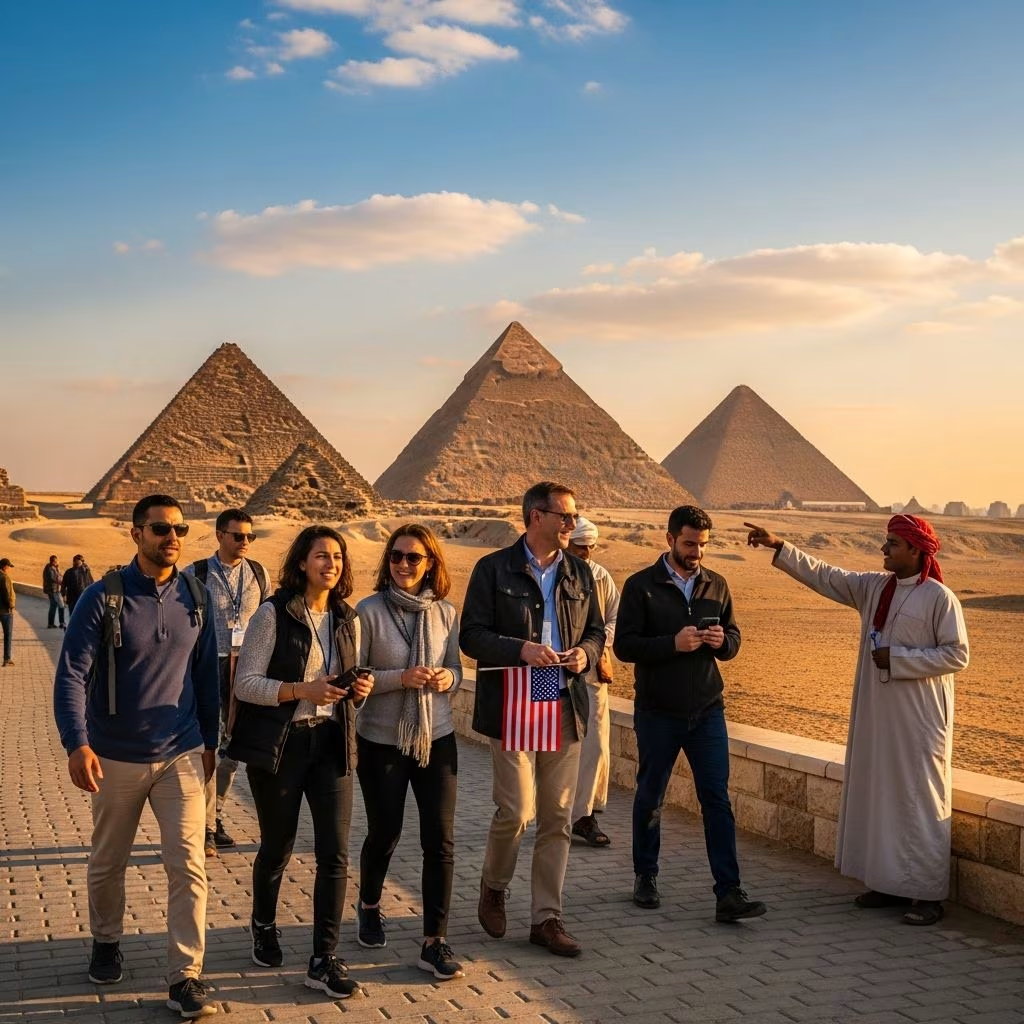 Travel Essentials
Planning a journey to Egypt requires careful consideration of the current security landscape and health conditions. The United States government has issued specific travel guidance for American citizens, with varying levels of caution depending on destination within the country. While many popular tourist destinations remain accessible, travelers must understand the complexities of Egypt’s regional security situation and prepare accordingly.
The U.S. Department of State maintains a Level 4 advisory for the Northern and Middle Sinai Peninsula, recommending that Americans do not travel to these regions for any reason. However, significant portions of Egypt, particularly established tourist centers along the Red Sea coast and major cities like Cairo, continue to operate with active tourism industries and are accessible to international visitors who exercise appropriate precautions.
The U.S. State Department employs a color-coded advisory system to communicate risk levels to travelers. Understanding these categories helps Americans make informed decisions about their travel plans to Egypt. The system ranges from Level 1 (Exercise Normal Precautions) to Level 4 (Do Not Travel), with each level indicating the degree of caution recommended for that particular destination.
Egypt currently receives mixed advisory levels depending on location. Most of the country falls under Level 3 (Reconsider Travel), indicating that while tourism continues, travelers should carefully weigh the risks before proceeding. The Northern and Middle Sinai Peninsula, however, receives the most severe Level 4 designation due to persistent terrorist activity and security operations. Additionally, Egyptian border regions and the Western Desert warrant heightened caution or complete avoidance.
This tiered approach reflects the reality that Egypt is not uniformly dangerous or safe. Conditions vary significantly by region, and travelers can generally visit major tourist infrastructure while avoiding high-risk areas. The key is understanding which regions present acceptable risk levels for your travel objectives.
Understanding Egypt’s geographic risk profile allows travelers to make strategic decisions about their itinerary. Certain regions are subject to military control or terrorist activity, while others welcome hundreds of thousands of tourists annually.
High-Risk Zones to Avoid Entirely:
Generally Accessible Tourist Destinations:
Terrorism remains a legitimate concern in Egypt and represents the primary driver of official travel warnings. However, the manifestation of this risk varies significantly by location and requires context to properly assess.
Terrorist groups operating in Egypt have demonstrated capability to conduct attacks in various locations, including urban centers like Cairo despite heavy security presence. Potential targets of terrorist interest include religious sites such as mosques, churches, and monasteries; diplomatic facilities and government buildings; transportation infrastructure including airports and train stations; commercial establishments including shopping centers and restaurants; tourist attractions and resort facilities; and public gathering spaces.
These risks are particularly elevated during major religious holidays and festivals, including Ramadan, Christmas, and major Islamic observances. Terrorist groups in Egypt have historically attempted to maximize civilian casualties during periods when large gatherings occur or when international attention focuses on Egypt.
Despite these documented threats, it is important to note that millions of tourists travel to Egypt annually, including thousands of Americans, without incident. The risks are real but statistically manageable when appropriate precautions are observed and high-risk areas are avoided.
Medical infrastructure presents particular challenges for Americans traveling to Egypt, especially those venturing beyond major tourist centers. Understanding health requirements and limitations helps travelers prepare appropriately.
Vaccination Requirements:
Medical Infrastructure Limitations:
Emergency and intensive care facilities in Egypt are significantly more limited than those available in the United States. Ambulance services are unreliable in most regions and lack advanced medical equipment comparable to American standards. Remote areas may have minimal medical infrastructure. Americans requiring serious emergency medical care face potential evacuation needs to countries with advanced medical facilities.
These limitations make comprehensive travel health insurance with medical evacuation coverage essential for American travelers. Travel insurance should specifically address emergency medical transportation, as this represents a realistic scenario requiring expensive intervention.
American travelers must exercise extreme caution regarding medications, as significant discrepancies exist between U.S. legal status and Egyptian pharmaceutical law.
Medical marijuana and CBD products remain strictly prohibited in Egypt, even with valid U.S. prescriptions. American citizens have faced arrest and conviction for entering Egypt with these substances. Prescription medication that is legal in the United States may not be permitted in Egypt, creating legal exposure for travelers.
If bringing prescription medications to Egypt is necessary, observe these critical guidelines:
Demonstrations and protests occur regularly throughout Egypt, particularly in major urban centers. While these events are often peaceful, they can escalate rapidly and present safety hazards to foreign visitors.
Law enforcement personnel have employed various crowd control methods including water cannons, tear gas, birdshot, and in some cases live ammunition. Foreigners engaging in political activities or demonstrations face potential detention, arrest, or deportation. The situation can shift from peaceful to dangerous with minimal warning, making avoidance the prudent strategy.
Travelers should monitor local conditions continuously, avoid all demonstrations regardless of apparent peacefulness or cause, and maintain distance from large public gatherings. Keeping identification documents readily available is advisable, as authorities may request documentation during unrest.
Implementing consistent safety practices significantly reduces risk exposure while traveling in Egypt. These measures reflect standard international travel safety principles adapted to Egypt’s specific context.
American citizens in Egypt operate within Egyptian legal jurisdiction and should understand significant differences from the U.S. legal system. Dual U.S.-Egyptian citizens face particular complications.
The Egyptian government considers dual citizens to be solely Egyptian citizens, which means the U.S. Embassy has severely limited ability to provide consular assistance if dual citizens are arrested or detained. This distinction has significant implications for dual nationals planning Egypt travel.
Specific legal concerns include restrictions on political activity, strict pharmaceutical laws regarding controlled substances, and various local regulations that may differ dramatically from U.S. law. Violations can result in detention, prosecution, fines, or imprisonment. Consulting the U.S. Embassy website regarding Egyptian law is prudent before travel.
Comprehensive travel insurance is not optional for Egypt travel; it represents essential financial protection against realistic medical, logistical, and evacuation scenarios. Standard travel insurance policies often prove insufficient for Egypt’s specific risks.
Recommended insurance coverage should include medical evacuation services, as this represents the most expensive but potentially necessary service. Standard medical insurance from the United States typically does not cover international evacuation, making specialized travel insurance essential. Trip cancellation coverage provides financial protection if circumstances force cancellation before departure.
Verify that your insurance provider explicitly covers Egypt and includes provisions for medical evacuation to countries with advanced medical facilities. Review policy exclusions and conditions carefully, as some policies may exclude coverage if travel advisories exist for your destination.
Deciding whether to travel to Egypt requires weighing personal risk tolerance against the genuine desire to experience Egypt’s remarkable cultural and historical assets. Millions of Americans have traveled to Egypt safely, and established tourism infrastructure continues operating despite official travel cautions.
The decision should not be made in isolation but rather should incorporate family circumstances, health status, dual citizenship issues, travel experience, and personal comfort with security concerns. Families with young children may make different decisions than solo travelers with extensive international travel experience.
Consulting with travel professionals familiar with Egypt, reviewing current conditions through official U.S. Embassy channels, and maintaining realistic expectations about required precautions all contribute to informed decision-making. Ultimately, travel to Egypt represents a personal choice with both rewards and genuine risks that require honest evaluation.
