

 Travel Essentials
 Travel Essentials

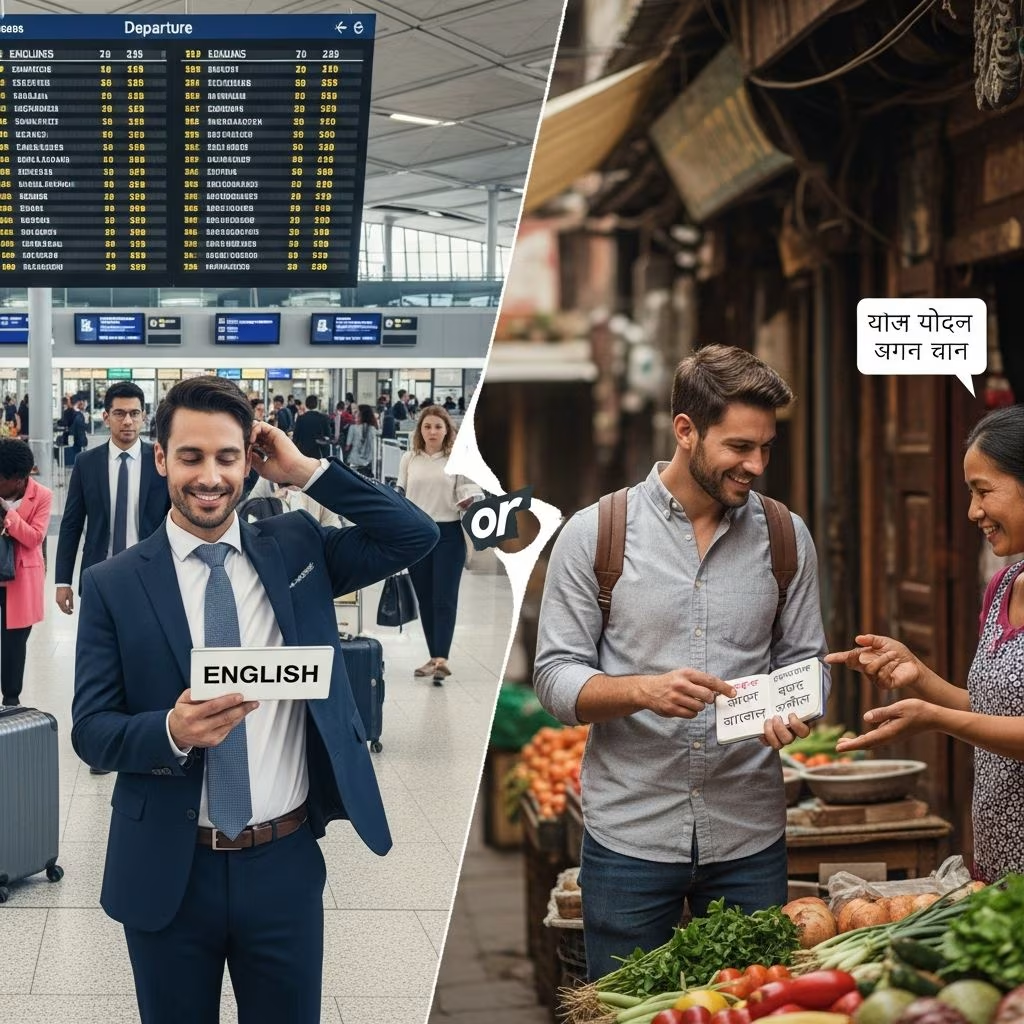
English helps you travel anywhere, but learning a few local phrases can unlock better connections, smoother trips, and richer cultural experiences.
 Travel Essentials
English serves as a powerful tool for travelers worldwide, enabling communication in diverse settings from airports to tourist sites. However, relying solely on it can limit deeper cultural engagement, prompting many to consider basic local language skills for more meaningful journeys.
With over 1.5 billion speakers, English stands as the most widely used language globally, surpassing even Mandarin in total users when including non-native speakers. This dominance stems from its role in international business, aviation, and tourism, making it indispensable for quick interactions.
In airports, hotel lobbies, and popular attractions, signage and staff often accommodate English speakers. For instance, major hubs like those in Dubai or Singapore feature multilingual announcements prioritizing English. This accessibility provides peace of mind, especially for first-time travelers navigating unfamiliar environments.
Statistics from the British Council highlight that English is taught in nearly 100 countries as a second language, with 700 million learners fueling its spread. This creates a network where travelers from various backgrounds converge using English as a bridge.
While English opens doors, it falters in rural areas, local markets, or off-the-beaten-path destinations where residents prioritize their native tongues. Non-English-speaking travelers may cluster in expat bubbles, missing authentic interactions and overpaying due to communication gaps.
Picture bargaining at a bustling Thai night market or seeking directions in rural Japan—English alone often leads to misunderstandings or isolation. Research from the World Tourism Organization notes that language barriers contribute to 40% of traveler dissatisfaction in non-Western destinations.
| Scenario | English Works Well | English Falls Short |
|---|---|---|
| Urban Tourism | Hotels, restaurants | Local taxis, street food |
| Rural Exploration | Rarely | Markets, homestays |
| Emergencies | Hospitals in cities | Remote clinics |
Over-reliance fosters entitlement perceptions among locals, straining cross-cultural relations. Travelers who expect universal English proficiency risk alienating hosts who view such assumptions as disrespectful.
Mastering a handful of phrases—greetings, numbers, directions—transforms trips by signaling respect and effort. Locals respond warmly, offering insider tips, better deals, and genuine hospitality that English alone cannot elicit.
Studies from linguists at the University of Cambridge show that even minimal local language use increases positive interactions by 30%. In Vietnam, saying “xin chào” (hello) opens doors to family-run eateries; in Morocco, “shukran” (thank you) earns smiles and discounts.
Apps like Duolingo or Memrise make preparation effortless, requiring just 15 minutes daily pre-trip. Phrasebooks tailored to regions provide context-specific vocabulary, amplifying impact.
Europe offers a patchwork: English thrives in the Netherlands (90% proficiency) and Scandinavia, but dips in Hungary or Poland. Asia varies wildly—Singapore is English-dominant, while Indonesia demands Bahasa basics outside Bali.
In Latin America, Spanish or Portuguese unlocks vibrancy beyond tourist zones. Africa’s multilingual tapestry favors Swahili or French in key spots, with English auxiliary in South Africa or Kenya.
Pro tip: Research via Ethnologue database reveals proficiency maps. Prioritize high-tourism fluency but prepare for immersion zones.
Start with survival phrases: please, thank you, excuse me, where is…, how much? Practice pronunciation via YouTube tutorials or Google Translate audio.
For longer stays, enroll in immersion classes. Teaching English abroad via programs like TEFL offers reciprocal learning—natives teach you their language while you share yours.
English empowers global mobility, but local languages enrich souls. Hybrid approaches—leaning on English for logistics, locals for connections—yield optimal experiences. Travelers who adapt linguistically report higher satisfaction and repeat visits.
Ethical travel demands reciprocity: as English speakers enjoy privileges, reciprocate by honoring host languages. This mindset fosters unity, countering divisions from monolingual expectations.
Yes in Western/Northern Europe, but learn basics for Eastern/Southern regions to avoid barriers.
Hello, goodbye, please, thank you, yes/no, numbers 1-10, help/emergency.
10-20 hours via apps yields conversational basics for most languages.
Often yes—better bargaining and hidden gems reduce costs by 20-30%.
Duolingo, Babbel, Google Translate, Drops.
A backpacker in Peru used Quechua greetings to join a village festival, an experience impossible via English. Conversely, an English-only tourist in rural China navigated solely through gestures but missed local cuisine insights.
These anecdotes underscore: English starts conversations; local words deepen them.
