

 Travel Essentials
 Travel Essentials

Puerto Rico offers American travelers a safe Caribbean experience without passport requirements, featuring strong tourism infrastructure and reliable healthcare services.
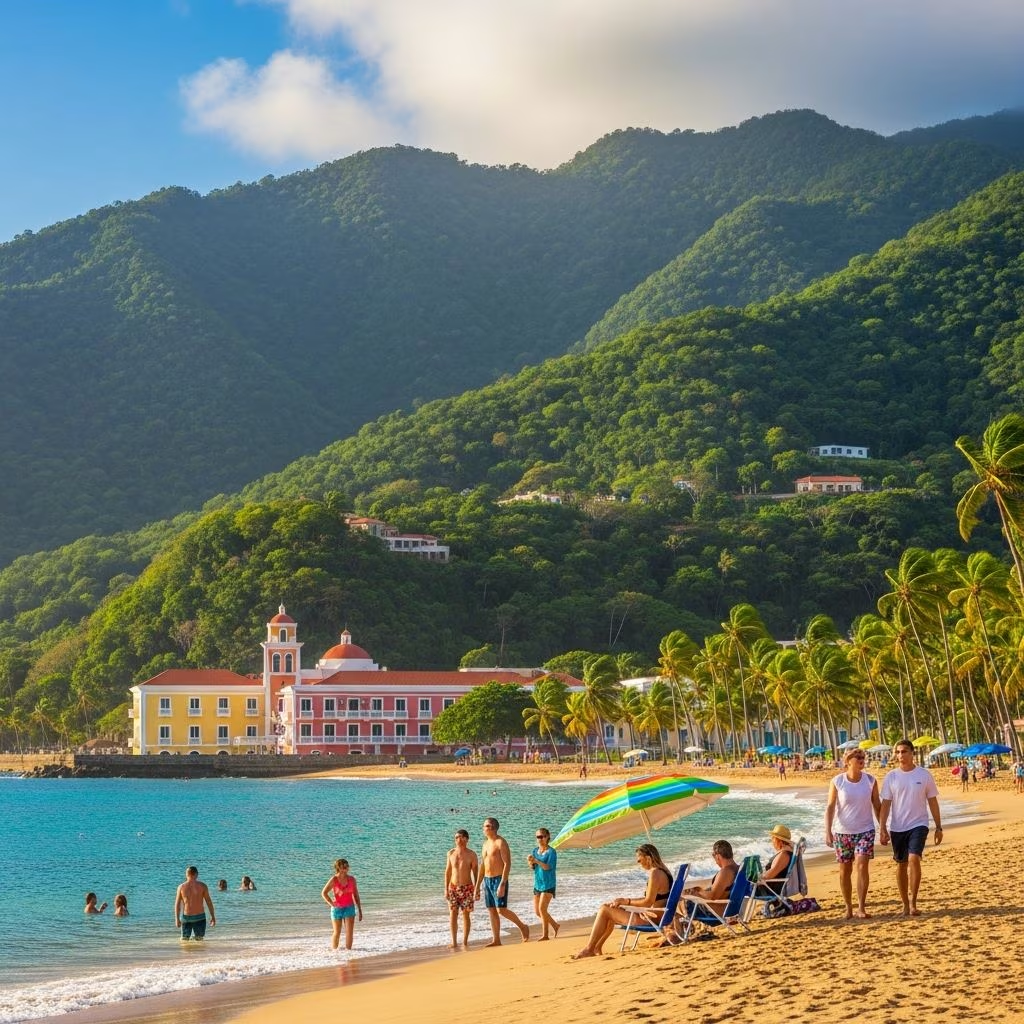 Travel Essentials
When considering Caribbean vacation options, American travelers face numerous decisions about logistics, safety, and accessibility. Puerto Rico presents a distinctive opportunity that resolves one of the primary concerns for many potential visitors: the need for international travel documentation. As a United States territory, Puerto Rico eliminates the passport requirement entirely, allowing American citizens to travel with just a valid government-issued ID such as a driver’s license. This administrative advantage, combined with its reputation as one of the safer Caribbean destinations, makes Puerto Rico an increasingly popular choice for families, solo travelers, and couples seeking tropical getaways without the complications of international travel.
The island’s status as a US territory extends beyond documentation convenience. The healthcare infrastructure mirrors mainland standards, with 911 emergency services functioning identically to those available throughout the United States. This continuity in critical services provides travelers with peace of mind, knowing that medical emergencies will be handled with familiar protocols and that most health insurance plans will cover treatment expenses similar to mainland coverage.
Puerto Rico maintains a safety profile that compares favorably to many major American cities, placing it among the Caribbean’s more secure destinations. The island’s tourism infrastructure has developed sufficiently to create well-established zones where visitors can navigate confidently. Popular areas such as Old San Juan, Condado, Isla Verde, Ocean Park, and Miramar provide environments with robust security measures, regular law enforcement presence, and accessibility to emergency services.
These designated tourism areas benefit from increased foot traffic, visible security presence, and business investments focused on visitor experience. Hotels, restaurants, and attractions in these neighborhoods operate with tourist safety as a priority, and staff members at these establishments regularly assist visitors with directions, recommendations, and emergency support. The concentration of tourism-related businesses creates natural supervision and accountability systems that contribute to overall safety.
San Juan, as the capital and primary tourist hub, receives particular attention regarding visitor safety. While the city encompasses diverse neighborhoods with varying characteristics, the main tourist districts maintain consistent safety standards. Visitors who remain in these established zones and exercise standard urban awareness practices report overwhelmingly positive experiences.
Like any destination, Puerto Rico contains areas better suited to tourist visits than others. Certain neighborhoods in San Juan, including Louis Llorens Torres, Villa Palmeras, and portions of Puerto Nuevo, present higher risks and warrant avoidance, particularly during evening hours. However, most visitors naturally remain within tourist-friendly areas and rarely encounter these neighborhoods unless they deliberately venture beyond standard travel routes.
Successful travel to Puerto Rico emphasizes strategic neighborhood selection rather than widespread restrictions. By choosing accommodations in established tourist areas and planning activities within these zones, travelers substantially reduce any safety concerns. The tourism infrastructure guides visitors naturally toward appropriate locations, with hotels, rental companies, and tourism boards providing clear recommendations about where to spend time and which areas to avoid.
For travelers accustomed to navigating urban environments in American cities, Puerto Rico’s safety considerations align with familiar practices. Using rideshare services after dark, avoiding isolated areas late at night, and maintaining awareness of surroundings represent standard precautions that apply equally in mainland cities and Puerto Rican tourist zones.
Puerto Rico’s development as a tourism destination has created supporting infrastructure that enhances visitor confidence and accessibility. The island features modern hotels, established transportation networks, and abundant vacation rental options through platforms like Airbnb, which lists over 10,000 properties across the island. This diverse accommodation landscape allows travelers to select options matching their preferences and budgets.
Transportation options serve tourists effectively, with Uber and traditional taxi services providing reliable movement throughout San Juan and other major areas. Visitors can navigate the island without renting vehicles, and those preferring car rentals access well-maintained roads and clear signage. The availability of multiple transportation choices reduces dependency on any single option and provides flexibility for different situations and preferences.
Communication capabilities mirror mainland standards, with full cellular coverage, reliable internet access, and compatibility with American phone service plans. These communication systems ensure visitors can contact emergency services, reach family members, or access travel information instantaneously. The technological connectivity that Americans expect remains consistent throughout Puerto Rico, eliminating additional concerns about communication challenges during travel.
The Puerto Rican healthcare system ranks among the Caribbean’s highest quality providers, offering medical facilities and services comparable to mainland American standards. This quality extends beyond emergency services to include routine medical care, dental services, and specialized treatments. Visitors experiencing illness or minor injuries access professional medical care quickly and affordably.
Insurance compatibility represents another significant advantage for American travelers. Most health insurance plans cover medical expenses in Puerto Rico similarly to mainland treatment, eliminating the international insurance complications that often accompany Caribbean travel to other islands. Visitors should verify their specific coverage before traveling, but most standard plans include Puerto Rico as an in-network destination.
The presence of English-speaking medical professionals in tourist areas ensures communication clarity during medical encounters. Hospitals and clinics in major tourist zones accommodate international visitors regularly and maintain protocols for non-emergency situations as well as urgent care. This accessibility to quality, affordable healthcare represents a substantial differentiator between Puerto Rico and alternative Caribbean destinations.
Puerto Rico, like other Caribbean locations, remains subject to hurricane season, which typically runs from June through November. Hurricane Ernesto struck Puerto Rico in August 2024, causing flooding, power disruptions, and infrastructure damage, though this particular storm proved mild compared to historical precedents. While weather represents a natural consideration for Caribbean travel planning, it does not uniquely distinguish Puerto Rico from alternatives like Barbados, Turks and Caicos, or the Cayman Islands, which face similar seasonal risks.
Travelers planning visits should consider seasonal weather patterns when scheduling trips. Visiting outside peak hurricane season provides greater assurance regarding weather stability. The island’s infrastructure, developed through repeated hurricane seasons, includes disaster preparedness systems and recovery protocols that serve travelers effectively.
Successful travel to Puerto Rico emphasizes preparation and awareness rather than extensive precautions. Learning basic Spanish phrases enhances communication and demonstrates respect for local culture, though English remains widely spoken in tourist areas. Understanding local regulations—such as prohibition against open container drinking in Old San Juan—prevents unintended violations and supports positive interactions with local authorities.
Travelers should maintain situational awareness consistent with urban travel in American cities. Avoiding isolated areas after dark, securing valuables, and remaining aware of surroundings represent standard practices applicable everywhere. Puerto Rico’s pronounced economic inequality contributes to theft concerns, primarily in the form of pickpocketing and purse snatching rather than violent crime targeting tourists. These risks diminish substantially through standard urban precautions and strategic neighborhood selection.
Gang activity and drug trafficking exist in certain areas, but these issues concentrate in specific neighborhoods outside tourist zones and rarely affect visitors who remain in established tourism areas. By maintaining awareness and exercising standard safety practices, travelers avoid encountering these challenges.
When evaluated against other Caribbean destinations, Puerto Rico maintains a competitive safety profile. Islands such as Aruba, Barbados, the Cayman Islands, Turks and Caicos, and Anguilla all offer comparable or superior safety metrics. However, Puerto Rico distinguishes itself through the combination of strong safety standards alongside the passport requirement elimination and healthcare coverage compatibility.
The availability of tourism infrastructure—hotels, restaurants, activities, and support services—exceeds what many smaller Caribbean islands provide. Visitors to Puerto Rico access diverse entertainment and dining options alongside natural attractions, offering more varied experiences than some alternative destinations.
Puerto Rico presents itself as particularly suitable for family travel, with attractions, accommodations, and activities designed for diverse age groups. The island’s tourism infrastructure includes family-friendly hotels, children’s activities, beaches suitable for various ages, and cultural attractions appealing to educational interests.
Parents appreciate the familiar healthcare access, the absence of passport requirements for children, and the English-language compatibility of most tourist services. Extended families can travel together without managing complex international documentation for multiple members. This accessibility factor particularly benefits families with very young children or elderly members traveling together, as coordinating international travel documents becomes substantially simpler.
Puerto Rico offers tropical vacation experiences at competitive pricing compared to alternative Caribbean destinations. Vacation rental options through platforms like Airbnb and Vrbo provide diverse budget options, from luxury beachfront properties to modest accommodations suitable for budget-conscious travelers. The variety of accommodation choices allows families to find options matching their financial parameters.
Dining options range from high-end restaurants to casual establishments offering authentic Puerto Rican cuisine at moderate prices. Activities span from free beach access to paid attractions, allowing visitors to customize their spending based on preferences and budgets. The island’s developed tourism infrastructure means competitive pricing across many services, as multiple businesses compete for visitor attention in major tourist areas.
No. American citizens require only a valid government-issued photo ID, such as a driver’s license, for travel to Puerto Rico. This requirement eliminates the expense and time associated with passport acquisition or renewal.
Yes. Puerto Rico ranks among the better Caribbean destinations for solo travel, particularly when visitors remain in established tourist areas and exercise standard urban safety practices such as avoiding isolated areas after dark and using rideshare services at night.
Puerto Rico’s healthcare system ranks among the Caribbean’s highest quality, with 911 emergency services functioning identically to mainland protocols and most health insurance plans covering treatment expenses similarly to mainland coverage.
In San Juan, visitors should exercise caution in areas such as Louis Llorens Torres, Villa Palmeras, and parts of Puerto Nuevo, particularly after dark. However, most tourists naturally remain in established tourism areas and rarely encounter these neighborhoods.
Puerto Rico maintains a competitive safety profile within the Caribbean, with crime rates comparable to several other popular destinations like Barbados and Turks and Caicos, while offering superior accessibility through no-passport requirements and healthcare coverage compatibility.
Visitors can use Uber, traditional taxi services, rental cars, or established tourism transportation options. Uber operates reliably throughout San Juan and major tourist areas, providing safe transportation alternatives to walking after dark.
