

 Travel Essentials
 Travel Essentials

Discover essential tips, logistics, and planning strategies for successful multi-island vacations across tropical archipelagos.
 Travel Essentials
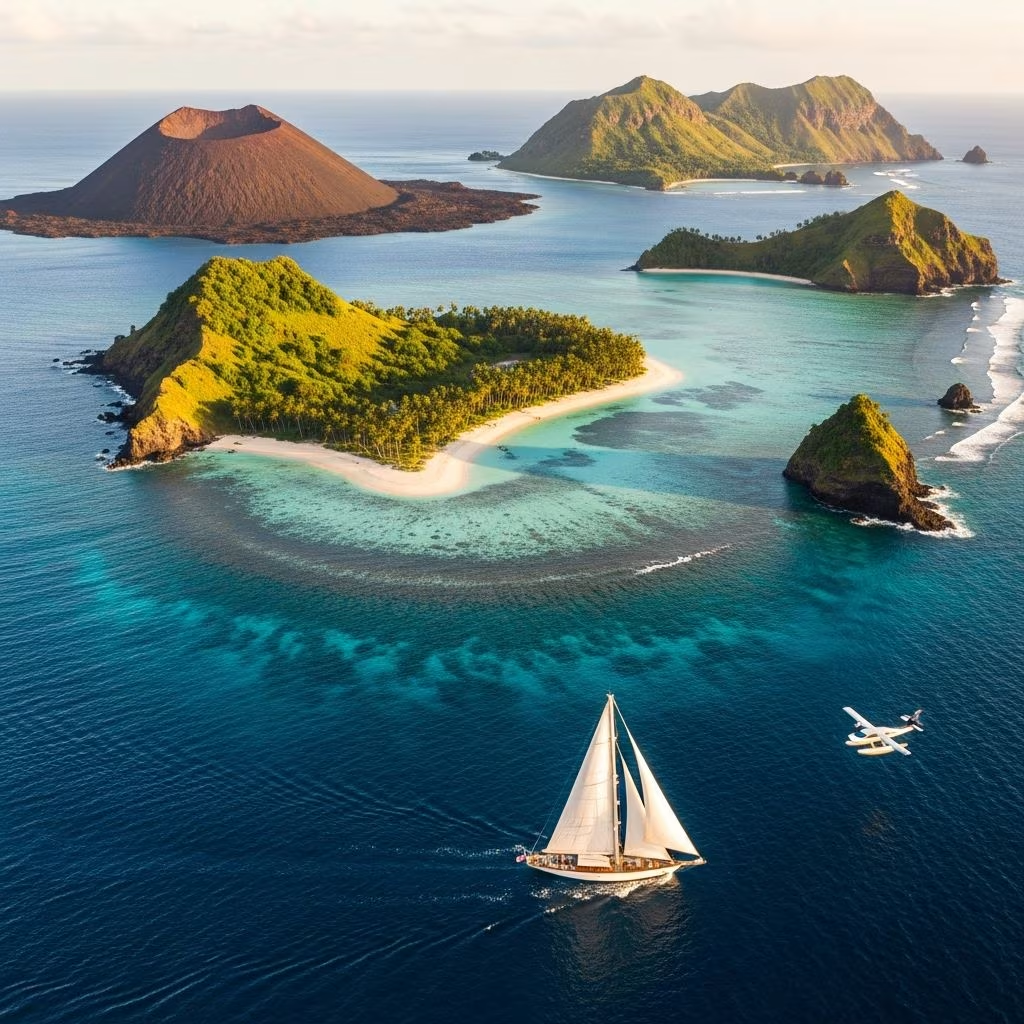
The allure of island vacations extends beyond a single destination. Many travelers dream of exploring multiple islands within a single trip, combining diverse landscapes, cultures, and experiences into one cohesive journey. Island-hopping—the practice of visiting several islands sequentially during one vacation—offers unparalleled opportunities for discovery while presenting unique logistical challenges that require careful planning and strategic decision-making.
Island-hopping represents a distinctive travel approach that transforms a vacation into an expedition across multiple territories. Unlike traditional resort-based stays, this methodology emphasizes movement, exploration, and the gradual unveiling of an archipelago’s character. Travelers who embrace this approach gain exposure to varying ecosystems, local communities, and cultural nuances that would remain hidden during a stationary vacation.
The fundamental appeal lies in diversity. Rather than settling into a single location for an entire trip, visitors can sample the unique offerings of several islands. Geographic positioning, resource availability, and historical development create distinct identities for each island within an archipelago, ensuring that each stop presents something genuinely different.
The first critical decision involves choosing which archipelago aligns with your travel goals, budget constraints, and available time. Several factors should influence this selection:
Successful multi-island vacations rest upon meticulous planning executed well before departure. This preparation phase establishes the foundation for seamless transitions between destinations and maximizes time spent enjoying each location rather than managing logistics.
Duration allocation: Determine how many days to allocate per island. Most travelers benefit from spending at least three to five days on each destination, allowing sufficient time for exploration without excessive packing and unpacking. Brief stays compressed into rushed itineraries generate fatigue and diminish enjoyment quality.
Accommodation diversity: Consider varying your lodging type across islands. Experiencing everything from beachfront resorts to intimate guesthouses to boutique properties enriches your overall journey. Different accommodations provide distinct perspectives on local hospitality and regional character.
Transportation research: Map out specific transportation methods linking your chosen islands. Verify schedules, duration, costs, and booking requirements. Some ferry services operate seasonally or operate infrequently, necessitating schedule adjustments.
The itinerary represents your vacation’s skeleton, determining movement patterns and experience sequencing. Strategic itinerary construction balances exploration ambitions with practical feasibility.
Geographic routing: Consider whether to follow a linear path through islands, creating a natural progression that minimizes backtracking. Alternatively, a hub-and-spoke model uses one island as a base for day trips to surrounding destinations, reducing luggage movement frequency.
Activity sequencing: Organize activities thoughtfully across your itinerary. If one island specializes in water sports and another emphasizes cultural immersion, sequence these strategically to maintain experience variety. Alternating between active and relaxation-focused days prevents fatigue accumulation.
Rest and flexibility: Avoid scheduling activities on every single day. Include buffer days without predetermined plans, allowing spontaneous discoveries and recovery time. This flexibility prevents itinerary stress from overshadowing vacation enjoyment.
Movement between islands fundamentally shapes the multi-island experience. Understanding available transportation methods and their respective characteristics enables informed decisions.
| Transportation Method | Typical Duration | Comfort Level | Cost Range | Best For |
|---|---|---|---|---|
| Inter-island ferries | 30 minutes to 2 hours | Moderate | Budget-friendly | Nearby islands with frequent service |
| Regional aircraft | 15-45 minutes | Good | Moderate | Distant islands requiring speed |
| Private boat charters | Variable | Excellent | Premium | Luxury experiences and customization |
| Speedboat services | 45 minutes to 1.5 hours | Moderate | Mid-range | Quick transitions with minimal downtime |
Each transportation method presents distinct advantages and limitations. Ferry services typically cost least but operate on fixed schedules and may involve lengthy waits. Regional aircraft move faster but cost significantly more. Private charters offer maximum flexibility and comfort but command premium pricing accessible primarily to affluent travelers.
Where you sleep dramatically influences how you experience each island. Rather than defaulting to identical resort properties on every island, consider diversifying your accommodation selections.
Beachfront resorts: These properties provide immediate water access and comprehensive tourist amenities. They excel for travelers prioritizing convenience and facility consistency but may limit authentic local interaction.
Family-operated guesthouses: Smaller properties managed by local families offer intimate experiences and insider knowledge unavailable through larger operations. These accommodations frequently provide superior cultural immersion at reduced costs.
Boutique properties: Mid-scale establishments balance personal attention with quality amenities. These venues often reflect local architectural traditions and artistic sensibilities.
Eco-lodges and sustainable properties: Environmentally conscious accommodations appeal to travelers prioritizing ecological responsibility. These properties typically emphasize renewable energy, waste reduction, and community engagement.
Moving between islands complicates packing considerations. Rather than transporting voluminous luggage, experienced island-hoppers adopt strategic packing approaches.
Multi-island vacations introduce expenses beyond typical single-destination trips. Accounting for these additional costs ensures financial sustainability and prevents mid-vacation budget crises.
Transportation costs: Inter-island travel represents a significant expense category. Budget ferry fares, flight expenses, and boat charter costs strategically within your overall vacation budget.
Accommodation variety pricing: Prices fluctuate considerably between islands and property types. Research typical pricing on each destination to allocate appropriate funds and avoid disappointments from unexpectedly expensive properties.
Currency considerations: Some archipelagos utilize multiple currencies across different islands. Research exchange rates and determine whether carrying local currency or using credit cards proves more economical.
Activity expenses: Guided tours, water sports, and recreational activities accumulate quickly. Establish a realistic activity budget that balances experiences against financial constraints.
Archipelago weather patterns significantly impact vacation quality and logistics feasibility. Understanding seasonal variations enables informed travel timing decisions.
Tropical archipelagos typically experience distinct wet and dry seasons. Dry season travel offers superior weather, calm seas facilitating ferry operation, and reliable accessibility. However, dry season coincides with peak tourism, resulting in crowding and premium pricing.
Shoulder season travel—the periods transitioning between dry and wet seasons—provides middle ground between price and crowd levels. Expect occasional rain but retain generally favorable conditions. Ferry schedules typically maintain reliability during shoulder seasons.
Wet season travel presents bargain pricing and minimal crowds but involves significant rainfall, potential ferry cancellations, and limited activity availability. This timing suits budget-conscious travelers prioritizing savings over weather perfection.
Island-hopping, while exhilarating, can generate substantial fatigue through continuous movement and exploration. Intentionally structuring rest into your itinerary prevents exhaustion from overshadowing your vacation.
Designate specific days as low-key or stationary, minimizing scheduled activities and permitting spontaneous relaxation. Spend unstructured time lounging on beaches, reading, swimming, or simply observing local life. These seemingly unproductive moments often generate the most cherished vacation memories.
Alternate between activity-intensive days and quiet recovery periods. After a day of guided tours or water sports, schedule a following day featuring minimal planned activities. This rhythm maintains engagement while preventing burnout.
Multi-island vacations create opportunities for meaningful interaction with diverse local communities. Approaching these encounters with respect and cultural sensitivity enriches experiences for both travelers and residents.
Research local customs, traditions, and cultural norms before visiting each island. Understanding appropriate dress codes, greeting customs, and behavioral expectations enables respectful engagement. Support local economies by purchasing from community-based enterprises, eating at family-owned restaurants, and hiring local guides.
Learn basic phrases in local languages, demonstrating respect for cultural identities. Participate in community festivals or local events when timing permits, experiencing authentic cultural expressions beyond tourist-focused activities.
Multi-island travel involves navigating multiple destinations and potentially different countries or jurisdictions within archipelagos. Proper documentation and logistics management prevents complications.
Passport and visa requirements: Verify that your passport maintains sufficient validity for your entire trip duration. Research visa requirements for each island destination, recognizing that some archipelagos treat islands as separate jurisdictional entities with distinct entry requirements.
Travel insurance: Multi-island travel complicates typical travel insurance considerations. Ensure your policy covers all destinations on your itinerary and includes medical evacuation coverage, relevant for remote island locations with limited medical facilities.
Digital documentation: Maintain digital copies of important documents including passport pages, travel insurance policies, and accommodation confirmations. Cloud storage and email backups ensure accessibility even if physical copies are lost.
Most travelers benefit from visiting 3-4 islands per week-long trip. This quantity balances exploration ambitions with practical movement logistics. Attempting to visit too many islands results in excessive travel time, exhaustion, and insufficient destination immersion.
Advanced booking provides security and ensures availability, particularly during peak seasons. However, some travelers prefer booking first and last nights in advance while determining intermediate accommodations based on on-arrival preferences and recommendations. This hybrid approach balances planning with flexibility.
Build flexibility into your itinerary by maintaining buffer days that permit rescheduling without vacation disruption. Consider travel insurance covering cancellation losses, particularly during seasons with weather uncertainty.
Download translation applications and language learning resources before departure. Learn essential phrases in local languages. English-language proficiency varies across archipelagos; major tourist destinations typically feature English-speaking staff, while remote islands may require greater communication effort.
Multi-island vacations represent travel’s most enriching expressions, combining relaxation with discovery, comfort with adventure, and leisure with cultural engagement. By thoughtfully planning logistics, strategically selecting islands, and intentionally balancing activity with rest, travelers transform what could be chaotic movement into a harmonious journey revealing the archipelago’s complete character.
The most memorable vacations emerge not from perfect itinerary execution but from embracing spontaneity within structured frameworks. Allow space for unexpected discoveries, meaningful local interactions, and moments of unscheduled relaxation. These authentic experiences ultimately define how island-hopping adventures integrate into your life’s travel narrative.
