

 Travel Essentials
 Travel Essentials

Explore Isle Royale National Park's pristine trails, wildlife, and isolation. This ultimate guide covers access, hikes, lodging, and why it's a must for nature lovers seeking uncrowded adventures.
 Travel Essentials
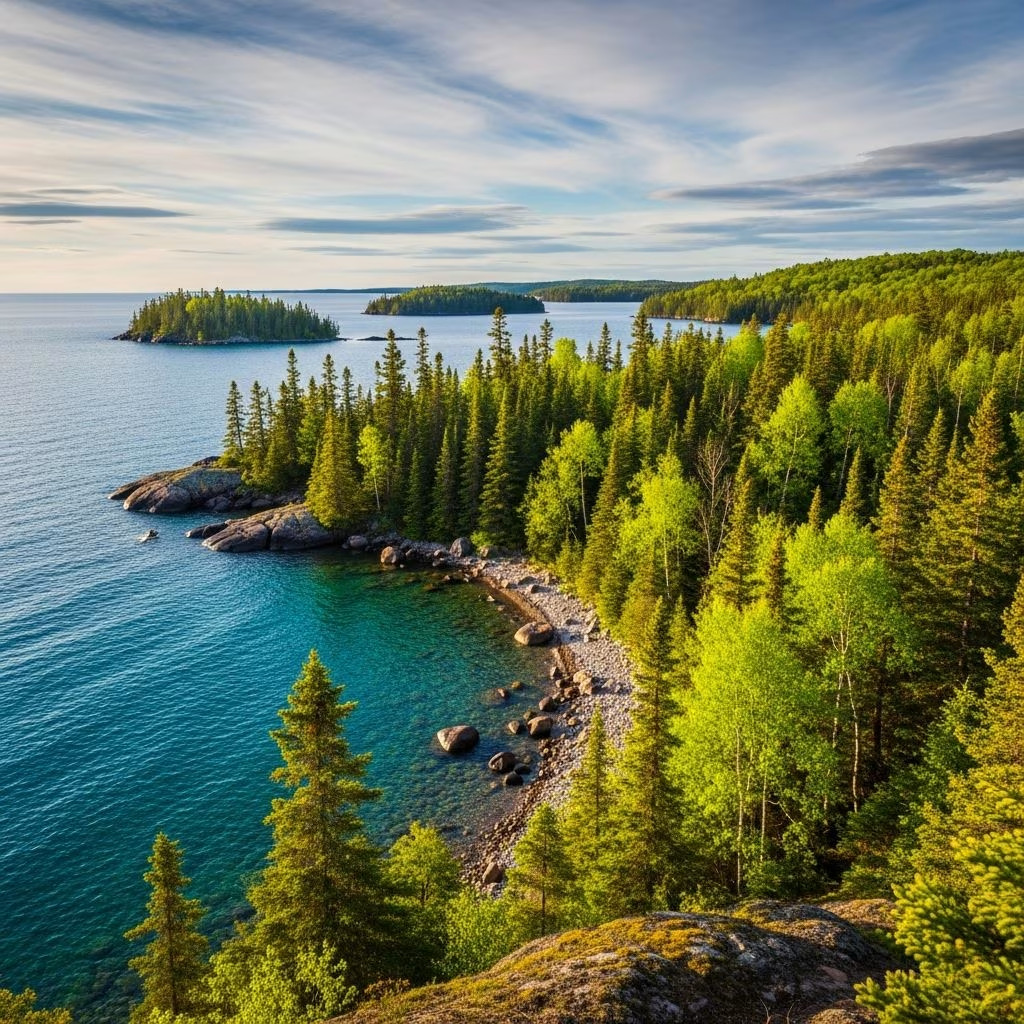
Nestled in the vast expanse of Lake Superior, Isle Royale National Park stands as a beacon of untouched natural beauty, drawing only the most dedicated adventurers to its shores. Spanning nearly 250,000 acres across an archipelago of over 200 islands, this park offers unparalleled seclusion, with fewer than 20,000 visitors annually—making it the least-visited national park outside Alaska. Its remoteness, defined by the absence of roads, vehicles, and cell service, transforms a visit into a true escape from modern life, where the rhythm of waves and wildlife takes center stage.
The allure of Isle Royale lies not in grand overlooks or tourist traps, but in its intimate scale and raw wilderness. Measuring 45 miles long and just 9 miles wide at its broadest, the main island feels personal and approachable, fostering a deep connection with nature. Here, hikers share trails with moose and wolves, paddle canoes across glassy inland lakes, and witness ecosystems in delicate balance. Repeat visitors flock back, drawn by the park’s ability to recharge the soul amid conifer forests and rugged shorelines.
Unlike crowded parks like Great Smoky Mountains, which saw over 14 million visitors in recent years, Isle Royale’s exclusivity weeds out casual tourists, attracting backpackers, boaters, and those craving solitude. The park closes entirely in winter, reopening each spring as Lake Superior’s ice melts, emphasizing its seasonal, ephemeral charm.
Reaching Isle Royale demands commitment, amplifying the reward of arrival. Located 15-56 miles from mainland shores—18 miles off Minnesota’s coast and farther from Michigan—no bridges or airports connect it directly. Travel options include:
Plan ahead: Ferries book early, especially for Rock Harbor lodging. Day trips are possible but limit exploration; multi-day stays unlock the park’s depths. No cars mean all movement is by foot, canoe, or kayak—embrace the foot-powered ethos.
With over 165 miles of trails weaving through ancient forests, bogs, and ridges, hiking defines an Isle Royale experience. Trails suit various fitness levels, from gentle lakeside paths to multi-day epics. Key routes include:
| Trail Name | Length | Difficulty | Highlights |
|---|---|---|---|
| Greenstone Ridge Trail | 43 miles | Strenuous | Panoramic ridges, lakes, swamps; 3-5 day thru-hike from Lookout Louise to Windigo. |
| Scoville Point Trail | 3.2 miles RT | Easy-Moderate | Stunning Lake Superior views, pebble beaches, forested paths. |
| Mount Franklin Trail | 4 miles RT | Moderate | Highest point on island (elev. 1,394 ft), 360-degree vistas. |
| Siskiwit Lake Trail | 8 miles RT | Moderate | Access to largest lake on island, prime fishing and paddling. |
Most backpackers tackle sections of the Greenstone, the park’s backbone, offering exposed ridges and hidden gems like pristine lakes. Over 36 campgrounds dot the network, each with shelters, privies, and fire rings—first-come, first-served beyond reservations at a few sites.
Isle Royale’s ecosystem is a living laboratory, famed for its moose-wolf predator-prey dynamics studied for decades. Spot bull moose grazing in wetlands, their massive antlers silhouetted against the water, or hear wolves’ haunting calls at dusk. Other residents include beavers, otters, foxes, and diverse birds—loons, eagles, and warblers abound.
Trails reveal fresh tracks: paw prints in mud, scat near campsites. Kayak shorelines for closer encounters, but maintain distance—park rules protect this fragile balance. The isolation preserves biodiversity, with old-growth cedars and orchids thriving in bogs.
Options range from rustic to comfortable, all emphasizing minimal impact:
Pack light: No stores beyond basic supplies at Rock Harbor. Water purification essential; bears rare but food hangs required.
Lake Superior’s shores and 50 inland lakes beckon water lovers. Rent kayaks/canoes at Rock Harbor ($20-50/day) for serene paddles to hidden coves or Siskiwit Lake. Guided ranger tours visit Edisen Fishery, a preserved 1920s site, or Raspberry Island.
Fishing thrives: Lake trout, brook trout, smallmouth bass. Michigan licenses needed; inland waters yield walleye. Sunset paddles amplify the magic, with loons echoing across glassy surfaces.
To thrive in this remote setting:
Budget $300-600/person for 3-5 days, excluding travel. The investment yields priceless solitude.
Its remoteness requires boat or plane access across Lake Superior, deterring casual visitors and ensuring seclusion.
No—zero roads or vehicles; foot, boat, or ski only.
Yes for prepared families; short trails and ranger programs suit kids, but remoteness demands self-sufficiency.
Early morning/late evening in wetlands along trails like Feldtmann Loop.
Ranger-led hikes, boat cruises, and programs from Rock Harbor/Windigo.
Isle Royale’s magic endures through visitor stewardship. Low impact keeps it wild—over 80% remains untouched. Support by following rules, donating to the friends group, or advocating for Lake Superior protections. This hidden gem rewards those who venture far, offering a blueprint for wilderness immersion in an overcrowded world.
