

 Travel Essentials
 Travel Essentials

Complete travel guide to Itacaré, Brazil featuring beaches, hiking trails, water sports, and eco-tourism activities in Atlantic Forest region.
 Travel Essentials
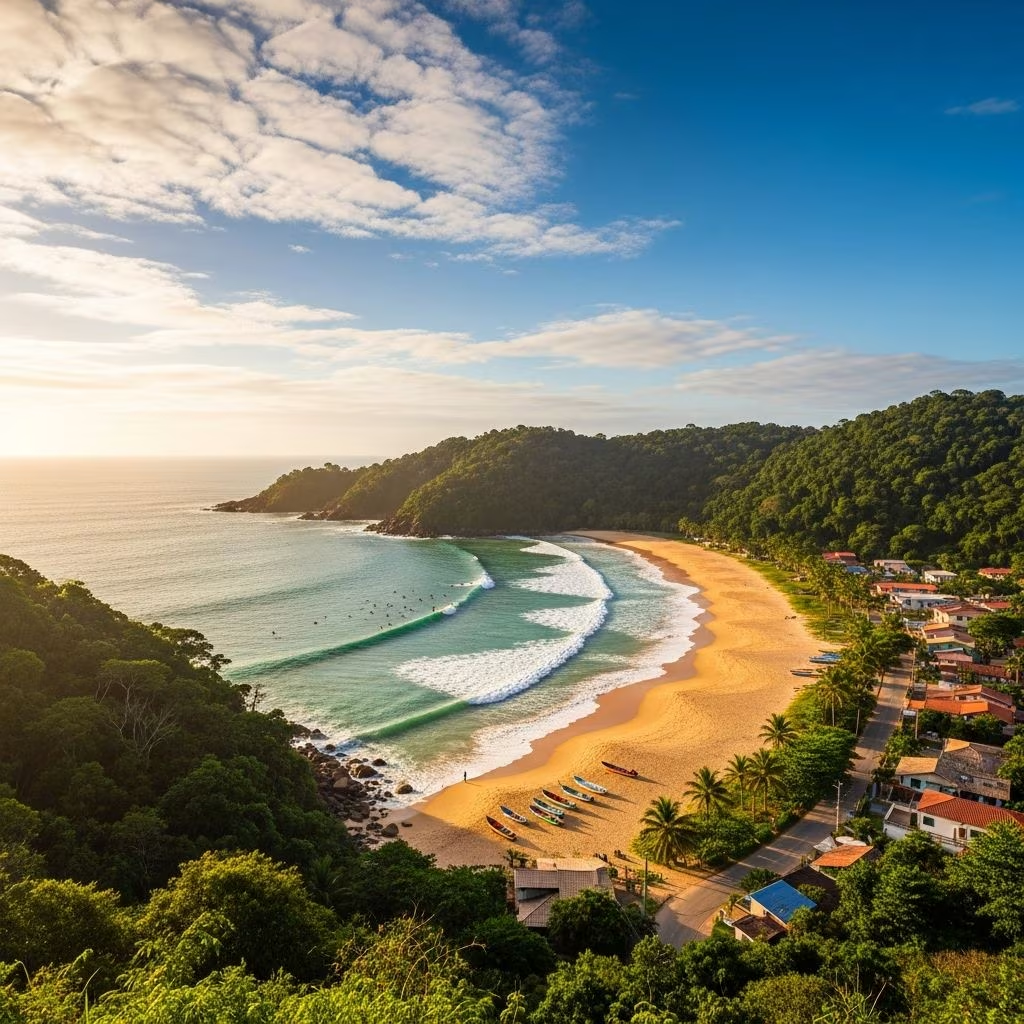
Nestled along the coast of Bahia in northeastern Brazil, Itacaré represents a unique convergence of natural splendor, adventure opportunities, and authentic cultural experiences. Located 250 kilometers south of Salvador and situated along what locals call the “Discovery Coast”—named for Portuguese explorer Pedro Alvares Cabral’s 1500 landing—this formerly secluded fishing village has emerged as one of Brazil’s premier destinations for travelers seeking both relaxation and exploration. The transformation began in 1998 when an ecological highway connected Itacaré to nearby Ilhéus, opening this paradise to a growing audience of international and domestic visitors.
Itacaré occupies a strategic position where the Rio de Contas meets the Atlantic Ocean, creating a landscape where river systems blend seamlessly with coastal environments. The town’s elevation and mountainous terrain contribute to its dramatic topography, with lush vegetation cascading toward pristine shorelines. The region sits within the Cocoa Coast, an area historically dominated by cocoa production that paradoxically preserved vast stretches of the Atlantic Forest. Unlike other Brazilian coastal developments that cleared rainforests entirely, cocoa cultivation required forest canopy coverage for shade, creating a symbiotic relationship that maintained ecological integrity while generating economic output.
Part of a larger UNESCO World Heritage protected area, Itacaré benefits from environmental regulations that limit overdevelopment and prioritize conservation. This designation reflects the global significance of the Atlantic Forest ecosystem, which once stretched continuously along Brazil’s entire eastern coastline but now exists only in fragmented remnants, with the Bahia region containing some of the largest intact sections.
Itacaré’s beach offerings range dramatically from accessible urban sands to remote, virtually undiscovered stretches requiring dedicated hiking to reach. The main beaches serviced by town infrastructure include options suitable for different visitor preferences and activity levels.
The beaches display characteristic white sand composition typical of Bahia’s coast, with towering coconut palms providing natural shade and contributing to the tropical aesthetic. Water temperatures remain consistently warm year-round, eliminating seasonal barriers to ocean recreation.
The Atlantic Forest surrounding Itacaré presents extensive trail networks ranging from casual 40-minute walks to challenging full-day expeditions. These paths wind through dense vegetation, reveal hidden waterfalls, and connect multiple beaches in a continuous loop that exemplifies the region’s geographic interconnectedness.
The “Trilha das 4 Praias” (Four Beaches Trail) represents the premier long-distance hiking experience, spanning approximately 2.8 miles and connecting Itacarezinho, Camboinha, Havaizinho, and Engenhoca beaches. This trail traverses well-marked forest terrain suitable for various fitness levels, though certain sections present moderate challenges. Starting points exist at both Itacarezinho and Engenhoca, with hiking in reverse from Engenhoca recommended for visitors attempting the complete route. The trail immerses hikers in authentic rainforest ecology, revealing the biodiversity that characterizes this protected ecosystem.
The Prainha Trail offers a more accessible option, requiring roughly 40 to 45 minutes from the Ribeira Beach trailhead and passing through palm forest sections with waterfall encounters. This route accommodates varying skill levels, though proper footwear with good traction enhances safety and comfort compared to casual flip-flops.
For those preferring guided experiences, local tourism agencies and private guides offer structured hikes typically ranging from R$30 to R$80 per person, depending on group size and destination complexity. These guided options provide ecological education, safety oversight, and cultural insights unavailable to independent trekkers.
Beyond ocean swimming and surfing, Itacaré’s freshwater systems offer distinct recreational opportunities that showcase alternative aquatic experiences. The Tijuípe Waterfall represents the region’s most accessible waterfall destination, featuring easy access appropriate for families and requiring no special athletic ability. The waterfall’s fresh water temperature provides stark contrast to ocean environments, creating uniquely refreshing experiences for visitors accustomed to salt-water conditions.
White-water rafting expeditions operate from Taboquinhas, located approximately 30 kilometers from Itacaré, where river rapids create excitement-generating descents. These tours typically include river bathing intervals and opportunities for adventurous cliff-jumping at designated safe locations, with costs averaging R$60 per participant. The combination of adrenaline-inducing rapid negotiation and tranquil swimming intervals provides balanced activity flow throughout excursions.
For visitors seeking to experience rainforest ecosystems from elevated perspectives, canopy tour providers operate suspended trail networks that traverse treetop environments at heights unavailable to ground-level trekkers. Conduru Arvorismo specializes in such experiences, offering interconnected suspended trails with variable difficulty levels spanning multiple activity types. Participants walk across forest canopy routes, navigate rope nests, traverse suspended bridges, and experience exhilarating zipline descents while observing forest ecology from unique vantage points. These tours accommodate varying comfort levels with difficulty-appropriate section options, allowing nervous participants to avoid extreme challenges while still experiencing canopy-level immersion.
Itacaré’s historical significance stems partly from its position within the Cocoa Coast region, which supplied the global cocoa market’s majority demand during the 1920s. This agricultural heritage persists through active plantations and agritourism opportunities allowing visitors to understand both cultivation techniques and local economic history. The cocoa farming model prevalent in the region demonstrates sustainable practices born from necessity—cocoa plants require forest canopy shade to prevent direct sunlight damage, creating incentives for forest preservation rather than clearing.
Visiting cocoa farms provides educational experiences regarding tropical agriculture, processing techniques, and the environmental management systems that distinguish Bahian production from intensive monoculture approaches elsewhere. Many operations now incorporate visitor experiences where tourists observe cultivation practices, learn harvest procedures, and participate in chocolate creation processes.
Itacaré’s nocturnal scene centers around Pituba Street, the primary thoroughfare hosting concentrated restaurant, bar, and entertainment establishments. The street atmosphere balances energetic nightlife with intimate dining options, accommodating diverse visitor preferences. Live music venues contribute to the youthful, dynamic ambiance that characterizes the town’s evening culture. Parallel streets offer additional dining and entertainment venues, allowing visitors to customize evening experiences according to personal preferences.
The broader Afro-Brazilian cultural context permeating Bahia manifests through local cuisine emphasizing traditional ingredients and preparation methods, musical performances incorporating regional traditions, and festivals celebrating Candomblé and Capoeira heritage. These cultural elements provide depth beyond beach and nature attractions, offering visitors authentic engagement with local communities and traditions.
Despite maintaining its character as a small town, Itacaré offers comprehensive tourist infrastructure accommodating various budgets and preferences. Lodging options range from luxury resorts providing upscale amenities to charming guesthouses emphasizing personal service and local hospitality. This accommodation diversity ensures accessibility for budget-conscious backpackers and affluent travelers seeking premium experiences alike.
Restaurant and bar establishments reflect both international visitor expectations and authentic Bahian culinary traditions. The dining scene balances casual beachside venues with formal fine-dining experiences, accommodating every occasion from intimate dinners to social group meals.
Itacaré experiences tropical climate patterns with consistently warm temperatures year-round, eliminating seasonal weather barriers that restrict visiting windows elsewhere. However, rainfall patterns, ocean conditions, and visitor volumes fluctuate with seasons, influencing experience quality across different months. Surfers evaluate conditions differently than casual beach visitors, creating distinct peak seasons for different traveler types.
The ecological highway connection established in 1998 remains the primary terrestrial access route, providing vehicle access through scenic Bahian landscapes. Salvador’s international airport offers the nearest major transit hub, with ground transportation covering the 250-kilometer distance via established road infrastructure. This accessibility balance maintains Itacaré’s authentic character while enabling convenient visitor arrival without requiring international flight connections to smaller regional airports.
Itacaré’s designation within UNESCO World Heritage protected areas reflects commitment to environmental preservation alongside economic development through tourism. Conservation management systems limit development density, regulate commercial activity impacts, and maintain ecological integrity of surrounding Atlantic Forest. Local businesses increasingly adopt sustainable practices acknowledging that long-term tourism viability depends on preserving the natural attractions that generate visitor interest.
| Activity Category | Typical Duration | Difficulty Level | Approximate Cost |
|---|---|---|---|
| Beach visits and swimming | 2-4 hours | Easy | Free |
| Guided hiking tours | 2-4 hours | Moderate | R$30-80 per person |
| Waterfall visits | 2-3 hours | Easy to moderate | Free to R$40 |
| White-water rafting | 3-4 hours | Moderate to challenging | R$60 per person |
| Canopy tours | 2-3 hours | Moderate | R$80-150 per person |
| Cocoa farm visits | 2-3 hours | Easy | R$40-80 per person |
Itacaré combines pristine beaches with extensive rainforest access, offering integrated nature experiences unavailable in purely coastal destinations. The Atlantic Forest proximity enables rapid transitions from ocean to jungle environments, while smaller-town character contrasts with commercialized resort areas.
Yes, the established tourist infrastructure, active visitor community, and organized group activities create welcoming environments for independent travelers. Organized group hiking and water sports tours facilitate social connection while maintaining independence.
Three to five days provides sufficient time for beach relaxation, hiking exploration, and water-based activities without exhausting available experiences. Extended stays allow deeper engagement with local culture and leisurely pacing through attractions.
Absolutely. Hiking, canopy tours, cocoa farm visits, and cultural experiences accommodate visitors avoiding water activities. Calm beaches like Praia da Concha provide safe wading experiences for those uncomfortable with strong ocean conditions.
Both approaches work effectively. Well-marked trails support independent hiking, while guided tours provide ecological education and safety assurance. Combination approaches maximize experience depth while maintaining flexibility.
Itacaré represents a rare convergence of natural preservation, adventure opportunity, and authentic cultural experience within accessible proximity to international travel infrastructure. The destination maintains authentic character despite growing tourism visibility, with development patterns respecting environmental constraints and community identity. Whether seeking intensive activity experiences or contemplative natural immersion, visitors discover abundant options within landscapes of genuine beauty and ecological significance. The combination of beaches, rainforest, water systems, and cultural richness creates multifaceted appeal transcending typical tourist demographics, ensuring diverse visitor satisfaction across varying interests and activity preferences.
