

 Travel Essentials
 Travel Essentials

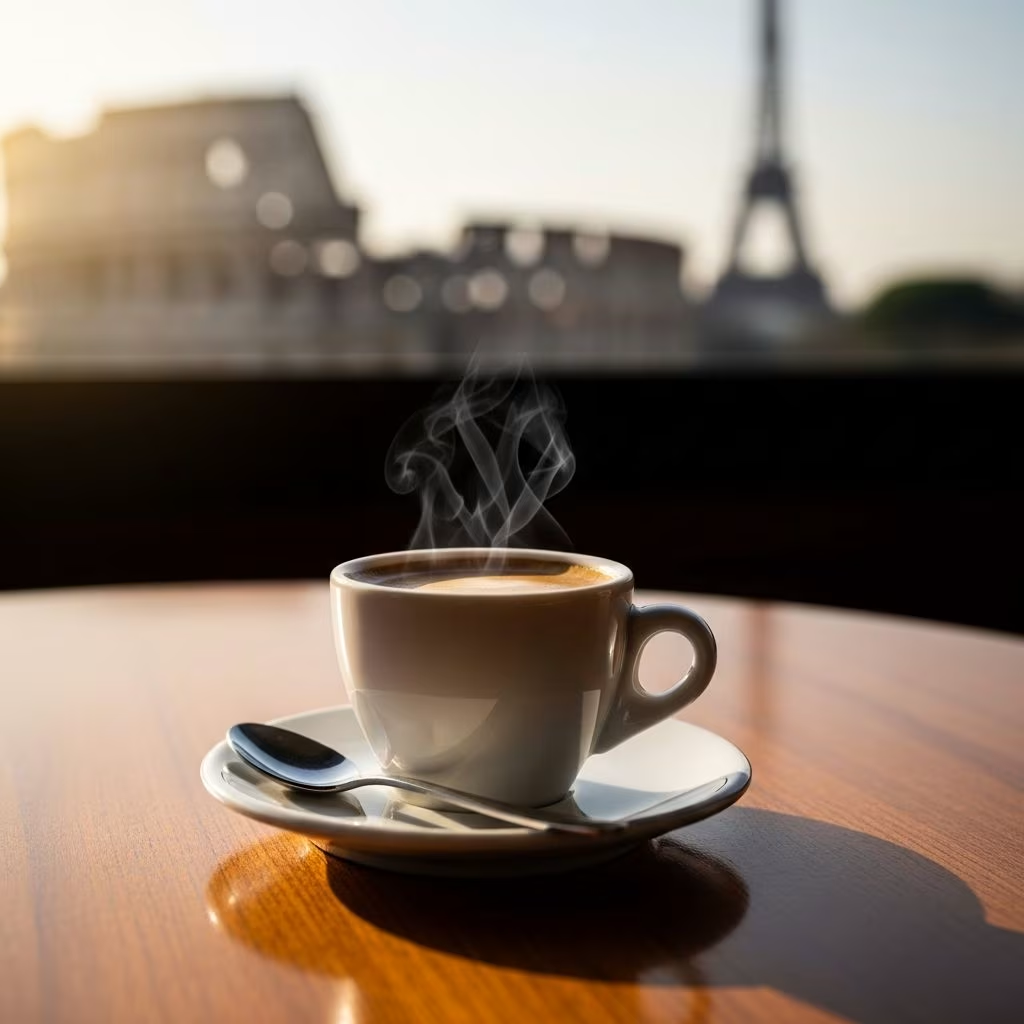
Explore how Italian espresso became a cultural ritual, from daily bar-side traditions to its bid for UNESCO recognition.
 Travel Essentials
Italian espresso stands as a global symbol of precision, flavor, and daily ritual, now at the heart of a national effort for UNESCO Intangible Cultural Heritage recognition. This push unites communities from northern Venice to southern Naples, framing the quick shot of coffee as more than a beverage—it’s a thread in Italy’s social and literary fabric.
At its core, Italian espresso embodies a meticulous craft passed through generations. Brewed under high pressure from finely ground beans, it yields a concentrated 25-30ml shot topped with a golden crema, savored in seconds yet cherished for hours of conversation. This isn’t casual drinking; it’s a structured rite observed in bars nationwide, where standing at the counter signals respect for tradition over leisure.
From bustling Milan cafés to quiet Sicilian spots, this pattern reinforces espresso’s role in rhythm of Italian life, blending utility with cultural depth.
Espresso’s story traces to the late 19th century, when Luigi Bezzera patented the first steam-pressure machine in 1901, revolutionizing coffee extraction. Angelo Moriondo’s 1884 precursor and Desiderio Desideri’s lever innovations followed, but post-WWII machines by Achille Gaggia elevated it to modern form with that signature crema.
By the 1950s, espresso machines dotted Italy’s urban landscape, turning coffee bars into social hubs. Venice’s historic caffè like Florian, dating to 1720, evolved to embrace espresso, while Naples refined street-level consumption. This evolution mirrors Italy’s industrial boom, making espresso a democratic pleasure accessible to all classes.
| Era | Key Innovation | Cultural Impact |
|---|---|---|
| 1884 | Moriondo’s patent | Early mechanized brewing |
| 1901 | Bezzera’s machine | Commercial viability |
| 1940s | Gaggia’s piston | Crema perfection, mass adoption |
| Today | UNESCO bid | Global heritage recognition |
Italy’s campaign, titled “Italian espresso coffee between culture, rituals, sociability, and literature in emblematic communities from Venice to Naples,” gained momentum in 2022. The Ministry of Agricultural, Food and Forestry Policies unanimously backed it, led by Undersecretary Gian Marco Centinaio, who hailed espresso as integral to national identity.
The bid merged efforts from the Consortium for the Protection of Traditional Italian Espresso Coffee in Treviso and Naples’ community advocates, aiming for the 2023 cycle. Proponents argued its rituals qualify under UNESCO’s Intangible Cultural Heritage framework, akin to Neapolitan pizza or the Mediterranean diet.
However, Italy’s UNESCO Commission rejected it in 2023, favoring opera instead. Despite appreciation, political turbulence reportedly hindered prior attempts. Members like Cimbali and ESSSE Caffè persist in support, viewing recognition as vital for preserving authenticity amid global chains.
The espresso rite follows unspoken rules: order at the till, pay, then claim your shot at the bar. Sugar it swiftly—con zucchero or macchiato—stir minimally to preserve crema, and sip standing amid locals. Variations like cappuccino (milk-frothed, mornings only) or ristretto (shorter, bolder) add nuance.
These steps, honed over decades, ensure consistency, turning each bar into a ritual space where haste meets mindfulness.
Espresso bars serve as Italy’s informal town squares, where brief exchanges build lasting ties. A 2022 survey noted 93% of Italians drink coffee daily, mostly socially. From apprenticeships where baristas mentor youth to post-game huddles, it lubricates interactions across divides.
In Venice, tourists mingle with gondoliers; in Naples, street vendors share shots amid chaos. This inclusivity counters isolation, embodying la dolce vita‘s communal spirit. Globally, Italian diaspora cafés replicate this, exporting the rite.
Espresso permeates Italian literature, symbolizing life’s intensity. Dante’s Inferno echoes in bitter brews; modern authors like Elena Ferrante depict Neapolitan bars as plot pivots. Umberto Eco praised its philosophical brevity, while Primo Levi tied it to resilience.
Poets evoke crema as life’s fleeting foam, rituals as metaphors for routine’s poetry. This literary weave strengthens the UNESCO case, proving espresso’s transcendence beyond the cup.
Italy’s diversity shines in espresso styles:
These reflect terroir and temperament, from alpine restraint to southern exuberance, unifying yet diversifying the tradition.
Globalization threatens purity: chains dilute standards, favoring volume over craft. Capsules mimic but lack soul; industrial blends erode bean quality. Italy counters via consortia enforcing Traditional Italian Espresso marks, mandating Arabica blends and manual pulls.
The UNESCO bid spotlights these risks, urging preservation. Climate change hits coffee yields, prompting sustainable sourcing debates.
Worldwide, espresso inspires: Australia’s flat whites, America’s lattes, Vietnam’s robusta twists. Yet purists insist true form remains Italian. Recognition could standardize protections, boosting exports worth billions annually.
Cafés from Tokyo to New York ape rituals, but lack bar-side banter’s warmth. UNESCO status might elevate it beside falafel or yoga, affirming coffee’s diplomatic power.
Listing ensures transmission to youth via apprenticeships, festivals, and education. It combats dilution, celebrates artisans, and markets Italy’s soft power. Rejections aside, persistence signals commitment—future bids loom.
Its high-pressure extraction, crema layer, and ritualistic consumption distinguish it from drip or French press methods.
No, the 2023 bid failed, but advocacy continues through consortia and communities.
Use a quality machine, fresh grind, precise tamping, and serve immediately with crema intact.
Espresso symbolizes ephemerality and connection in Italian works, deepening its cultural claim.
Yes—stand at the bar, order simply, sip fast, and chat locally.
