

 Travel Essentials
 Travel Essentials

Italy enforces bans on key lockboxes for Airbnb-style rentals in cities like Milan and Florence, aiming to boost security and curb misuse while challenging hosts to adapt.
 Travel Essentials
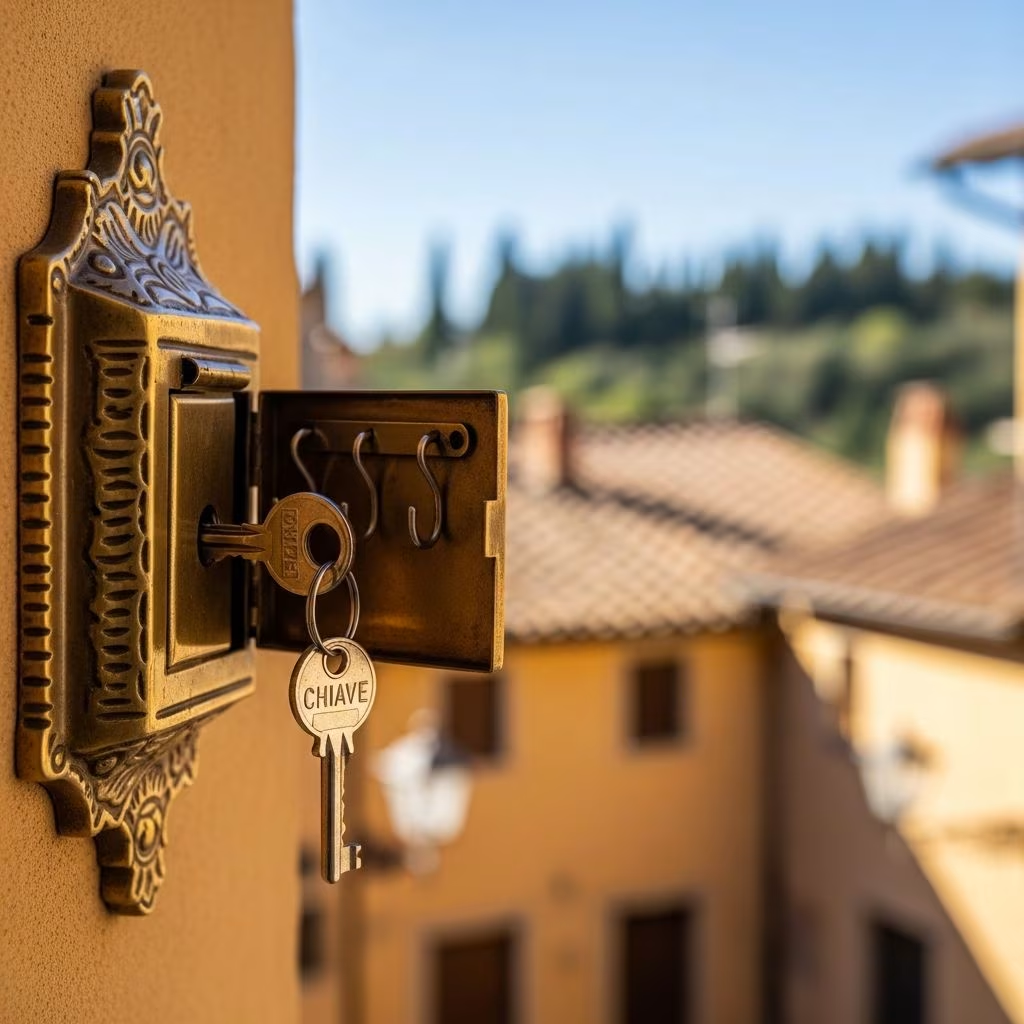
Italy is implementing stricter controls on short-term vacation rentals by prohibiting key lockboxes on public property, starting with major cities like Milan in 2026. This move addresses security vulnerabilities and unauthorized use of public spaces, affecting platforms like Airbnb and forcing hosts to rethink check-in processes.
Key lockboxes, those small secure containers holding property keys for self-service access, have become staples for contactless check-ins in short-term rentals. Travelers enter a code to retrieve keys from boxes often attached to door handles, fences, or street fixtures. While convenient for late arrivals or remote hosts, Italian authorities view them as problematic when placed on public land.
The core issue revolves around public space misuse. Municipalities argue that affixing lockboxes to street furniture, lampposts, railings, or gates without permits turns communal areas into private profit tools. This practice not only disrupts urban aesthetics but also poses safety risks, as evidenced by reports linking lockboxes to illicit activities like drug exchanges in Milan.
Several Italian tourist hubs have pioneered these bans, creating a patchwork of rules that short-term rental operators must navigate. Milan’s recent city council decision aligns it with earlier adopters, signaling a national trend toward regulated hospitality.
| City | Implementation Date | Fines | Key Rationale |
|---|---|---|---|
| Milan | January 2026 | €100–€400 + removal costs | Public space misuse, crime prevention |
| Florence | February 2025 | Administrative fines, 10-day removal | Urban decorum, safety |
| Bologna | Prior to 2026 | Varies | Overtourism control |
| Rome | Prior to 2026 | Varies | Public order |
| Venice | Prior to 2026 | Varies | Tourist impact mitigation |
Florence led with a swift resolution requiring immediate dismantling, while Milan’s approach includes explicit penalties to deter non-compliance. These measures respond to resident complaints about visual clutter and security gaps in high-tourism zones.
The push against key boxes ties into broader national debates on guest verification. In late 2024, Italy’s Ministry of the Interior mandated in-person ID checks for short-term stays, effectively curbing remote access methods. A May 2025 Lazio court ruling temporarily struck this down as overly broad, but the Council of State reversed it in November 2025, reinstating requirements for visual ID confirmation.
Local bans like Milan’s refine this framework, focusing on physical installations rather than outright self-check-in prohibition. Smart locks or internal boxes can persist if hosts ensure face-to-face or verified ID processes, balancing convenience with oversight.
Authorities cite multiple factors for the crackdown, blending public welfare with practical concerns.
City Councillor Michele Albiani noted, ‘Self check-ins lead to improper public space use for private gain, causing resident inconvenience.’
Property owners face operational overhauls. Small-scale hosts, reliant on lockboxes for scalability, must invest in alternatives or hire greeters, potentially eroding profitability.
Airbnb and similar platforms may see listing dips in regulated areas unless they adapt tools like digital key delivery or partner networks. Some predict a revival of traditional hotels offering personalized welcomes.
Hosts aren’t out of options. Viable workarounds maintain efficiency while meeting rules.
| Method | Pros | Cons | Compliance Fit |
|---|---|---|---|
| Smart Locks (e.g., August, Yale) | Remote code generation, app control | Requires internet, ID verification | High, if on private property |
| Direct ID check, personal touch | Time-intensive for hosts | Perfect match | |
| Professional greeters, 24/7 availability | Added fees (€20–50/stay) | Fully compliant | |
| Hidden inside property or gate | Needs initial access method | Allowed on private land | |
| Temporary codes, audit trails | Tech setup costs | Viable with video ID |
Many hosts are pivoting to hybrid models, combining tech with verification to satisfy both regulators and guests seeking seamless experiences.
Vacationers should anticipate changes, especially for 2026 trips to Milan or similar cities. Listings may note ‘in-person check-in required,’ with some hosts charging ‘greeter fees.’
Positive note: Stricter rules could foster authentic interactions, like host meet-and-greets sharing local tips, enhancing cultural immersion.
Italy’s actions mirror Europe-wide efforts to tame short-term rental booms. Spain fined Airbnb €56M recently, while cities like Barcelona limit listings. These reflect tensions between tourism revenue and livability, with key boxes as a visible flashpoint.
Expect further evolutions: digital ID mandates, rental caps, or taxes. Travelers benefit from informed planning amid these shifts.
No, only key boxes on public land. Private smart locks or services are fine with proper ID verification.
Fines of €100–€400 per violation, plus removal expenses borne by the host.
Primarily those using public-facing lockboxes; hotels and long-term leases are exempt.
Yes, in-person or visual guest ID is mandated nationally post-2025 court rulings.
Read listing policies, contact hosts early, and consider flexible booking options.
As bans take hold, Italy prioritizes safe, orderly tourism. Hosts adapting with innovative solutions will thrive, while visitors gain from reduced anonymity and better oversight. This regulatory pivot underscores a commitment to balancing economic benefits with community well-being in one of Europe’s top destinations.
