

Food & Culture Stays Travel Essentials Travel Guides Trip Ideas
Categories
From the Blog
Remy’s Ratatouille Adventure at EPCOT: Ride Review, Tips & 2D Update
Travel Essentials

Italy Train Travel Guide: Routes, Tickets, and Rail Pass Tips

Comprehensive guide to navigating Italy's trains: from booking Frecciarossa tickets to scenic routes, rail passes, and station tips for first-timers.
Travel Essentials

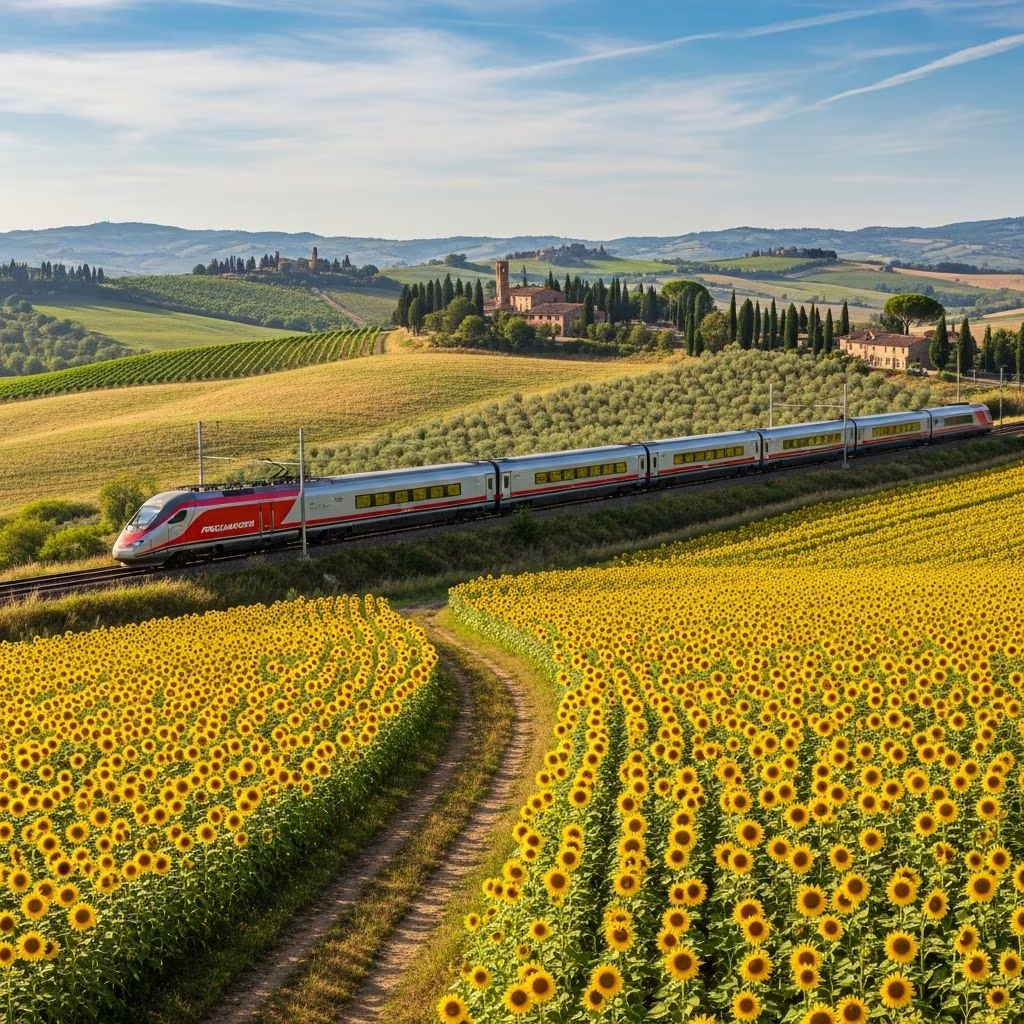
Italy’s extensive rail system offers one of Europe’s most efficient ways to explore its diverse landscapes, from the Alps to the Mediterranean coast. With high-speed services connecting major cities in hours and regional lines reaching remote villages, trains provide comfort, speed, and scenic views superior to driving or flying.

Overview of Italy’s Rail Operators

Two primary companies dominate Italy’s train services: state-owned Trenitalia and private Italo. Trenitalia operates the majority of routes, including high-speed Frecciarossa, Frecciargento, and Frecciabianca trains, as well as Intercity and regional services. Italo focuses on high-speed connections between key northern and central cities like Turin, Milan, Bologna, Florence, Rome, Naples, and Salerno, with extensions to Venice and Brescia.

Trenitalia’s network covers the entire country, including Sicily via ferry connections, while Italo competes aggressively on popular high-speed corridors with competitive pricing and modern amenities. Both offer Wi-Fi, power outlets, and onboard dining, but reservations are mandatory for high-speed and many Intercity trains.

Types of Trains and Their Speeds

Italy’s trains vary by speed and service level to suit different needs:

  • Frecciarossa (Red Arrows): Flagship high-speed trains reaching 300 km/h, ideal for Milan-Rome (under 3 hours) or Venice-Naples.
  • Frecciargento and Frecciabianca: Slightly slower at up to 250 km/h, serving routes like Rome-Bari or Genoa-Rome.
  • Intercity (IC): Medium-distance trains for routes like Milan-Genoa or Rome-Naples-Sicily, comfortable but slower than high-speed options.
  • Regionale (REG): Local trains stopping frequently, no reservations needed, perfect for short hops like Cinque Terre or day trips; cheapest but longest travel times.

High-speed lines drastically cut journey times: Rome to Naples now takes just over 1 hour, compared to hours by regional train.

Key corridors link Italy’s highlights efficiently:

RouteDuration (High-Speed)Key StopsOperator
Milan – Florence – Rome – Naples2.5-3 hrs Milan-Rome; 1 hr Rome-NaplesBologna, FlorenceTrenitalia Frecciarossa, Italo
Venice – Florence – Rome3.5 hrs Venice-RomePadua, Bologna, FlorenceTrenitalia Frecciarossa
Turin – Milan – Venice2.5 hrs Turin-VeniceVeronaTrenitalia Frecciarossa, Italo
Milan – Bari – Lecce4-5 hrs Milan-BariAncona, BariTrenitalia Frecciarossa

These routes feature Frecciarossa 1000 trains with business, premium, and standard classes, including seat maps for optimal choice.

Booking Tickets: Step-by-Step Guide

Tickets go on sale 4-6 months ahead for high-speed trains, earlier booking secures lowest fares (Super Economy from €9.90). Use these platforms:

  • Trenitalia.com or app (English available) for all Trenitalia services.
  • Italo.it for Italo trains.
  • TheTrainline.com or RailEurope.com to compare both operators.
  • ItaliaRail.com for no-fee U.S.-based booking.

Search tips: Enter Italian city names (e.g., Roma Termini, Firenze S.M.N., Venezia Santa Lucia). Select ‘Le Frecce’ for high-speed, ‘Regionale’ for locals. Choose one-way or return, then pick the best price/time.

Validate regional tickets before boarding; high-speed tickets include assigned seats and are e-tickets (QR code).

Rail Passes: Are They Worth It?

Eurail Italy Pass offers 3-10 travel days in a month, covering Trenitalia regionals fully and high-speed with €10-13 seat reservations. Not valid on Italo. Best for itineraries with 3+ long trips or side explorations (e.g., Milan-Venice-Florence-Rome plus day trips).

  • Pros: Flexibility for spontaneity, covers regionals to small towns.
  • Cons: Point-to-point tickets often cheaper for linear Milan-Rome routes; reservations extra.

Calculate via Seat61.com: For 4 high-speed legs, passes break even only with many regionals.

Major stations like Roma Termini, Milano Centrale, Firenze Santa Maria Novella are hubs with shops, luggage storage, and info desks. Check overhead boards for train number, final destination (not intermediate), and platform (binario).

Arrive 20-30 minutes early; platforms announced 10-20 minutes prior. Validate tickets at green machines if paper. Board promptly—doors close early. Use Frecciarossa lounges in platinum/executive class.

  • Rome: Termini (main), Tiburtina (secondary).
  • Milan: Centrale (main), Cadorna (Malpensa Express).
  • Venice: Santa Lucia (city center), Mestre (mainland).

Airport Connections and Special Routes

Trains from airports: Leonardo Express (Rome Fiumicino-Termini, 32 min), Malpensa Express (Milan airports-Centrale), Pisa Airport to city/regionals. Scenic highlights include:

  • Cinque Terre: Regionale from La Spezia.
  • Naples-Pompeii-Sorrento: Circumvesuviana (€5, no pass).
  • Coast: Milan-Genoa-Ventimiglia for French Riviera.

Tips for Smooth Travel

  • Luggage: No strict limits, but high-speed has racks; label bags.
  • Strikes: Check Trenitalia app; buses replace sometimes.
  • Classes: Standard (2+2 seating), Premium (more space), Business (1+2, lounge access).
  • Families: Kids under 4 free, discounts for 4-11.
  • Bikes: Allowed on regionals (fee), folded on high-speed.

Download Trenitalia/Italo apps for live updates. English signage widespread in big stations.

Frequently Asked Questions (FAQs)

Do I need reservations for all Italian trains?

No—regionals are reservation-free, but high-speed (Frecce, Italo) and Intercity require them.

What’s the difference between Trenitalia and Italo?

Trenitalia covers more routes including regionals; Italo is high-speed only on main lines, often cheaper.

Can I buy tickets at the station?

Yes, via machines (English/multilingual) or ticket offices, but lines long—book online ahead.

Are Eurail passes good for Italy?

Yes for Trenitalia, but add reservation fees for high-speed; best for multi-city with locals.

How do I find my platform?

Monitor departure boards for train number/destination; platform shows last 10-20 min.

Sample 7-Day Itinerary by Train

  1. Day 1-2: Fly to Milan Centrale, Frecciarossa to Venice (2.5 hrs). Explore canals.
  2. Day 3: Venice to Florence (2 hrs). Uffizi, Duomo.
  3. Day 4-5: Florence to Rome (1.5 hrs). Colosseum, Vatican.
  4. Day 6: Rome to Naples (1 hr), Circumvesuviana to Pompeii/Sorrento.
  5. Day 7: Naples back to Rome or airport.

This covers icons efficiently; add regionals for Pisa or Bologna.

References

  1. Train travel in Italy 2026: Trains, tickets & rail pass guide — Seat61. 2026 (updated). https://www.seat61.com/train-travel-in-italy.htm
  2. Italy Rail Passes and Train Tips — Rick Steves Europe. Recent update. https://www.ricksteves.com/travel-tips/transportation/trains/italy-rail-passes
  3. How to Travel by Train in Italy — Nadas Italy. Recent. https://nadasitaly.com/blog/how-to-travel-by-train-in-italy/
  4. Italy Itinerary | Eurail.com — Eurail (official rail pass site). Recent. https://www.eurail.com/en/plan-your-trip/trip-ideas/suggested-itineraries/italy-itinerary
  5. Official Trenitalia site — Trenitalia (Italian Railways, government-owned). Ongoing. https://www.trenitalia.com/
ME
medha deb
Medha Deb is an editor with…

Medha Deb is an editor with a master's degree in Applied Linguistics from the University of Hyderabad. She believes that her qualification has helped her develop a deep understanding of language and its application in various contexts. Medha specializes in the areas of beauty, health, sports, and wellness and is committed to ensuring that the content on the website is of the highest quality.Medha's passion for writing and editing began early in life when she joined a book writer's club with her mother. It was there that she discovered her love for the written word and the power it holds to inform, inspire, and transform lives. Since then, she has honed her skills as a writer and editor, working with a variety of clients and publications to produce compelling and informative content. Currently, she writes and edits for CultureTreker.She is also an ardent animal lover and dedicates her time and resources to the foster care of neonatal kittens, providing them with the love and attention they need to thrive. Her commitment to animal welfare is a testament to her compassion and empathy, and it underscores her belief in the importance of caring for the most vulnerable members of our society.

← Previous
Traverse City Fall Colors: Cherry Capital Autumn Getaway
‹›
