

 Travel Essentials
 Travel Essentials

Learn how to book trains in Italy, compare Trenitalia and Italo, understand rail passes, and travel efficiently across the country's major cities.
 Travel Essentials
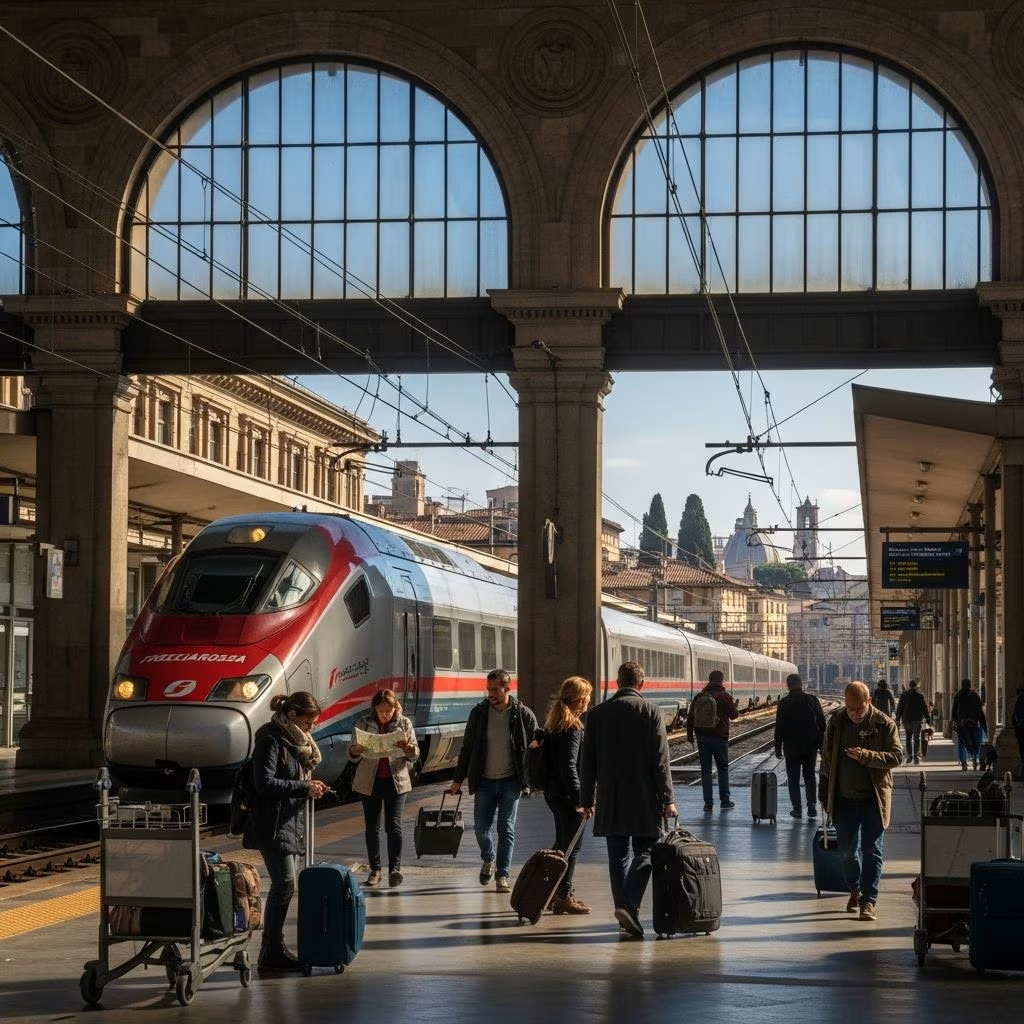
Italy’s extensive rail network connects the country’s most iconic destinations, from the canals of Venice to the historic streets of Rome. Whether you’re planning a multi-city tour or exploring regional treasures, understanding how to navigate Italy’s train system is essential for efficient and enjoyable travel. This guide provides practical insights into operators, ticket options, booking strategies, and route planning to help you make the most of Italy’s modern and well-maintained railways.
Italy’s rail landscape is dominated by two major operators, each offering distinct advantages and service levels. Trenitalia, the state-owned national operator, provides the broadest coverage across the country, running everything from local regional services to premium high-speed trains. Italo, a privately-owned competitor, focuses exclusively on high-speed routes connecting Italy’s major urban centers. Understanding the differences between these operators helps travelers select the most appropriate service for their journey.
Trenitalia operates several train categories, each designed for specific travel needs and budgets:
Italo trains compete directly with Trenitalia’s Le Frecce on high-speed corridors but operate independently, meaning they are not covered by most rail passes. However, travelers using multi-operator booking platforms can compare prices between Italo and Trenitalia to find the best fares.
Italy’s most-traveled rail corridors form a natural circuit connecting the country’s cultural and economic hubs. The Turin-Milan-Bologna-Florence-Rome-Naples-Salerno corridor represents the spine of Italy’s rail network, served by Frecciarossa 1000 and 500 trains offering frequent daily departures. This route allows travelers to experience Italy’s most celebrated destinations in a logical geographic progression.
The Venice-Florence-Rome-Naples route provides another essential circuit for tourists, with comparable high-speed service. Alternatively, the Turin-Milan-Verona-Venice route connects northern Italy’s Alpine regions with its coastal Adriatic gateway, typically served by Frecciarossa 700 trains. For those exploring Italy’s Adriatic coast and southern regions, the Milan-Ancona-Bari-Brindisi-Lecce line extends service deep into the heel of Italy’s peninsula.
Beyond these primary corridors, InterCity trains serve secondary but equally important routes, including Rome-Naples-Sicily, Rome-Livorno-Pisa-Cinque Terre-La Spezia-Genoa-Milan, and Milan-Genoa-Savona-Ventimiglia connections to France. Regional trains provide access to smaller cities and countryside destinations not served by high-speed services.
Multiple booking platforms offer access to Italian train tickets, each with distinct advantages. Trenitalia.com and Italiarail.com provide direct access to Trenitalia’s schedule and real-time availability, though Italiarail.com offers the convenience of no booking fees. For comparative shopping between operators, Thetrainline.com and Raileurope.com display both Trenitalia and Italo trains, allowing travelers to evaluate price differences and schedule options side-by-side.
Booking opens up to four months in advance, though timing varies by season and route. High-demand routes between major cities fill quickly during peak travel months, making advance reservations advisable. Travelers arriving at major Italian airports can purchase tickets directly at Rome Fiumicino, Milan Malpensa, or Pisa airports, providing convenient alternatives to online booking.
Key booking considerations include:
Rail passes offer significant savings for travelers planning multiple journeys across Italy. Italia In Tour passes provide unlimited travel on Trenitalia regional trains for 3 or 5 consecutive days across all regions. These passes cover regional, regional express, and metropolitan services but notably exclude high-speed trains and certain routes through Cinque Terre, Lombardy, and the Trentino-Alto Adige region.
Eurail Italy Pass provides multi-day coverage across Italy’s network and appeals particularly to international travelers combining Italy with other European destinations. However, Eurail Pass holders must pay additional reservation fees for high-speed trains, which can accumulate significantly on longer itineraries.
The value of rail passes depends on your travel pattern. For travelers taking multiple regional trains across different days and regions, passes often provide savings compared to individual tickets. Conversely, travelers planning only a few specific high-speed journeys between major cities might find individual ticket purchases more economical. Consider calculating your anticipated travel costs before committing to a pass.
Italian train stations, particularly at major hubs like Roma Termini and Milano Centrale, can appear intimidating to first-time visitors. However, systematic navigation simplifies the experience. Large electronic departure boards display train numbers, departure times, and final destinations, with platform numbers (binario in Italian) typically posted 15-30 minutes before departure.
When identifying your destination on station signs and booking platforms, remember that Italian cities use local names: Firenze for Florence, Roma for Rome, Venezia for Venice, and Napoli for Naples. When selecting arrival stations in multi-station cities, the station marked “centrale” is generally the primary hub, though verification via Google Maps confirms the most convenient location for your destination.
Practical station tips include:
The Circumvesuviana train service provides the primary rail connection from Naples to Pompeii and Sorrento, with tickets costing approximately $5. This regional service offers exceptional value for travelers exploring the Bay of Naples region without requiring rail passes or high-speed reservations.
Italy’s 20 regions, including two island territories, all feature train station access. Travel in heavily-touristed and densely-populated regions including Tuscany, Lazio, Lombardy, Veneto, and Piedmont offers frequent service to cities and smaller towns. Regional trains enable exploration of villages and countryside destinations beyond major tourist circuits, providing authentic Italian experiences at minimal cost.
Most train travelers in Italy spend each day taking relatively short rides connecting the Milan-Venice-Florence-Rome circuit. This logical progression allows 2-3 days per city with efficient train transfers. Alternative multi-day itineraries might combine coastal regions like Cinque Terre with mountain towns in the north, or southern destinations like Naples and Sicily with central Italian highlights.
When planning, consider:
Successful Italian rail travel combines advance planning with flexibility. Booking major inter-city journeys 2-4 weeks ahead secures optimal pricing and seat availability. Conversely, regional train flexibility allows spontaneous day trips to smaller towns without advance commitment. Download the Trenitalia app for real-time schedule access and mobile ticket display, eliminating paper ticket concerns. Monitor Italian railway announcements for occasional strikes, which, though uncommon, can disrupt service on short notice.
Italy’s train system represents one of Europe’s most efficient and extensive networks, offering travelers seamless access to the country’s cultural, historical, and natural treasures. Understanding operators, routes, booking strategies, and practical navigation transforms train travel from potential frustration into genuine enjoyment, enabling you to experience Italy on your own terms while maximizing travel efficiency and budget allocation.
