

 Travel Essentials
 Travel Essentials

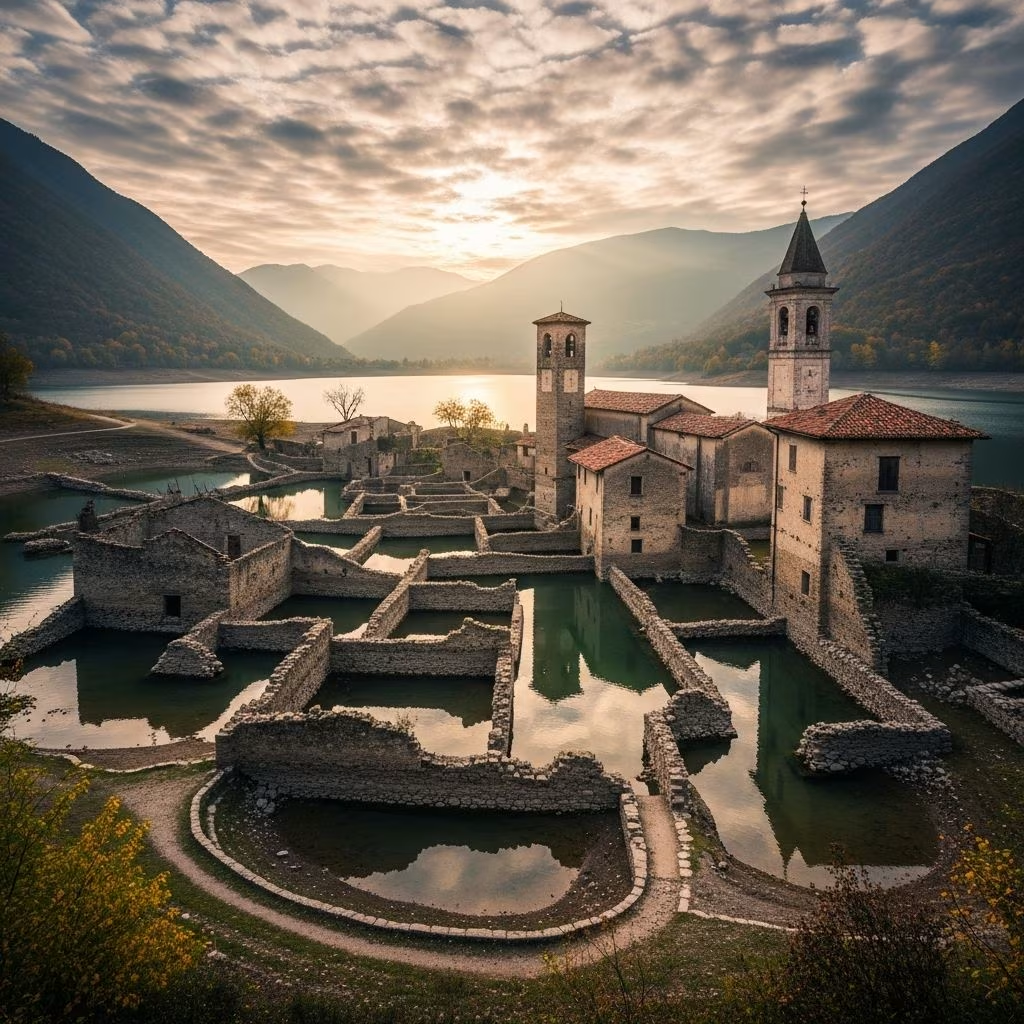
Italy’s submerged villages resurface from time to time, revealing remarkably preserved medieval ruins and the human cost of hydroelectric progress.
 Travel Essentials
Beneath the surface of several Alpine lakes in northern Italy lies an extraordinary collection of medieval ruins—entire communities deliberately submerged decades ago to harness hydroelectric power. What makes these underwater ghost towns remarkable is that they occasionally resurface, offering rare glimpses into preserved architectural history and the human cost of industrial progress. The phenomenon has captured international attention, inspiring literature and streaming content while raising questions about cultural preservation and environmental transformation.
During the mid-twentieth century, Italy underwent rapid industrialization and electrification. To meet growing energy demands, utility companies identified strategic locations where rivers could be dammed to generate hydroelectric power. These locations, unfortunately, coincided with established settlements that had flourished for centuries.
The most prominent case involves Curon, a community in the southern Alps mere kilometers from the Austrian and Swiss borders. In 1950, authorities made the controversial decision to merge two adjacent lakes by constructing a dam, thereby creating a single larger reservoir that would power a regional electric plant. More than 900 residents faced displacement, with approximately 160 homes demolished to clear the area. Despite vocal objections from the local population, the flooding proceeded as planned, transforming what had been dry land into a submerged landscape.
Similarly, Fabbriche di Careggine in Tuscany’s Lucca province experienced comparable circumstances. This twelfth-century settlement, established around 1270, functioned as a thriving mountain community until 1946, when authorities relocated inhabitants to nearby towns and deliberately flooded the valley to construct a hydroelectric dam. The village became the foundation of what is now Lake Vagli.
One of the most intriguing aspects of Italy’s submerged villages is how well certain structures have persisted underwater. Stone construction, particularly prevalent in medieval Alpine communities, proves surprisingly resilient to prolonged submersion when bacterial decomposition is limited by cold water temperatures and low oxygen environments.
In Curon, the most iconic surviving feature is a fourteenth-century church steeple that protrudes above the water’s surface even when the reservoir remains full. This haunting architectural landmark has become the visual symbol of the lost community, appearing in countless photographs and serving as a poignant reminder of what lies beneath.
When water levels drop during maintenance operations, additional structures emerge intact:
This preservation creates an extraordinary archaeological opportunity. Unlike typical excavations where layers must be carefully removed chronologically, these communities offer complete cross-sections of medieval Alpine life frozen in place.
The reservoirs containing these villages are not permanently full. Maintenance operations on the hydroelectric infrastructure require periodic water level reductions, during which the submerged communities briefly resurface. These intermittent exposures have become anticipated events, drawing photographers, historians, and curious tourists.
Fabbriche di Careggine has experienced multiple resurfacing events since its submersion. Historical records document the village emerging from Lake Vagli in 1958, 1974, 1983, and 1994—demonstrating a pattern of approximately ten to fifteen year intervals between exposures. Each reemergence lasts only weeks before the refilling process begins anew.
Curon’s situation differed somewhat in its recent history. The village remained submerged continuously from 1950 until April 2023, when authorities initiated a comprehensive drainage of Lake Resia for significant maintenance work on the dam structure. This marked the first complete exposure of Curon in over seven decades, creating an unprecedented opportunity for documentation and study.
Social media transformed this temporary resurrection into a global event. Images circulated widely showing the eerily preserved ruins, moss-covered stone walls, and the dramatic landscape transformation. For many people worldwide, these photographs provided their first visual connection to the vanished community.
While the architectural preservation is remarkable, the human impact of these submersions cannot be overlooked. The displacement of over 900 residents from Curon alone represented a profound disruption to established communities and cultural continuity.
After Curon’s flooding, authorities established a new settlement called Curon Ventosa in nearby elevated terrain. This modern community, now home to approximately 2,500 residents, exists as both a practical relocation and a poignant reminder of what was lost. Descendants of the original residents maintain connections to their ancestral homeland, and many express complex feelings about the lake that simultaneously preserves and conceals their family histories.
Local communities have become custodians of oral histories, family documents, and photographs that document pre-flooding existence. Genealogical research has become increasingly important to those seeking to understand their heritage and maintain generational memory.
The submerged villages have transcended their status as historical curiosities to become subjects of serious artistic and entertainment interest. The story of Curon particularly captured international imagination, inspiring both novelists and streaming platforms to create fictional narratives exploring themes of loss, preservation, and supernatural mystery.
A Netflix series drew from the Curon narrative, fictionalizing the village’s emergence and layering supernatural elements onto the historical reality. This adaptation introduced the submerged communities to millions of viewers who might otherwise never have encountered this aspect of Italian history. The dramatized version, while departing significantly from factual events, sparked genuine curiosity about the real locations and their histories.
This cultural phenomenon has also benefited the modern communities. Increased tourism interest has created economic opportunities, though it has simultaneously raised concerns about commodification of tragedy and the appropriateness of treating sites of displacement as entertainment destinations.
The periodic emergence of these villages creates unique preservation challenges. Each exposure and subsequent reflooding subjects the structures to environmental stress—freezing, thawing, water infiltration, and bacterial growth—potentially accelerating deterioration with each cycle.
Archaeological authorities face difficult decisions about how to document and potentially preserve elements of these communities. Systematic excavation during brief exposure windows is logistically challenging and potentially destructive to remaining structures. Photography and 3D digital modeling have become primary documentation methods, allowing researchers to create permanent records without physical removal or alteration of the sites.
Some experts advocate for permanent preservation strategies, including controlled drainage sections or protective structures that would allow more extended access for study. However, such interventions would require coordination with hydroelectric operations, environmental impact assessments, and substantial funding—making comprehensive solutions impractical for the foreseeable future.
| Village Name | Location | Submersion Year | Primary Reason | Last Documented Emergence |
|---|---|---|---|---|
| Curon | Lake Resia, southern Alps | 1950 | Hydroelectric dam and lake merger | April 2023 |
| Fabbriche di Careggine | Lake Vagli, Tuscany | 1946 | Hydroelectric dam construction | 1994 |
As these submerged communities continue their cycles of emergence and submersion, new considerations shape how Italy approaches both energy infrastructure and cultural heritage. Modern dam construction standards incorporate environmental impact assessments and cultural preservation considerations that were absent in the mid-twentieth century.
For existing submerged sites, the tension between energy production and historical preservation remains unresolved. The reservoirs serve critical functions in Italy’s energy infrastructure, and operators must balance heritage concerns against practical operational requirements. Each scheduled maintenance operation, however, presents opportunities for enhanced documentation and scientific study.
Researchers and heritage organizations continue advocating for comprehensive surveys during exposure periods, with emerging technologies like drone photography and underwater acoustic mapping enhancing documentation capabilities. These efforts create increasingly detailed records that may eventually support restoration or preservation initiatives.
For travelers interested in Italian medieval history and unusual destinations, the submerged villages present an extraordinary opportunity—though one constrained by unpredictability. The irregular exposure schedule makes spontaneous visits impractical for most visitors. However, residents of nearby communities remain attuned to reservoir conditions, and local tourism boards typically announce significant drainage events.
When accessible, the sites offer haunting experiences of archaeology in real-time. Walking through stone passageways, examining architectural details, and photographing preserved structures within the context of their Alpine landscape provides visceral historical connection that typical museums cannot replicate.
The psychological impact of visiting these spaces resonates with visitors in unexpected ways. Standing in structures that have been underwater for decades, surrounded by the physical evidence of mid-century displacement decisions, creates contemplative moments about technological progress, cultural loss, and environmental transformation.
Italy’s submerged villages represent a specific manifestation of broader conflicts between industrialization and preservation that characterize twentieth-century history globally. Similar debates emerged regarding dam projects, mining operations, and urban development in numerous countries, often with communities of indigenous peoples or long-established settlements bearing disproportionate costs.
The visible preservation of these Italian communities—their periodic reemergence creating undeniable physical evidence of what was lost—makes them particularly powerful case studies. Unlike many displaced communities whose former settlements vanish entirely into modern urban sprawl or are gradually demolished, these villages remain essentially intact, serving as enduring monuments to historical decisions and their consequences.
Emergence patterns vary. Fabbriche di Careggine typically surfaces every ten to fifteen years during maintenance operations. Curon’s exposure is less predictable, depending on major infrastructure maintenance schedules.
Access depends on current conditions, ongoing maintenance work, and local regulations. It is advisable to contact local tourism authorities for updated information about accessibility during exposure periods.
While Curon and Fabbriche di Careggine are the most documented cases, other reservoir areas in Italy may contain submerged settlements. Comprehensive inventories of all affected communities remain incomplete.
The reservoirs serve critical hydroelectric functions. Permanent preservation would require redirecting water resources and redesigning dam operations, which is economically and technically impractical given current energy infrastructure dependencies.
