

 Travel Essentials
 Travel Essentials

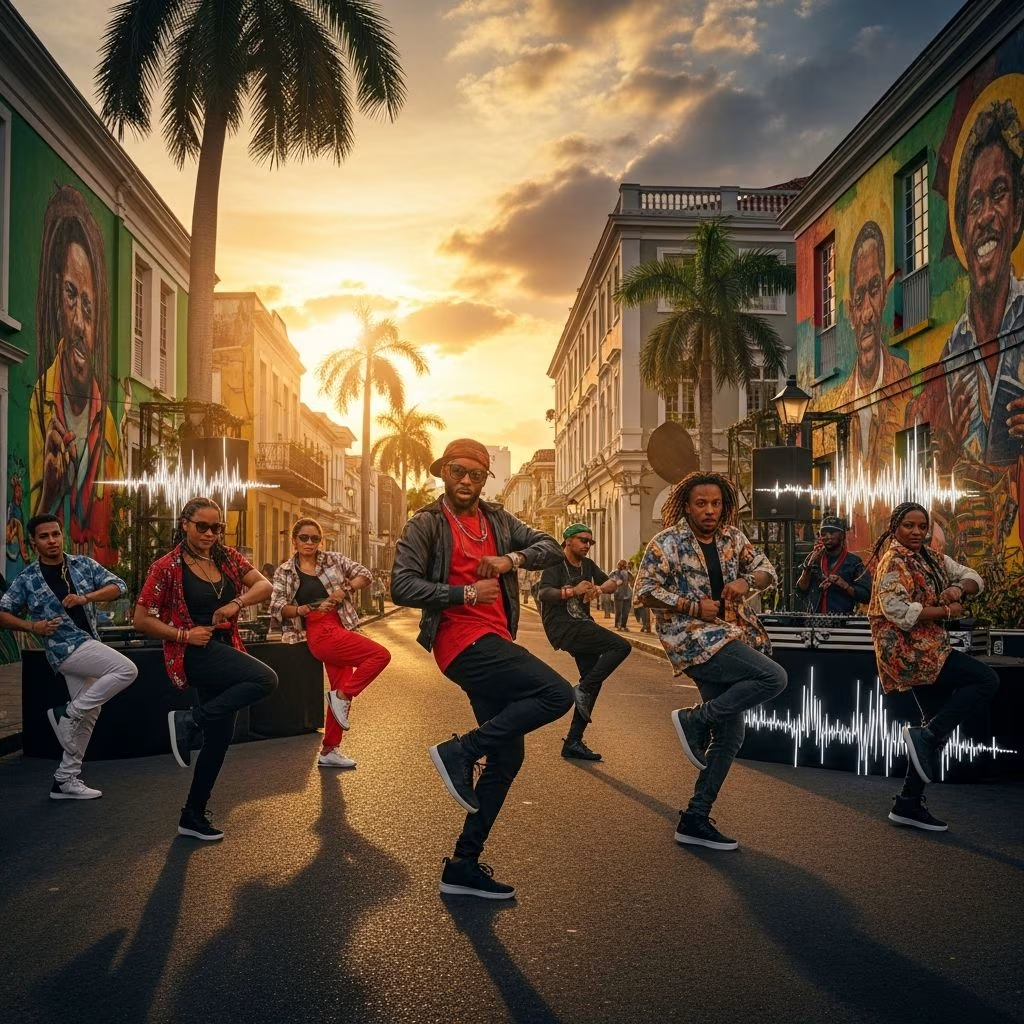
Dive into Jamaica's dancehall world with tips on music origins, iconic venues, essential dances, and safe ways to join the vibrant parties.
 Travel Essentials
Jamaica’s dancehall culture pulses with raw energy, blending infectious rhythms, bold fashion, and communal vibes in open-air gatherings across Kingston and rural spots. Originating as a grassroots evolution from reggae, it draws crowds to sound system clashes where deejays toast over heavy basslines, creating nights of unfiltered celebration.
Dancehall emerged in the late 1970s amid Jamaica’s social upheavals, transforming the denser reggae sound into something leaner and more urgent. Working-class communities in Kingston’s inner city birthed this genre, using it as an outlet for expression when upscale venues excluded them. Sound systems—massive speaker setups hauled by mobile crews—became the heartbeat, playing riddims that deejays layered with rapid-fire chants.
Unlike roots reggae’s spiritual depth, dancehall prioritized dance-floor immediacy. Early pioneers like U-Roy in the late 1960s experimented with toasting over instrumentals, laying groundwork for the deejay style that defined the 1980s dominance. By then, it was Jamaica’s top sound, influencing global hip-hop through shared African diasporic roots. Political tensions fueled its rise, with lyrics tackling poverty, power struggles, and resilience.
No dancehall experience skips sound systems, Jamaica’s engineering marvels cranked to earthquake levels. These aren’t just speakers; they’re cultural institutions where selectors curate vinyl or digital riddims, and MCs hype the crowd. Iconic clashes pit systems like Stone Love against Killamanjaro in bass battles that last till dawn.
Modern setups blend analog warmth with digital tools, evolving from the 1970s dub experiments. Attending means surrendering to vibrations that you feel in your chest—pure sensory overload. Rural areas host street parties with generators powering rigs under starry skies, while Kingston’s sessions pack hundreds into yards.
| Sound System Era | Key Features | Notable Examples |
|---|---|---|
| 1970s Origins | Analog vinyl, basic amps | Tom The Great Sebastian |
| 1980s Peak | DJ toasting, riddim tracks | U-Roy innovations |
| Today | Digital mixes, massive wattage | Stone Love, Black Chiney |
Dancehall isn’t passive listening—it’s a full-body call to action. Core moves like the “Bogle,” a shoulder-shimmy with hip pops, or the sensual “Gully Creeper” demand confidence and flow. Women often lead with waist-winding “Winin,” while men counter with precise footwork.
Classes in Kingston teach basics: start with the foundational two-step, add arm flourishes, and sync to the ‘drop’ when bass hits. Outfits amplify it—neon crops, baggy pants, gold chains signaling readiness to “bruk out” (go wild). Practice mirrors the culture’s boldness: no stiff hips allowed.
Kingston rules as dancehall HQ. Waterhouse and Tivoli Gardens host raw yard parties; check social media for pop-ups. For structured vibes, Passa Passa started as a weekly bus-taxi lot bash, now a global export. Negril beaches draw tourists to seaside clashes, but true immersion hits uptown spots like Red Stripe’s events.
Timing matters: Fridays ignite, Sundays simmer with gospel-dancehall fusions. Apps and local Facebook groups announce lineups—follow promoters like Bay-C for updates. Rural Montego Bay or Portmore offer less crowded, equally fierce nights.
Dancehall thrives on intensity, but smarts keep it fun. Stick with groups, avoid flashing valuables, and use ride-shares over solo taxis. Women: confident energy deters issues; dance circles protect newcomers. Hydrate amid heat—rum punches tempt, but pace yourself.
Respect codes: No intrusive filming without permission; hype the selector. Recent years saw cleanup efforts reducing violence, with police-monitored big sessions. Still, vibe-check venues via reviews.
Dancehall style screams individuality—think fitted tees with artist prints, distressed jeans, and pristine sneakers. Women rock sheer tops, high-waisted shorts, and dramatic nails. Accessories like snapback caps and heavy jewelry complete the armor.
Attitude seals it: boldness without aggression. Chant along to toasts, throw up selector hands—it’s participatory. This fusion of look and mindset turns observers into insiders.
From hip-hop samples to K-pop nods, dancehall reshaped music. Artists like Vybz Kartel and Popcaan tour worldwide, exporting moves via TikTok challenges. Jamaica leverages it for tourism, with dancehall queen contests and studio tours.
Yet roots remain sacred—visitors fuel local economies, but authenticity demands respect for origins amid commercialization.
A Jamaican genre from the late 1970s, featuring deejay toasting over digital riddims, evolved from reggae.
Many sessions are, especially guided ones; group up, stay aware, and choose well-reviewed spots.
Year-round, but summer festivals like Sumfest peak the energy.
No—energy matters more; locals teach on the floor.
Follow Instagram promoters, join WhatsApp groups, or use event apps.
