

 Travel Essentials
 Travel Essentials

Explore Janai Purnima, Nepal's Hindu festival where sacred threads symbolize purity and protection. Learn about rituals, key sites, and cultural traditions observed on the full moon of Shrawan.
 Travel Essentials
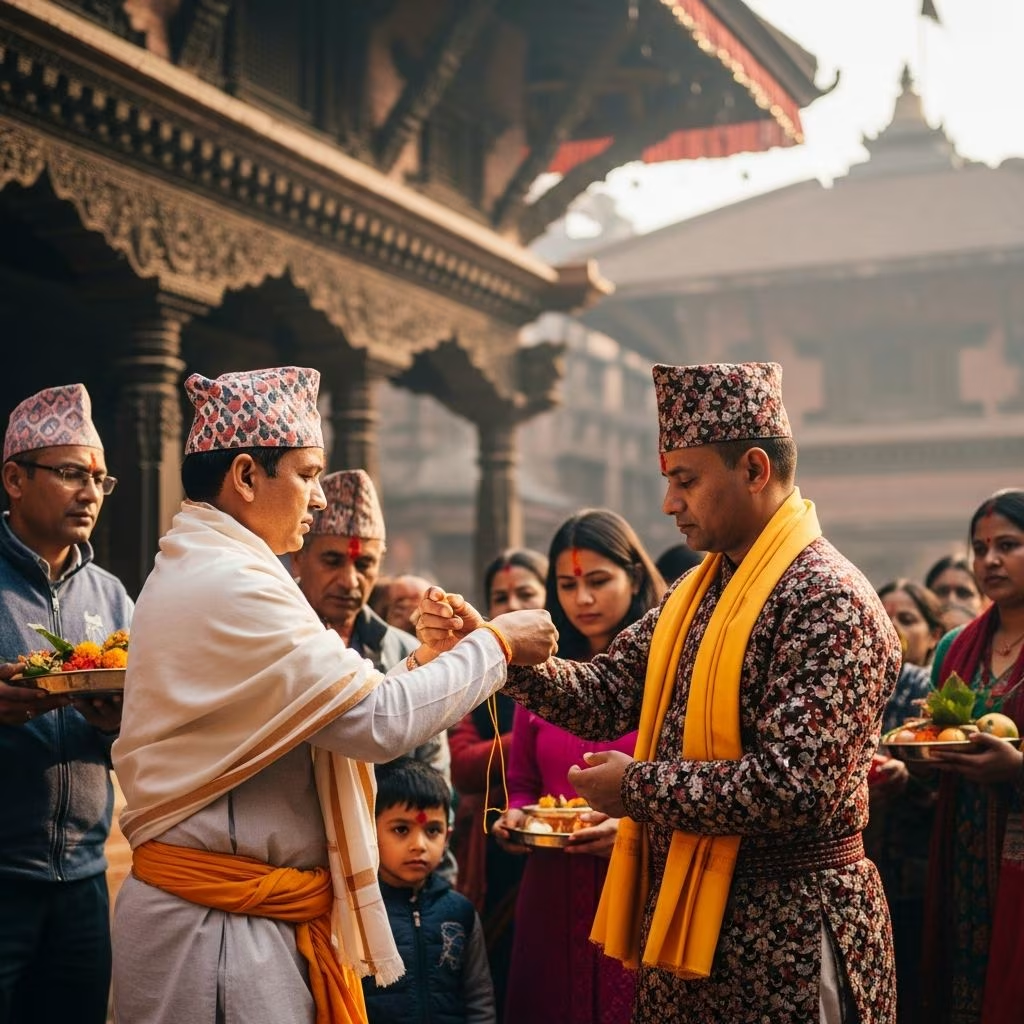
Janai Purnima stands as a cornerstone of Nepal’s Hindu calendar, observed on the full moon day of the Shrawan month, typically falling in late July or early August. This vibrant festival centers on the renewal of the sacred janai thread, worn by Hindu men across the chest, and the tying of protective doro or rakhi threads on wrists, symbolizing divine safeguarding against misfortune. Devotees engage in purifying baths, priestly blessings, and communal gatherings that blend spirituality with familial devotion.
At its core, Janai Purnima embodies **purity, protection, and renewal**. The janai, a simple cord of cotton or silk draped from the right shoulder to the left waist, represents the three core Hindu principles: dharma (moral duty), artha (prosperity), and kama (desire). Woven from three strands honoring Brahma, Vishnu, and Shiva—alongside their consorts Saraswati, Lakshmi, and Parvati—it serves as a constant reminder of cosmic balance and personal discipline.
For those who regularly wear the janai, primarily Brahmin and Chhetri men, the festival mandates its annual replacement. This act, performed after ritual cleansing, invigorates the wearer’s spiritual energy, warding off illness and evil influences. Non-wearers receive the raksha bandhan thread, a yellow or red doro infused with mantras by Brahmin priests, believed to shield against fear and adversity for the coming year. Legend ties this to King Bali, whose virtues were curbed by a protective thread from Brahma, a tale perpetuated through this custom.
Celebrations commence at dawn with meticulous preparations. Devotees purify themselves through holy dips in rivers like the Bagmati or sacred lakes, followed by haircuts to shed impurities. Brahmin priests then chant sacred mantras—often 27 in number, mirroring astrological constellations—to sanctify new threads.
Many retain the doro until Tihar’s Laxmi Puja, tying it to cows—venerated as Lakshmi’s embodiment—before disposal, linking festivals across the year.
Nepal’s landscape transforms into a tapestry of devotion during Janai Purnima, with pilgrimage hotspots drawing thousands.
| Site | Location | Highlights |
|---|---|---|
| Pashupatinath Temple | Kathmandu | Mass gatherings for puja, thread-tying by priests, and Bagmati River baths; a UNESCO site pulsing with chants. |
| Gosaikunda Lake | Langtang Region | High-altitude holy lake formed by Shiva’s trident; treks by pilgrims for immersive rituals amid Himalayan peaks. |
| Kumbheshwor Temple | Patan | Shaman (jhankri) pageants in traditional attire; ancient pond for ritual dips and healing rites. |
| Kalinchowk Bhagavati | Dolakha District | Jhankris seek renewed powers from the goddess; remote, mystical vibes for shamanic traditions. |
These venues not only host rituals but foster community bonds, with international shamans joining Nepali counterparts.
Beyond rituals, Janai Purnima delights the senses. Newars in the Kathmandu Valley prepare **kwati**, a hearty soup of nine sprouted beans symbolizing nourishment and the nine planets. This nutritious dish, simmered with spices, is shared among families, enhancing the festival’s theme of holistic well-being.
The Raksha Bandhan element deepens sibling ties. Sisters apply tikka, tie rakhis, and offer sweets, while brothers vow lifelong guardianship—echoing pan-South Asian customs but uniquely fused with janai renewal in Nepal. This fosters harmony, reinforcing cultural values of loyalty and care.
Janai Purnima uniquely spotlights Nepal’s shamans, or jhankris, who converge in vivid processions. Clad in feathers, bells, and herbs, they perform trance-induced rites at sites like Kumbheshwor and Kalinchowk, petitioning deities for healing prowess. These pre-Hindu traditions blend seamlessly with Vedic observances, showcasing Nepal’s syncretic heritage. Global trainees amplify the spectacle, bridging ancient wisdom with modern curiosity.
In contemporary Nepal, Janai Purnima transcends religion, uniting diverse ethnicities in shared reverence. Urban dwellers flock to temples, while rural treks to Gosaikunda offer adventure fused with spirituality—ideal for hikers seeking authentic immersion. The festival underscores resilience, with post-pandemic revivals drawing record crowds.
For travelers, timing visits aligns with the lunar calendar (e.g., August 9 in recent years). Respectful participation—observing dress codes and photography etiquette—enriches experiences. Homestays near sites provide kwati feasts and ritual insights, boosting local economies.
It occurs on the full moon (Purnima) of Shrawan, varying yearly per the lunar calendar—typically late July to mid-August. Check Hindu panchangs for precision.
Primarily Hindu males from Brahmin and Chhetri castes, initiated during Upanayana; others receive wrist doro for protection.
In Nepal, yes—combining thread renewal with sibling rakhi-tying, unlike India’s family-focused version.
Yes, respectfully; receive doro at temples, join baths (with permission), but avoid sacred areas unless guided.
This Shiva-created lake at 4,380m hosts perilous treks and mass pilgrimages, blending faith with stunning alpine scenery.
Janai Purnima’s rituals safeguard Nepal’s intangible heritage amid modernization. Community efforts promote eco-friendly threads and sustainable pilgrimages, ensuring the festival’s vitality. As a beacon of unity, it invites global visitors to witness threads weaving protection, purity, and profound cultural continuity.
