

 Travel Essentials
 Travel Essentials

Comprehensive guide to behavioral expectations, cultural norms, and practical guidelines that help travelers navigate Japan respectfully and avoid common mistakes.
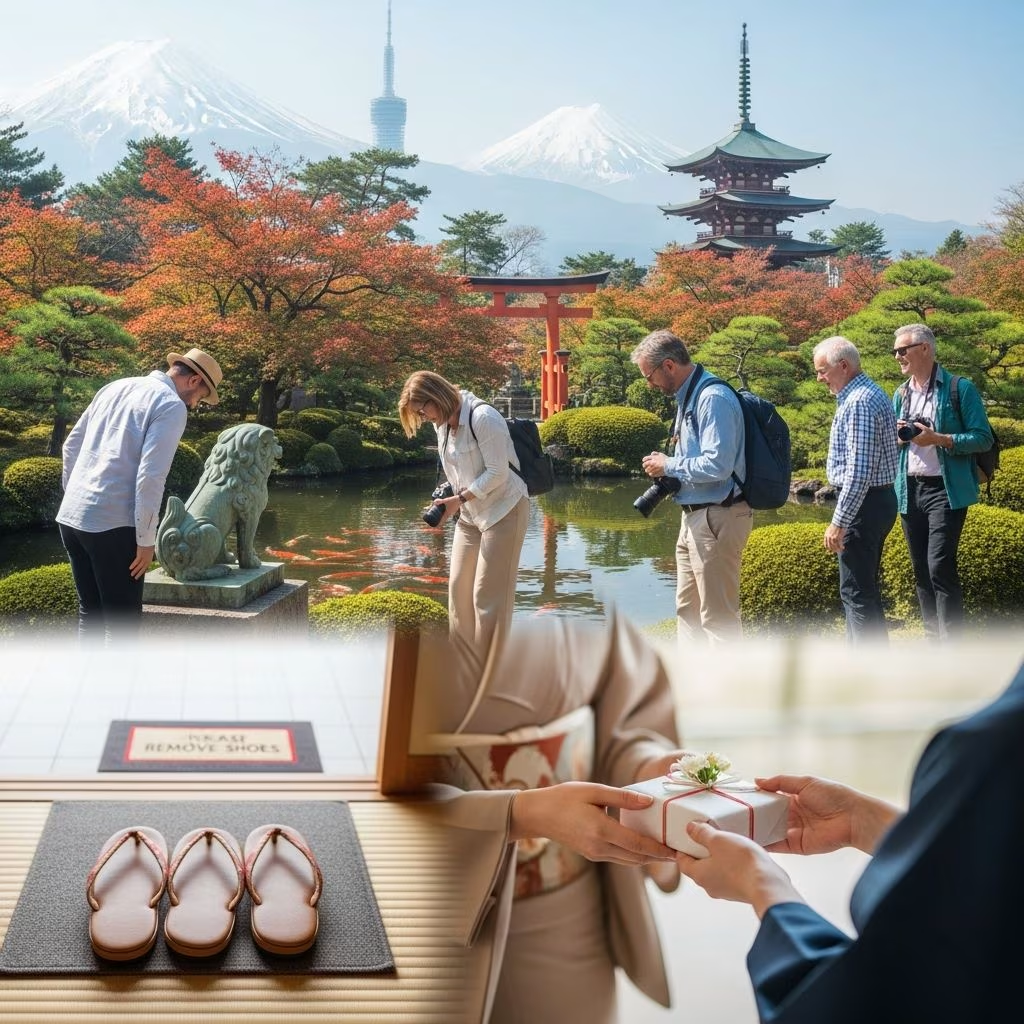 Travel Essentials
Japan attracts millions of international visitors annually, yet cultural misunderstandings and behavioral missteps can create friction between tourists and local communities. Understanding and respecting Japan’s social norms isn’t merely about avoiding embarrassment—it reflects consideration for the people who call Japan home and helps preserve the cultural heritage that makes the country extraordinary. This comprehensive guide outlines the behavioral expectations and cultural practices that transform a visit into a genuinely respectful and enriching experience.
Japanese society operates on principles of harmony, consideration for others, and respect for shared spaces. These values have been cultivated over centuries and remain central to daily interactions. Unlike some Western cultures that emphasize individual expression, Japanese culture prioritizes group harmony and awareness of how individual actions affect the community. Tourists who grasp this fundamental philosophy find that many specific rules become intuitive rather than burdensome. The concept of “wa” (harmony) suggests that maintaining peace and avoiding disturbance supersedes personal preferences.
Proper conduct in Japan extends beyond avoiding explicitly prohibited behaviors—it involves adopting a mindset of consideration. This means speaking thoughtfully about noise levels, being aware of your physical space in crowded environments, and recognizing that certain locations carry spiritual or cultural significance that demands reverence. By internalizing these principles before arriving, visitors can navigate Japan with confidence and genuine respect.
Japanese cities present unique challenges for pedestrian traffic, particularly in dense urban centers where millions of people move through narrow streets and crowded transit systems daily. Understanding how to move through these spaces appropriately is essential for both safety and social harmony.
Streets in Japan’s major cities are frequently narrow, and vehicle traffic moves rapidly through these confined spaces. Stopping abruptly to photograph landmarks or monuments creates genuine hazards—not only for yourself but for vehicles and other pedestrians. Taking photos safely requires stepping completely out of foot traffic onto a sidewalk or into an established viewing area. Similarly, railroad tracks are strictly off-limits for amateur photographers. Multiple fatalities have occurred when tourists attempted to capture dramatic photos by walking on active railway lines, not realizing how quickly trains approach or how difficult they are to hear.
When walking through busy districts, maintain awareness of directional flow. If crowds are moving in one direction, moving against the current creates bottlenecks and frustration. Stopping mid-sidewalk to check maps or directions should be done by stepping to the side, not in the middle of pedestrian traffic.
Escalators throughout Japan incorporate a fast-moving lane for commuters in a hurry. However, the location of this lane varies significantly by region. In Tokyo and eastern Japan, travelers should stand on the left side of the escalator, leaving the right side open for those who need to walk. Conversely, in Osaka, Kyoto, and western Japan, the convention reverses—stand on the right and leave the left side open. This regional variation often surprises visitors, but the solution is straightforward: observe which side local commuters occupy and position yourself accordingly. Never stand in the center of an escalator or block the walking lane, regardless of the regional variation.
Japanese society places tremendous value on orderly queuing and respecting established lines. Before joining any queue, carefully observe whether a line has already formed. In situations where queuing protocol isn’t immediately obvious, politely ask nearby individuals where the line begins. Cutting in line—whether intentionally or through inattention—is considered genuinely disrespectful and may result in confrontation with other queue members.
Japanese culture emphasizes restraint and consideration in public settings. This translates into specific expectations regarding noise levels and personal behavior in shared spaces.
Speaking loudly in restaurants, hotels, public transportation, or other shared spaces violates fundamental Japanese etiquette. This doesn’t mean speaking in whispers, but rather maintaining conversational volumes that don’t intrude on others’ experiences. In restaurants, this allows other diners to enjoy their meals without distraction. On public transportation, it enables fellow commuters to relax or work during their journeys. In hotels, it respects other guests’ rights to peaceful rest.
If you’re experiencing illness symptoms like coughing or sneezing, wearing a surgical mask is expected, particularly in crowded environments like trains and buses. This practice, deeply embedded in Japanese culture, protects others from potential illness transmission and is widely understood and appreciated by locals.
Eating or drinking while walking through streets differs markedly from Western practices in many countries. In Japan, consuming food or beverages while mobile is considered improper and reflects a lack of appreciation for the food itself. When purchasing items from street vendors or convenience stores, the expectation is to either consume the item while stationary (sitting on a bench or standing in a designated area) or wait until reaching your accommodation. This practice stems from cultural attitudes about respecting food and demonstrating mindful consumption.
Additionally, avoid consuming purchased food in front of competing vendors’ establishments or bringing open food into retail shops. This is perceived as discourteous to business owners and demonstrates a lack of awareness regarding establishment boundaries.
Japan maintains specific regulations regarding alcohol and tobacco consumption in public spaces.
Street drinking—consuming alcohol in public areas or outside convenience stores—is prohibited in certain districts, particularly in nightlife areas. For example, Shibuya Ward in Tokyo enforces a ban on street drinking between 6 PM and 5 AM, though violation penalties aren’t uniformly imposed. Regardless of enforcement consistency, consuming alcohol in public spaces violates local norms and can result in fines up to ¥50,000 in some jurisdictions. To enjoy alcoholic beverages legally and respectfully, consume them in designated establishments such as bars, restaurants, or izakayas, or within your hotel room.
Smoking on streets and in most public areas carries fines ranging from ¥1,000 to ¥5,000. Japan has established designated smoking areas in cities, typically marked clearly. Before lighting a cigarette, locate these areas. Convenience stores and station kiosks can direct you to nearby smoking zones. Respecting these boundaries protects non-smokers and helps you avoid legal complications.
While electronic payment systems and credit cards have become increasingly prevalent, Japan maintains a substantial cash-based economy. Many establishments, particularly smaller restaurants, local shops, and rural destinations, accept only cash payments. Carrying sufficient Japanese yen ensures access to goods and services without complications. ATMs at convenience stores and train stations accept most international debit and credit cards, making cash withdrawal straightforward throughout the country.
Public trash receptacles are relatively scarce in Japanese cities compared to many Western countries. If you generate waste, you’re expected to transport it to an appropriate disposal location rather than leaving it on streets. Littering carries potential fines up to ¥50,000 and represents a significant breach of social norms. When trash receptacles are available—typically near vending machines at the location where purchases were made—waste must be sorted according to local regulations. Plastic bottles and aluminum cans require recycling, while combustible and non-combustible items are typically collected in separate containers. When receptacles aren’t available, retain your waste and dispose of it properly at your accommodation.
Japanese temples and shrines function as sacred spaces equivalent to churches and mosques in other cultures. These locations demand specific behavioral conduct reflecting reverence and spiritual respect. Speaking softly or maintaining silence preserves the contemplative atmosphere that defines these spaces. Photography activities must be conducted respectfully—avoid using tripods, commercial photography equipment, or conducting live streaming without explicit permission. Drones are strictly prohibited. Graffiti, property damage, and skateboarding represent serious violations that may result in arrest and legal consequences. In 2024, an American tourist faced arrest after carving his family’s names on a torii (gateway) at Meiji-jingū, demonstrating that authorities actively prosecute property damage at sacred sites.
When passing through torii gates at shrine entrances, never walk directly down the center line (known as the seichū). This path is symbolically reserved for the kami (spirit or deity), and occupying this space is considered deeply disrespectful. Visitors should step slightly to the left or right of the centerline, demonstrating humility and reverence for the spiritual significance the shrine embodies.
Japan contains numerous cultural heritage sites integrated into active communities, such as Shirakawa-go in Gifu Prefecture, where residents maintain traditional lifestyles. Similarly, certain areas at mountain shrines and temples may be closed due to avalanche risks or other seasonal hazards. Respect signage indicating restricted areas and understand that these boundaries exist for community protection and preservation, not arbitrary limitation of tourist access.
Proper chopstick handling represents foundational dining etiquette. Chopsticks should never be stood vertically in rice, as this mirrors funeral rites and is considered inauspicious. When taking breaks from eating, rest chopsticks horizontally across your plate or on provided chopstick rests. Avoid gesturing with chopsticks or pointing them at other diners. Using chopsticks to pass food between people directly mimics funeral practices and should be avoided completely.
Slurping noodles is not merely acceptable—it’s expected and indicates enjoyment. However, this cultural exception doesn’t extend to other foods or beverages. Leaving a small amount of rice in your bowl is respectful, as finishing every grain can suggest the meal was insufficient. If you finish all rice completely, some may interpret this as a request for additional servings. When dishes are shared, use the provided serving utensil rather than your personal chopsticks to prevent cross-contamination.
Removing shoes before entering homes, temples, and certain traditional establishments is mandatory, not optional. This practice maintains cleanliness in interior spaces and demonstrates respect for the environment and its inhabitants. When removing shoes, place them neatly oriented toward the entrance rather than haphazardly throughout the space.
Wearing clean, presentable socks when shoes are removed is a sign of respect and preparedness. Avoid socks with holes, stains, or overly bold designs. If you wore sandals without socks and need replacement socks, most convenience stores stock affordable options. Wearing shoes that slip on and off easily facilitates transitions between shoed and unshoed areas throughout the day.
Public displays of affection remain reserved in Japanese culture. Kissing between partners, even close couples, is typically conducted privately rather than in public spaces. This cultural practice reflects broader Japanese values of restraint and consideration for others’ comfort in shared environments.
Onsen (hot springs) and sento (public baths) offer uniquely Japanese relaxation experiences, but participation requires understanding specific protocols. Before entering communal bath water, you must wash your body thoroughly using provided shower facilities. This isn’t optional—it’s essential for hygiene and demonstrates respect for other bathers. Never submerge your towel in the communal bathwater. Small towels should be placed on the bath’s edge or retained in your hands. Bathing in these spaces should occur quietly, with minimal splashing or vocalization.
Visitors from countries with visa exemption agreements can stay in Japan for up to 90 days without a tourist visa. However, your passport must remain valid for your entire stay, and you must possess proof of return or onward travel. Engaging in any form of work during your visit is strictly prohibited, including paid or unpaid employment and freelance activities. Additionally, tourists cannot change visa status while in Japan—if you need a different visa category (such as a work or study visa), you must leave Japan and re-enter with appropriate documentation.
| Behavioral Category | Expected Conduct | Potential Consequences of Violation |
|---|---|---|
| Pedestrian Movement | Stay to the side on escalators; don’t photograph from street centers | Safety hazards; traffic obstruction |
| Public Noise Levels | Maintain conversational volumes in shared spaces | Social disapproval; potential confrontation |
| Consumption | Don’t eat or drink while walking; sort trash appropriately | Social judgment; fines up to ¥50,000 for littering |
| Substance Use | Use designated smoking areas; avoid street drinking | Fines ¥1,000–¥5,000 for smoking; ¥50,000+ for drinking violations |
| Sacred Sites | Maintain silence; avoid property damage; walk to the side of torii gates | Arrest; criminal charges for property damage |
| Residential Spaces | Remove shoes; wear clean socks; avoid excessive affection | Social offense; requests to leave premises |
If you unintentionally breach cultural etiquette, a sincere apology typically suffices. Japanese culture recognizes that foreigners operate with incomplete cultural knowledge. A respectful acknowledgment of your mistake and genuine effort to correct it usually resolves the situation. Learning from the experience and adjusting future behavior demonstrates respect.
Yes, significant variations exist, particularly regarding escalator conventions between Tokyo (stand left) and Osaka (stand right). Urban behavioral expectations generally remain consistent, though rural areas may have additional specific customs. When uncertain, observe local behavior and follow established patterns.
Enforcement varies by specific behavior and location. Property damage at sacred sites, street drinking in restricted areas, and smoking violations receive active enforcement. Social enforcement—disapproval from other citizens—often precedes legal consequences. Most violations primarily result in social discomfort rather than legal prosecution.
Some individuals have physical limitations or cultural backgrounds making certain practices difficult. In these situations, do your best to adapt while explaining limitations respectfully to locals if necessary. Most Japanese people appreciate genuine effort and understanding over perfect adherence.
