

 Travel Essentials
 Travel Essentials

Comprehensive guide to navigating Japan's trains: passes, tickets, routes, tips, and tools for effortless travel.
 Travel Essentials
Japan’s railway system stands as a marvel of engineering and efficiency, connecting bustling metropolises to serene rural landscapes with unparalleled precision. Whether you’re zipping through cities on high-speed Shinkansen or meandering on local lines, trains offer the most reliable and scenic way to explore the country. This guide equips you with everything needed for confident navigation, from selecting the right pass to mastering station etiquette.
The backbone of Japan’s transport is its extensive rail infrastructure, operated by multiple companies including the dominant Japan Railways (JR) Group. Trains vary widely to suit different needs: local services stop at every station for short hops, while rapid and express options skip smaller stops to save time. For intercity travel, Limited Express trains provide comfort with reserved seats, often incurring a supplement.
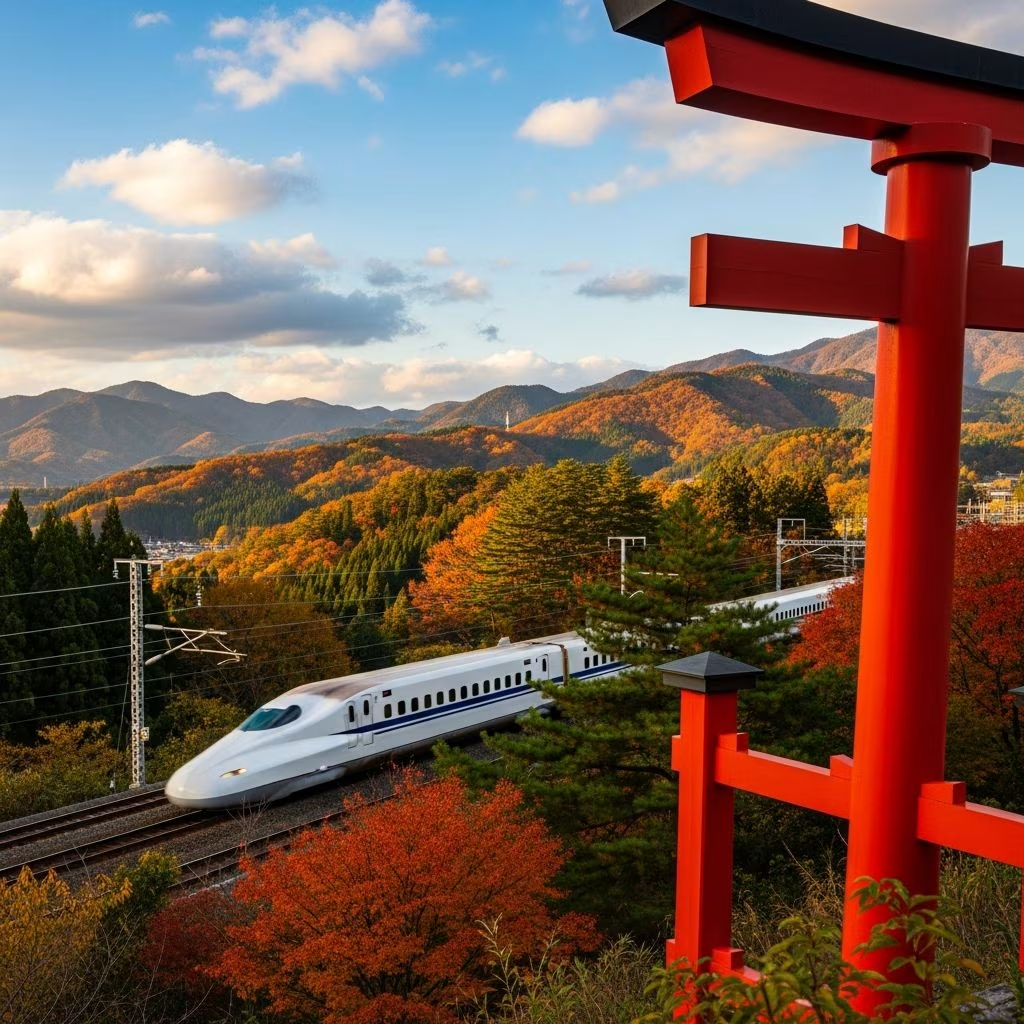
At the pinnacle are the iconic **Shinkansen** bullet trains, renowned for speeds exceeding 300 km/h. These lines span from Hokkaido in the north to Kyushu in the south, with key routes like the Tokaido Shinkansen linking Tokyo, Nagoya, Kyoto, and Osaka. Shinkansen services include Nozomi (fastest, non-JR Pass eligible in some cases), Hikari, and Kodama, catering to varied schedules.
Beyond JR, private operators like Keikyu or Odakyu run regional services, especially around Tokyo and Kansai, adding flexibility but requiring separate tickets.
Navigating fares starts with understanding options. For short trips, ticket machines at stations display regional maps with prices in yen. Insert cash (coins and bills accepted), select your fare, and retrieve the ticket. If unsure, buy the minimum and adjust at your destination.
Prepaid **IC cards** like Suica, Pasmo, or ICOCA revolutionize travel: tap to enter/exit gates, auto-deducting fares across most lines nationwide. Mobile versions (e.g., Mobile Suica) work on compatible smartphones, ideal for contactless convenience.
| Option | Best For | Cost Example | Pros |
|---|---|---|---|
| IC Cards | City hopping, short trips | ¥500 deposit + top-up | Easy, transferable value |
| Paper Tickets | One-off journeys | Varies by distance | Simple for beginners |
| JR Pass | Long-distance, tourists | ¥50,000/7 days | Unlimited Shinkansen |
For visitors planning multi-city itineraries, the **Japan Rail Pass (JR Pass)** is indispensable. Available in 7, 14, or 21-day durations for standard or Green Car (first-class), it grants unlimited access to JR trains, most Shinkansen, buses, and even the Miyajima Ferry. Priced from around ¥50,000 for seven days, it pays off quickly on routes like Tokyo-Kyoto-Osaka.
Purchase passes outside Japan via authorized agents; exchange vouchers at major stations upon arrival. Activate anytime within a month. Note: Nozomi/Mizuho Shinkansen require supplements, but Hikari/Kodama cover vast distances efficiently.
Regional alternatives shine for focused trips: Kansai Pass for Osaka-Kyoto-Nara, or JR East Pass for Tokyo-Niigata. These often cost less and avoid unused nationwide travel.
Japan’s trains run like clockwork, with frequencies from every few minutes in Tokyo to hourly in rural areas. Use apps for seamless planning: Navitime’s Japan Route Finder plots optimal paths, including transfers, platforms, and pass compatibility. Jorudan offers multilingual timetables and fare calculators.
Sample itinerary: Tokyo to Kyoto via Tokaido Shinkansen (2.5 hours, Hikari). Check departure boards at stations for English updates on platforms and delays—rare but possible during typhoons.
Pro tip: Book Shinkansen seats in advance at JR offices (green windows) or machines, especially peak seasons like cherry blossom viewing.
Stations are labyrinthine; follow color-coded lines and signs. Luggage: Use coin lockers (¥300-700) or oversized bag areas on Shinkansen. No eating on local trains, but bento permitted on bullet trains—grab ekiben from platforms.
Etiquette matters: Stand right on escalators (left in Kansai), silence phones, yield seats to elderly. Women-only cars during rush hour in major cities.
Trains reveal Japan’s beauty: The Hida Line from Nagoya to Takayama traces river valleys through Gifu’s mountains, a 2.5-hour visual feast. Hokkaido’s express trains showcase lavender fields, while Kyushu’s scenic routes hug coasts.
Kuroshio Limited Express links Tokyo to Shikoku via stunning bridges. Pair with JR Pass for spontaneous detours, like Kanazawa’s geisha districts or Hiroshima’s peace memorials.
Shinkansen accommodate large suitcases in dedicated spaces; reserve early. Stations feature elevators and ramps, with priority seating marked. English signage and staff assist foreigners.
For families, kid-friendly passes exist regionally; night trains like Sunrise Seto offer bunk beds Tokyo-Osaka-Kochi.
The 7-day JR Pass suits Tokyo-Kyoto-Osaka loops, covering Shinkansen unlimited.
Yes for Hikari/Kodama; Nozomi needs extra fee.
At major stations’ machines; refundable deposit.
Yes, but book ahead for Golden Week or Obon.
No entry without valid ticket/pass; gates detect it.
Leverage hyperdia alternatives like Navitime for real-time updates. Combine passes: JR nationwide then regional. Off-peak travel (shoulder seasons) means fewer crowds, same scenery.
Explore non-JR gems: Enoden line’s beach views near Kamakura or Tsugaru Railway’s autumn leaves in Aomori.
(Word count: 1678)
