

 Travel Essentials
 Travel Essentials

Discover how to navigate Japan's efficient trains, from high-speed Shinkansen to local lines, with tips on passes, tickets, planning tools, and essential travel advice for an unforgettable trip.
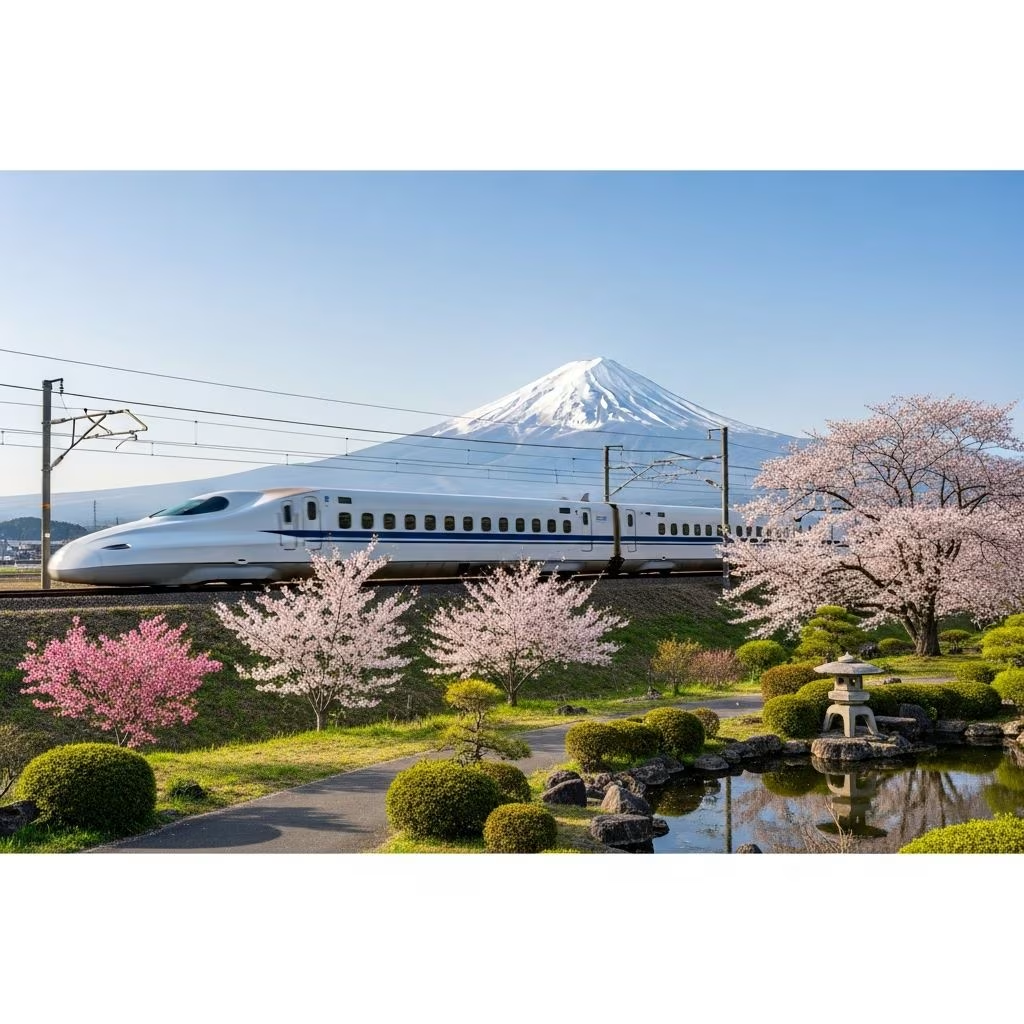 Travel Essentials
Japan’s railway system stands as a marvel of engineering and efficiency, connecting bustling metropolises with serene rural landscapes in a web of precision-timed services. Whether you’re zipping between Tokyo and Kyoto on a bullet train or hopping on local lines for short hops, trains offer the most reliable and scenic way to explore the country.
About 70% of Japan’s vast rail infrastructure falls under the Japan Railways (JR) Group, with private operators filling in urban and regional gaps. This network spans the four main islands—Honshu, Hokkaido, Kyushu, and Shikoku—delivering safe, punctual rides that rarely falter. From the supersonic Shinkansen to everyday commuter trains, options cater to every traveler’s needs, making rail the preferred mode for both locals and visitors.
Trains excel in convenience: no long security lines like airports, direct city-center access, and frequent departures. For instance, the journey from Tokyo to Osaka shrinks to about 2.5 hours on high-speed lines, rivaling air travel without the hassle.
Japan’s trains vary by speed, stops, and surcharges, allowing tailored choices. Understanding these categories ensures you pick the right service without overpaying.
Non-JR urban subways and private lines dominate city centers, with dense networks in Tokyo, Osaka, and beyond. These integrate seamlessly via IC cards for tap-and-go ease.
Planning is straightforward with free tools. Hyperdia (now JORUDAN) and NAVITIME apps plot optimal routes, fares, and pass compatibility, factoring in transfers and times. For example, Tokyo to Kyoto via Shinkansen takes roughly 2 hours 20 minutes; Narita Airport to Tokyo Station, about 1 hour.
| Popular Route | Main Transport | Time |
|---|---|---|
| Tokyo to Kyoto | Shinkansen | 2h 20m |
| Osaka to Kyoto | Local/Rapid | 30m |
| Tokyo to Hiroshima | Shinkansen | 4h |
| Narita Airport to Tokyo | Narita Express | 1h |
Stations display English signage, and apps provide real-time updates, minimizing confusion even for newcomers.
Short trips use vending machines: select fare from illuminated maps, insert cash (coins/bills), and collect tickets. English interfaces help; buy the minimum if unsure and adjust at destination. IC cards like Suica or Pasmo preload credit for seamless subway and bus use across providers.
For extensive travel, rail passes reign supreme. The Japan Rail Pass grants unlimited JR access—including most Shinkansen, express trains, buses, and even airport links like Narita Express—for 7, 14, or 21 days. Buy overseas before arrival, as prices start high but save on multi-city itineraries. Note: Nozomi/Hayama Shinkansen require supplements; stick to Hikari/Kodama.
Regional passes, like Kansai Thru Pass or Seishun 18 Kippu for locals, suit focused trips.
Shinkansen and limited expresses offer non-reserved (free-for-all, risk queues) and reserved seats (booked ahead, 300-900 yen extra, free with JR Pass). Green Cars provide luxury with wider seats and lounges—all reserved. During peaks (Golden Week, Obon), reserve early via JR offices, machines, or apps.
Major airports connect directly: Narita Express to Tokyo (JR Pass-eligible), Tokyo Monorail from Haneda, Haruka Express from Kansai to Osaka/Kyoto. These cut transfer stress, often covered by passes.
Arrive 10-20 minutes early; doors open precisely. Lost items? Stations have diligent lost-and-found.
No, purchase exchange vouchers abroad via official sites or agents; activate at major stations upon arrival.
Yes for Hikari/Kodama; Nozomi requires extra fee. Check apps for pass-friendly routes.
Tickets cover entire journeys; no need to exit gates mid-route if continuous. Follow signs.
NAVITIME or JORUDAN for comprehensive planning with pass filters.
Mostly 5 AM-1 AM; last trains vary by line. Schedules tighten late.
For immersive travel, Sunrise Seto/Izumo offers berth-equipped overnight runs from Tokyo to western Japan—JR Pass-eligible. Scenic routes like JR East’s Train Suite Shiki-Shima or Kyushu’s luxury lines blend luxury with views, though pricier.
Local gems: Sanriku Railway’s coastal paths or Hokkaido’s lavender fields via express.
JR’s electric fleets cut emissions; maglev Chuo Shinkansen (Tokyo-Nagoya by 2027) promises 500 km/h speeds. Expansions enhance rural access, preserving rail’s eco-friendly edge.
