

 Travel Essentials
 Travel Essentials

Explore how Japan's rich cultural traditions from cuisine to festivals remain integral to modern society, bridging past and present through enduring customs.
 Travel Essentials
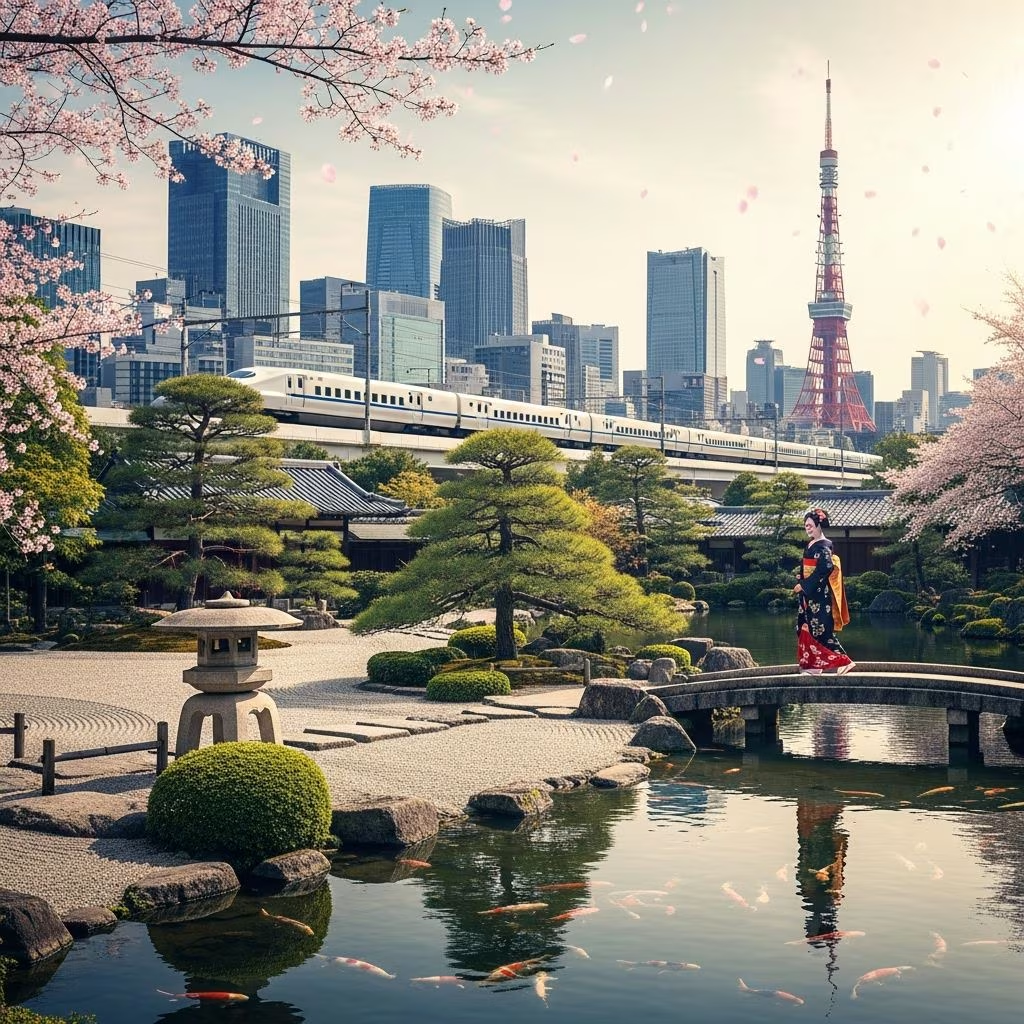
Japan presents a remarkable paradox in the modern world—a nation that embraces cutting-edge technology and contemporary innovation while maintaining profound respect for ancestral wisdom and time-honored practices. This distinctive balance between the ultramodern and the profoundly traditional creates a unique cultural landscape where ancient customs remain woven into the fabric of everyday existence. Unlike many industrialized nations where traditions have faded into historical memory, Japan actively sustains and celebrates its heritage as an essential component of national identity and personal meaning.
At the heart of Japanese culture lies a philosophical framework that views traditions not as relics of the past but as living bridges connecting ancestors, present communities, and future generations. This perspective shapes how Japanese society approaches cultural preservation and transmission. Rather than relegating customs to museums or academic study, Japanese families and communities actively practice these traditions in domestic settings, public spaces, and formal ceremonies throughout the year.
This commitment to cultural continuity reflects a deeper understanding of identity. Japanese traditions serve as repositories of collective memory, moral values, and spiritual wisdom accumulated over centuries. Each ceremony performed, each seasonal celebration observed, and each traditional skill practiced reinforces connections to historical roots while simultaneously reaffirming bonds within contemporary communities.
The vitality of Japanese traditions lies in their adaptability. Rather than remaining frozen in historical amber, these customs evolve while maintaining their essential character and significance. This dynamic preservation allows traditions to remain relevant and meaningful to younger generations who live in an increasingly globalized world.
Japanese cuisine extends far beyond the preparation and consumption of food—it represents a comprehensive philosophical system encompassing aesthetics, seasonality, sustainability, and social harmony. In 2013, UNESCO officially recognized *washoku* as an Intangible Cultural Heritage of Humanity, acknowledging not merely the dishes themselves but the entire ecosystem of knowledge, practice, and cultural meaning surrounding Japanese food traditions.
The UNESCO designation specifically highlighted several dimensions that make washoku culturally significant:
Washoku fundamentally reflects respect for nature’s cycles and availability. Rather than attempting to consume any ingredient year-round, traditional Japanese cuisine celebrates what each season offers, creating menus that change dramatically across spring, summer, autumn, and winter. This approach connects meals to the natural world and creates anticipation for specific dishes tied to particular times of year.
The presentation of food carries equal importance to flavor. Beautiful plating, appropriate dishware selection, and thoughtful arrangement on the table transform meals into aesthetic experiences. Every element—from the color of ingredients to the negative space on a plate—receives deliberate consideration. This holistic approach to cuisine demonstrates how Japanese traditions integrate art, nature, spirituality, and community into everyday activities.
Japanese culture organizes its most significant celebrations around the four seasons, with each season receiving distinct recognition through festivals, rituals, and observances. This cyclical framework reflects Shinto and Buddhist influences that perceive time not as linear progression but as recurring patterns of renewal, growth, maturity, and rest.
Spring initiates the annual cycle with cherry blossom festivals (*sakura matsuri*) that celebrate renewal and ephemeral beauty. The brief blooming period—sometimes lasting only weeks—carries profound meaning about impermanence and the precious nature of fleeting moments. Communities gather beneath flowering trees for celebrations that blend spiritual reverence with social gathering, connecting participants to centuries of cultural practice while creating contemporary memories.
Summer brings multiple major festivals throughout Japan, particularly in regional areas. The Tohoku region in Japan’s far north hosts some of the nation’s most elaborate summer celebrations, featuring illuminated floats, traditional music, and community participation. Events like Sendai Tanabata Matsuri, Aomori Neputa Matsuri, and Akita Kantō Matsuri demonstrate how regional variations preserve unique cultural expressions while maintaining connections to broader Japanese traditions.
Autumn shifts focus toward gratitude and preparation, with festivals celebrating harvests and honoring ancestors. The changing colors of foliage receive the same aesthetic attention that spring flowers command, with people making deliberate journeys to appreciate autumn landscapes in designated locations.
Winter brings reflective celebrations that balance the season’s harshness with spiritual warmth and family gathering. New Year observances and year-end preparations represent crucial transition points where households cleanse physical and spiritual spaces before welcoming the incoming year.
Japanese traditions maintain active connections between secular daily life and spiritual practice through temples, shrines, and ritualistic observances. These spaces serve not as isolated religious locations but as integrated components of community life where residents perform ceremonies marking life transitions, seasonal changes, and spiritual needs.
Temple and shrine visits occur throughout the year for specific purposes—seeking blessings for new endeavors, honoring deceased family members, requesting guidance during life transitions, or simply participating in community gatherings. This regular interaction with sacred spaces normalizes spiritual practice as a natural aspect of Japanese existence rather than an extraordinary religious activity.
Specific rituals mark important life passages: births receive blessing ceremonies, coming-of-age celebrations recognize the transition to adulthood, marriages are solemnized with traditional rites, and deaths prompt memorial practices honoring ancestral connection. These ceremonies provide cultural scripts for navigating significant life changes while reinforcing community bonds and shared values.
While national traditions create cohesion across Japan, regional variations preserve distinctive cultural expressions and historical identities. The Tohoku region exemplifies how less-frequented areas maintain ancient customs, mythical legends, and time-honored practices distinct from urban centers.
Remote regions have preserved traditional ways of living that urban development has substantially altered in metropolitan areas. Village life continues practices that connect residents directly to agricultural cycles, natural phenomena, and historical narratives specific to particular locations. Visitors to these areas encounter not merely tourist performances of tradition but lived cultural practice that residents have sustained across generations.
Regional festivals demonstrate this local distinctiveness:
| Festival | Region | Distinctive Features |
|---|---|---|
| Sendai Tanabata Matsuri | Tohoku | Thousands of colorful streamers and paper decorations celebrating Chinese legend |
| Aomori Neputa Matsuri | Tohoku | Elaborate illuminated floats with taiko drums and traditional performances |
| Akita Kantō Matsuri | Tohoku | Participants balance illuminated lanterns on giant poles to taiko drumming |
These regional celebrations preserve cultural memories and historical narratives specific to particular communities while demonstrating how traditions adapt to local geography, historical circumstances, and community needs.
The Japanese tea ceremony (*chanoyu*) exemplifies how traditions encapsulate philosophical principles into refined practices. Far exceeding simple beverage preparation, the tea ceremony represents a complete aesthetic and spiritual system emphasizing harmony, respect, purity, and tranquility. Practitioners spend years mastering subtle movements, understanding the philosophical principles underlying each gesture, and developing the meditative awareness that transforms routine activity into spiritual practice.
The tea ceremony demonstrates how Japanese traditions often contain multiple layers of meaning. Superficially, one observes careful preparation and presentation of tea. More deeply, participants engage in meditation on impermanence, practice mindful attention to present moments, express respect for guests and materials, and participate in traditions connecting them to centuries of practitioners who performed identical movements in similar spaces.
Rather than viewing traditions as opposing modernization, many young Japanese integrate ancestral customs into contemporary life through festival participation, martial arts study, tea ceremony learning, or family observances. Educational institutions often teach traditional arts alongside academic subjects, normalizing cultural practice across age groups.
Traditions remain dynamic rather than static. Modern practitioners adapt ceremonies and festivals to contemporary circumstances while preserving essential elements. For example, some tea ceremonies now accommodate modern mobility patterns, and certain festivals incorporate contemporary elements while maintaining traditional structures.
Visitors can participate in many traditions through guided tea ceremonies, festival attendance, temple visits, and culinary experiences. Approaching these traditions with respect, curiosity, and willingness to learn transforms tourism into genuine cultural engagement rather than superficial observation.
Seasonal celebrations, family gatherings around traditional foods, visits to temples and shrines during specific occasions, and participation in community festivals remain deeply embedded in Japanese society across urban and rural areas.
Japanese traditions ultimately represent sustained conversation between past and present. Rather than relegating historical practices to historical study, Japanese society maintains living relationships with ancestral wisdom, artistic forms, spiritual practices, and social customs. This commitment to cultural continuity provides meaning, identity, and spiritual grounding in increasingly globalized contexts.
The persistence of Japanese traditions demonstrates that modernization and cultural preservation need not exist in opposition. A society can embrace technological innovation, contemporary convenience, and global connectivity while simultaneously honoring ancestral practices, seasonal cycles, and time-tested wisdom. Japan’s example suggests that traditions offer valuable resources for navigating contemporary challenges—teaching mindfulness, community connection, respect for natural cycles, and spiritual depth that purely material progress cannot provide.
For both residents and visitors, engaging with Japanese traditions offers opportunities to slow temporal experience, appreciate beauty and meaning embedded in ordinary activities, strengthen community bonds, and access wisdom accumulated across centuries. These traditions remain vital not through nostalgic preservation but through active practice that proves their ongoing relevance to human flourishing and collective wellbeing.
