

 Travel Essentials
 Travel Essentials

Discover Japan’s scenic Hokuriku corridor by rail, from Nagano and Kanazawa to Kyoto and Osaka, with mountains, coastlines, crafts, and food.
 Travel Essentials
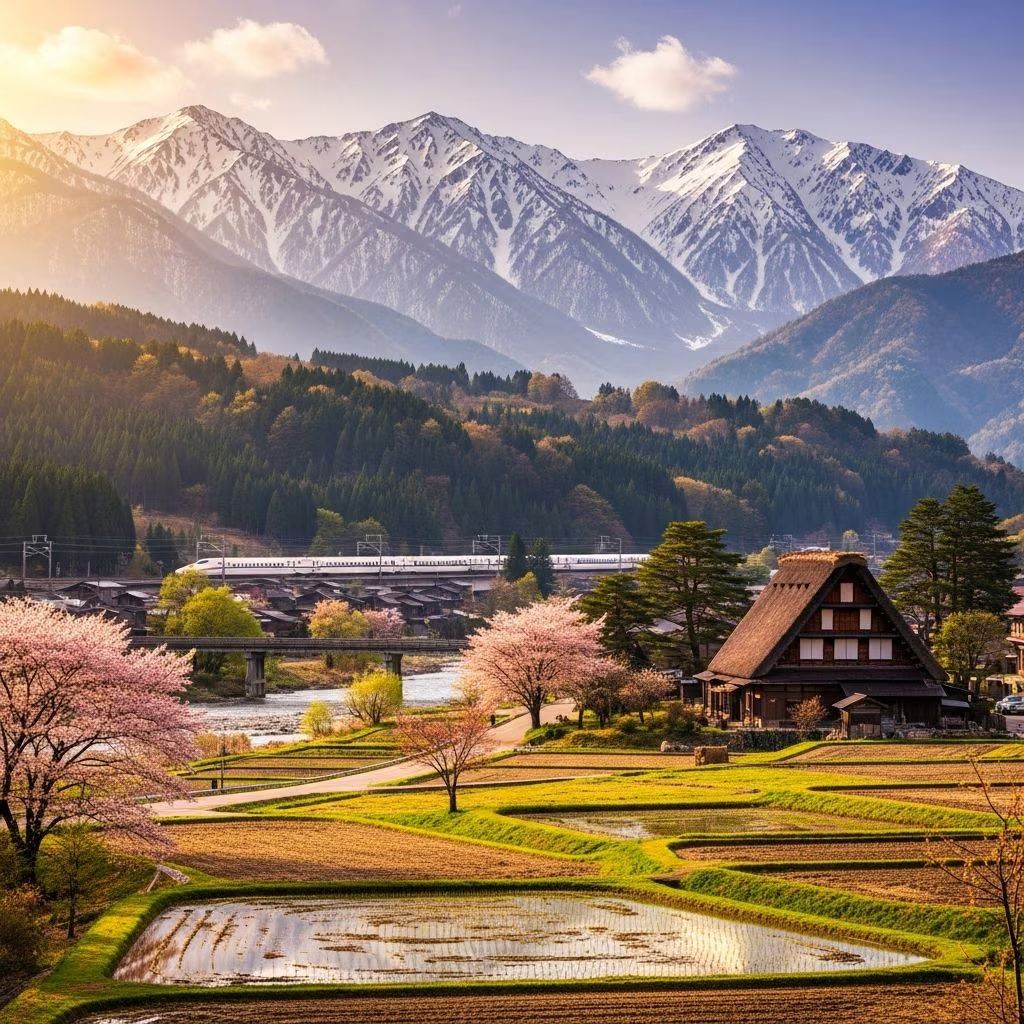
Japan’s New Golden Route offers a captivating alternative to the classic Tokyo-Kyoto-Osaka path, guiding travelers through the Hokuriku region’s diverse landscapes, from alpine peaks to coastal wonders. This rail-centric itinerary leverages the extended Hokuriku Shinkansen and connects to Kansai via Fukui, emphasizing slower-paced discovery over high-speed dashes.
The traditional Golden Route prioritizes efficiency along the Pacific coast, linking megacities with bullet trains. In contrast, the New Golden Route arcs northward along the Sea of Japan, incorporating Nagano’s mountains, Toyama’s bays, Kanazawa’s gardens, Fukui’s temples, and Kyoto’s heritage before culminating in Osaka’s vibrancy. This path gained feasibility with the 2024 Hokuriku Shinkansen extension to Tsuruga, enabling seamless transfers without backtracking.
Designed for international tourists, the Hokuriku Arch Pass provides 7 consecutive days of unlimited JR travel from Tokyo to Osaka via Hokuriku. Priced at around 24,000 yen, it includes reserved seats on the Hokuriku Shinkansen (Tokyo-Tsuruga), limited express trains like Thunderbird to Kyoto/Osaka, and local lines within the zone. Coverage spans JR East and JR West networks, making multi-stop itineraries affordable and flexible.
| Pass Feature | Details |
|---|---|
| Validity | 7 consecutive days |
| Shinkansen | Tokyo to Tsuruga (reserved seats) |
| Limited Express | Tsuruga to Kyoto/Osaka (e.g., Thunderbird, Haruka) |
| Local/Rapid | Unlimited in Hokuriku-Kansai corridor |
| Price | 24,000 JPY (adult) |
Purchase online or at major stations; activate upon first use for peak-season flexibility.
Begin in Tokyo, Japan’s pulsating capital, before boarding the Hokuriku Shinkansen northward. The 1.5-hour ride to Nagano reveals urban fringes giving way to forested hills.
Nagano, host of the 1998 Winter Olympics, centers on Zenkoji Temple, a 7th-century wooden marvel drawing pilgrims. Hike nearby Jigokudani Monkey Park, where snow monkeys bathe in hot springs—a quintessential Japanese scene. Savor soba noodles made from local buckwheat. Overnight here to acclimate to the route’s alpine rhythm.
From Nagano, continue to Toyama (2 hours), gateway to the UNESCO-listed Tateyama Kurobe Alpine Route. This 90km traverse features cable cars, trolleybuses, and the 1,700m-high Snow Wall in spring—towering ice corridors up to 20m high. Toyama Bay offers firefly squid viewing in season and kaisendon (seafood rice bowls). Base yourself for rugged exploration.
A 1-hour Shinkansen hop lands you in Kanazawa, rivaling Kyoto for preserved Edo-era charm. Wander Kenrokuen Garden, one of Japan’s ‘three best landscape gardens,’ with its four-season beauty. Explore Higashi Chaya geisha district’s teahouses and gold-leaf workshops—Kanazawa produces 99% of Japan’s edible gold leaf. Don’t miss Omicho Market for crab and sushi. This stop embodies samurai history and artisan crafts.
Travel 1 hour to Fukui Prefecture, rich in natural and historical gems. Eiheiji Temple, Soto Zen headquarters, offers meditative trails amid ancient cedars. The Fukui Prefectural Dinosaur Museum showcases Asia’s largest collection, including full Tyrannosaurus skeletons. Coastal Echizen features toad oil crafts and fresh crab. This underrated prefecture bridges Hokuriku’s wild north with Kansai’s polish.
From Tsuruga (30 minutes from Fukui), limited express trains whisk you to Kyoto (1.5 hours). Dive into 17 UNESCO sites: Fushimi Inari’s torii gates, Kinkaku-ji’s golden pavilion, Arashiyama’s bamboo grove. Kyoto’s kaiseki cuisine and tea ceremonies elevate evenings. Allocate 1-2 days for immersion.
A quick 30-minute ride ends in Osaka, the nation’s kitchen. Dotonbori neon, Osaka Castle, and Universal Studios thrill by day; takoyaki, okonomiyaki, and kushikatsu fuel nights. Shinsaibashi shopping caps the journey.
Timing enhances the New Golden Route:
Hokuriku shines culinarily. Toyama’s bay yields sweet shrimp; Kanazawa boasts kaga-ryori multi-course meals; Fukui excels in Obama beef; Kyoto refines kaiseki; Osaka delivers street eats. Stations double as tasting hubs—grab ekiben (station bentos) themed to locales. The pass supports flexible stops for market detours.
| Stop | Must-Try Dish |
|---|---|
| Nagano | Shinshu soba |
| Toyama | Black ramen, firefly squid |
| Kanazawa | Gold-leaf ice cream, jibuni stew |
| Fukui | Echizen crab, toad oil tofu |
| Kyoto | Kaiseki, yudofu |
| Osaka | Okonomiyaki, kushikatsu |
Book Shinkansen seats via JR apps; shoulder seasons avoid crowds. Pack layers for elevation changes. Use Hyperdia for schedules. Accommodations range from ryokans in Kanazawa to capsules in Osaka. The pass excludes non-JR lines but covers buses in key spots like Tateyama.
| Aspect | Traditional (Tokaido) | New (Hokuriku) |
|---|---|---|
| Duration | 2-3 days | 5-7 days |
| Focus | Cities, speed | Regions, scenery |
| Cost (w/pass) | JR Pass segment | Hokuriku Arch 24k yen |
| Highlights | Narita, Hakone, Nara | Alps, coasts, crafts |
It covers Hokuriku Shinkansen Tokyo-Tsuruga, limited expresses to Kansai, and local JR lines for 7 days.
Yes—monkeys, dinosaurs, gardens, and theme parks appeal across ages.
5-7 days with overnights; pure travel is 8-10 hours spread out.
Yes, combine with Kansai passes for Hiroshima or Nara.
Spring/autumn for weather; winter for snow enthusiasts.
This route promotes sustainable tourism in revitalized areas post-Shinkansen. Support locals by choosing regional crafts and eateries, ensuring the New Golden Route endures.
