

 Travel Essentials
 Travel Essentials

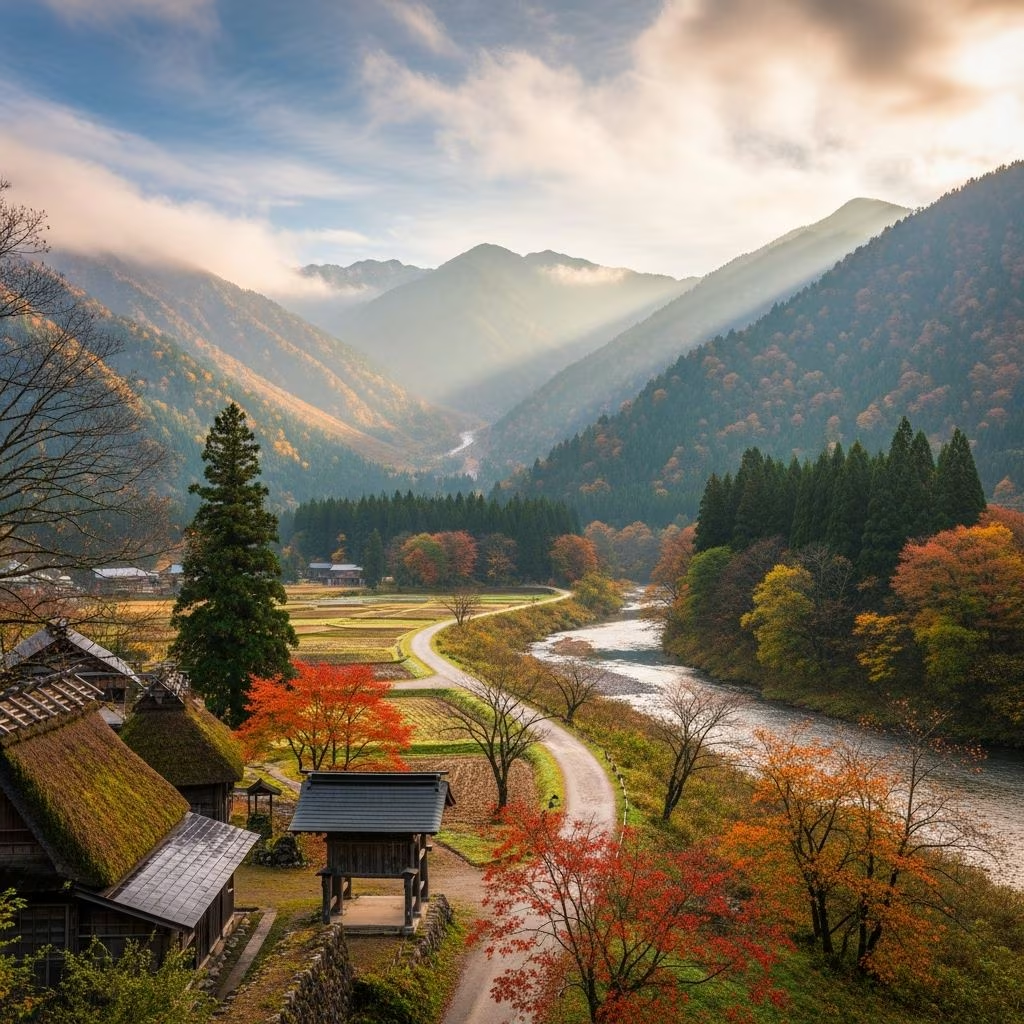
Explore Japan’s Three-Star Route: castles, mountain villages, hot springs, and gardens linked by easy rail and bus travel across central Honshu.
 Travel Essentials
Japan’s central mountainous region offers one of the nation’s most rewarding travel experiences through what has become known as the Three-Star Road, or Mitsuboshi Kaidou in Japanese. This isn’t a conventional highway but rather a thoughtfully curated sequence of destinations spanning approximately 200 kilometers across four prefectures: Nagano, Gifu, Toyama, and Ishikawa. The route connects five settlements that have each earned the prestigious three-star designation from Michelin’s Green Guide Japan, making it an essential itinerary for travelers seeking authentic cultural immersion combined with stunning natural landscapes.
What distinguishes this journey from other prescribed tourist pathways in Japan is its unconventional nature. Unlike traditional roads, the Three-Star Route consists of a series of carefully selected destinations linked by efficient public transportation systems rather than a continuous highway. This design allows visitors complete flexibility in how they experience each location, permitting extended stays in favored destinations or brief passes through others. The route officially begins in Matsumoto, a city renowned for its historic castle, and extends westward through the mountainous interior before concluding in the coastal city of Kanazawa, celebrated for its meticulously preserved traditional gardens and contemporary cultural institutions.
The five primary destinations earning three-star Michelin recognition along this corridor are Matsumoto Castle, Takayama’s historic district, the thatched-roof village of Shirakawa-go, the Gokayama region, and Kanazawa’s Kenrokuen Garden. Additionally, though situated slightly off the main route, Nagano’s Zenkoji Temple represents another significant three-star attraction that many travelers incorporate into their journey.
Accessibility has been substantially enhanced through the introduction of the Three-Star Route Option Ticket, a specialized transportation pass designed specifically for foreign visitors. Priced at approximately ¥5,500 (roughly $52 USD) for adults with reduced rates for children, this one-way pass provides seven days of consecutive or flexible travel between major attractions along the corridor. The ticket eliminates complex transportation arrangements, allowing travelers to focus on experiences rather than logistics. Journeys between stops typically require two to three hours by bus, with passengers having the flexibility to reserve seats in advance or travel on a first-come, first-served basis depending on their schedule preferences.
For those arriving from Tokyo, access to the Three-Star Road begins via the Hokuriku Shinkansen bullet train, which connects the capital to gateway stations throughout central Honshu. This efficient rail connection means travelers can depart Tokyo in the morning and arrive at their first Three-Star destination by mid-afternoon, minimizing time spent in transit and maximizing opportunities for exploration.
The journey traditionally begins in Matsumoto, home to one of Japan’s most visually striking castles. Constructed during the late 16th century, Matsumoto Castle stands as a designated National Treasure, rising dramatically from its surrounding moat with distinctive black exterior woodwork that has captured imaginations for centuries. The castle’s architecture represents a masterpiece of feudal-period engineering, combining defensive capabilities with aesthetic refinement. Visitors can spend several hours exploring the castle’s interior chambers, each revealing layers of samurai history and strategic design principles.
Beyond the castle, Matsumoto provides additional cultural attractions including traditional craft shops, local restaurants serving regional specialties, and museums dedicated to regional art and history. Many travelers spend a full day in this city, allowing ample opportunity to absorb its atmosphere before moving westward along the route.
As travelers progress along the Three-Star Route, the landscape transitions from urban centers to increasingly remote mountain settlements characterized by traditional architecture and customs preserved across generations. The journey passes through Hirayu Onsen, a relaxing hot spring resort where buses stop to permit passengers to experience Japan’s celebrated bathing culture. These strategically placed stops transform what could be monotonous transit into integrated cultural experiences.
Takayama represents a significant waypoint, preserving authentic Edo-period streetscapes that transport visitors backward in time. The town’s morning markets bustle with activity as local vendors display regional produce, handicrafts, and prepared foods reflecting centuries-old culinary traditions. Walking through Takayama’s preserved merchant district reveals traditional wooden storefronts, sake breweries, and restaurants serving dishes unavailable elsewhere in Japan.
The thatched-roof villages of Shirakawa-go and Gokayama merit extended exploration. These communities maintain distinctive architectural styles adapted to heavy snowfall in the region, featuring multi-story farmhouses with steeply pitched roofs designed to shed snow efficiently while providing substantial interior space for agricultural families and their livestock. UNESCO recognition of these villages reflects their exceptional preservation of traditional Japanese rural settlement patterns. Visitors can tour farmhouse interiors, observing how families organized domestic spaces, prepared meals, and managed agricultural operations across centuries.
Kanazawa, the western terminus of the Three-Star Route, represents perhaps the most culturally dense destination along the entire corridor. The city’s Kenrokuen Garden ranks among Japan’s most celebrated landscape gardens, combining carefully composed natural elements with architectural features reflecting refined aesthetic principles developed over centuries. Meticulously maintained seasonal displays ensure visitors experience the garden’s beauty regardless of when they visit, from spring cherry blossoms to winter snow arrangements.
Beyond its gardens, Kanazawa hosts numerous galleries showcasing both traditional and contemporary Japanese art. The city’s Higashi Chaya District preserves historic wooden teahouses where traditional entertainers once performed for merchants and travelers. Walking through this atmospheric neighborhood at dusk, when lanterns illuminate wooden facades and narrow lanes, provides sensory immersion into Japan’s pre-modern entertainment culture.
Kanazawa also serves as a culinary destination, with restaurants throughout the city specializing in regional ingredients and preparation methods. Fresh seafood from nearby coastal waters combines with mountain vegetables and rice cultivated in surrounding agricultural areas, creating distinctive flavor profiles that define regional cuisine.
The Three-Star Route passes through regions celebrated for distinctive food cultures developed through unique agricultural conditions and historical trade patterns. Nagano Prefecture has long been renowned for quality fruits, particularly peaches and apples, alongside distinctive protein sources including basashi (horse meat prepared raw), which holds cultural significance in the region. Mountain communities developed pickling and preservation techniques that transformed seasonal abundance into year-round sustenance, creating complex flavor profiles that contemporary chefs continue to celebrate.
Each destination along the route features restaurants emphasizing local sourcing and traditional preparation methods. Travelers can experience meals reflecting agricultural seasons, culinary heritage, and contemporary innovation simultaneously, as many establishments balance preservation of traditional recipes with modern presentation and technique refinement.
The Three-Star Route offers distinct experiences across different seasons, with each period presenting unique advantages and challenges. Spring brings flowering trees and mild temperatures ideal for extended walking exploration. Summer provides long daylight hours enabling visitors to maximize sightseeing activities, though mountain regions remain pleasantly cool compared to Japan’s coastal lowlands. Autumn presents spectacular foliage displays and excellent weather conditions. Winter transforms the route into a snow-covered landscape, particularly dramatic in mountain villages, though accessibility can be complicated by weather.
Most travelers find late spring through early autumn optimal for Three-Star Route journeys, as weather permits comfortable outdoor exploration while natural scenery displays seasonal transitions most dramatically. Spring visitors experience village cherry blossom festivals, while autumn travelers witness mountain foliage transformations across multiple elevations.
Successful Three-Star Route exploration requires advance consideration of several factors. Acquiring the Three-Star Route Option Ticket before departure streamlines logistics significantly, as supply can be limited during peak tourist seasons. Advance reservations at accommodations in smaller mountain villages ensure availability, particularly during festival periods and holiday seasons. Purchasing the ticket well in advance eliminates uncertainty and guarantees transportation access throughout the seven-day validity period.
Packing considerations should account for weather variability across regions and seasons. Comfortable walking shoes are essential, as exploring each destination fully requires substantial pedestrian movement through villages, gardens, and castle grounds. Mountain conditions demand layers accommodating temperature fluctuations between sunny days and shaded forest trails.
The Three-Star Route succeeds as a travel itinerary because it combines multiple elements appealing to diverse traveler interests and experience levels. Landscape photographers find endless compositions across mountain vistas and traditional village streetscapes. Cultural enthusiasts encounter authentic preservation of architectural styles, traditional crafts, and community customs spanning centuries. Culinary explorers discover regional specialties reflecting local agricultural conditions and historical development. Adventure-seeking travelers can incorporate hiking, hot spring experiences, and outdoor activities alongside cultural attractions.
The route’s accessibility through efficient public transportation makes it feasible for travelers with varying physical capabilities and time constraints. First-time Japan visitors can experience essential elements of the nation’s cultural heritage, while veteran travelers discover lesser-explored regions offering fresh perspectives on Japanese civilization.
While the Three-Star designation provides a helpful framework, travelers possess complete freedom to extend journeys beyond officially recognized destinations. Many choose to explore Nagano City more thoroughly, investigating additional temples and seasonal events. Others venture into mountainous regions surrounding primary route destinations, discovering small communities where traditional lifeways continue with minimal tourism infrastructure. This flexibility allows personalization of the journey according to individual interests and available time.
The route’s relatively recent formalization as a cohesive travel itinerary means many aspects remain authentically oriented toward local community benefit rather than tourism commodification. Villages maintain traditional functions alongside welcoming visitor interest, creating opportunities for genuine cultural exchange rather than staged performances designed exclusively for tourist consumption.
The Seven-day pass validity perfectly aligns with comprehensive route exploration, allowing two days per major destination plus transit time. However, travelers with limited time can experience highlights within 4-5 days by visiting primary attractions in each location, while those seeking deeper immersion may prefer 10-14 days incorporating extended stays and side exploration.
Advance booking is strongly recommended, particularly in smaller mountain villages where accommodation options remain limited. Peak seasons (spring and autumn) and festival periods often fully book weeks in advance. Major cities like Kanazawa and Matsumoto offer more flexible last-minute options, but reserving throughout ensures optimal experiences and preferred accommodation styles.
Yes, the Three-Star Route Option Ticket functions for travel in either direction across its seven-day validity period. Some travelers prefer beginning in Kanazawa and traveling eastward toward Matsumoto, allowing flexibility in route orientation according to Tokyo arrival times or personal preferences.
Major attractions like Matsumoto Castle and Kanazawa’s gardens provide accessibility features, though some traditional mountain village sites present stairs and uneven surfaces. Public transportation buses accommodate wheelchairs, and many accommodations offer ground-floor rooms. Advance communication with booking services ensures appropriate arrangements for specific mobility requirements.
Meal costs vary significantly by location and establishment type. Small village restaurants might charge ¥800-1,500 for lunch, while upscale Kanazawa establishments may exceed ¥8,000-12,000 per meal. Budget-conscious travelers can utilize convenience stores and local markets for some meals, combining economy options with selective fine dining experiences at key destinations.
The Three-Star Route represents one of Japan’s most rewarding travel itineraries, combining natural beauty, cultural heritage, and practical accessibility into a comprehensive experience. Whether this represents a first Japan visit or an additional chapter in extended Japanese travels, the route offers sufficient depth and diversity to satisfy varied interests while remaining logistically manageable for independent travelers. The combination of Michelin-recognized attractions, authentic village preservation, and thoughtful transportation infrastructure creates opportunities for both structured sightseeing and spontaneous discovery, making the Three-Star Route an essential destination for travelers seeking authentic engagement with Japan’s cultural landscape.
