

 Travel Essentials
 Travel Essentials

Juice jacking turns innocent charging ports into cyber traps. Learn how attackers exploit USB connections, why real incidents are rare, and essential defenses for safe travel.
 Travel Essentials
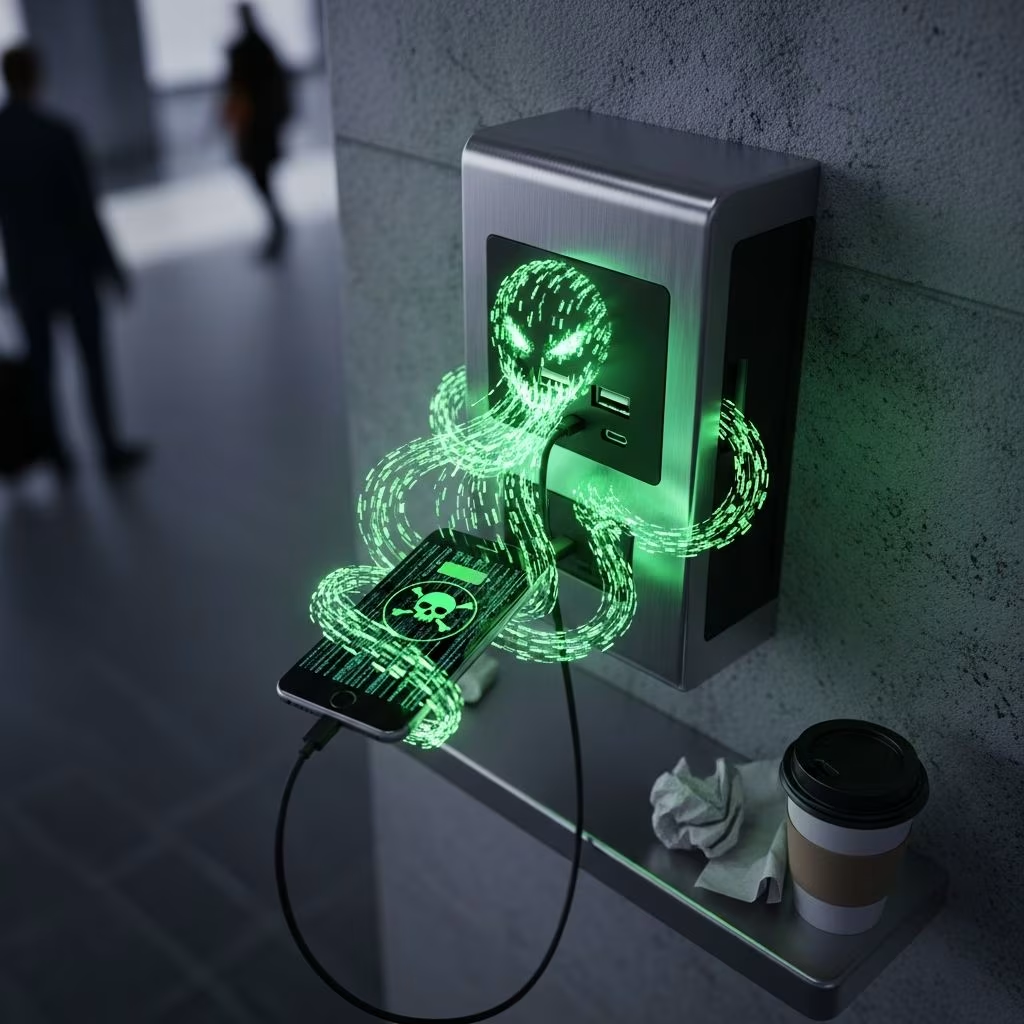
Public USB charging stations promise quick power boosts for weary travelers, but they harbor a subtle cyber risk known as juice jacking. This attack leverages compromised chargers to siphon data or deploy malware, turning convenience into vulnerability.
Juice jacking exploits the dual role of USB cables, which transmit both power and data. When a device connects to a tampered port, attackers can initiate unauthorized data transfers or install harmful software without immediate detection.
Attackers modify public stations in high-traffic areas like airports, cafes, or hotels. These setups appear legitimate but contain hidden hardware that masquerades as a trusted connection, potentially accessing files, contacts, or even granting remote control.
Modern operating systems from Apple and Google include safeguards, such as prompts requiring user approval for USB data access. Yet, emerging techniques like ChoiceJacking bypass these by simulating user interactions.
Despite widespread warnings, juice jacking remains largely theoretical. As of 2023, no verified real-world cases exist outside lab demonstrations, with experts deeming the risk low for average users.
Government bodies like the TSA and FCC highlight the threat precautionarily. The TSA advises against USB ports at airports, recommending personal power banks instead. The U.S. Army Cyber Command describes it as a method where compromised USB stations steal data or transfer malware.
| Authority | Stance on Juice Jacking | Date |
|---|---|---|
| TSA | Warn against airport USB ports; use personal chargers. | 2025 |
| FCC | No real-world attacks found since 2019. | 2023 |
| U.S. Army Cyber | Potential for malware/data theft via USB. | 2022 |
| Researchers | Lab-proven but no wild incidents. | 2025 |
This table summarizes official positions, showing consensus on theoretical feasibility but absence of confirmed exploits.
Travelers face heightened exposure in transient environments with depleted batteries and limited outlets. Airports and transit hubs amplify the appeal of free chargers, making them prime targets for warnings.
Psychological factors play a role: battery anxiety overrides caution, especially during long layovers. Coupled with evolving exploits like AOAP on Android, which fakes accessory connections, the narrative fuels ongoing alerts.
Broader context includes related risks, such as public Wi-Fi snooping. The TSA extends advice to avoid unsecured networks for sensitive tasks, favoring VPNs or cellular data.
Eliminate juice jacking risks with simple, effective habits. Prioritize methods that block data pathways while ensuring power delivery.
For shared power banks, inspect for tampering and prefer trusted brands. Post-connection, monitor for anomalies like unexpected battery drain or pop-ups.
If suspicion arises after using a public port, act swiftly. Disconnect immediately, power off the device, and run a full antivirus scan using reputable software.
Change passwords for affected accounts from a secure connection. Enable multi-factor authentication everywhere. If malware symptoms persist—such as sluggish performance or unauthorized app installs—consider a factory reset after backing up essentials.
Recent research from Graz University reveals ChoiceJacking, where ports spoof user taps to approve access, evading OS prompts. This underscores the need for vigilance despite built-in protections.
Attack economics deter widespread adoption: High setup costs yield low returns compared to phishing or ransomware. Quantitative models estimate minuscule individual probabilities, factoring global populations and charger numbers.
Industry responses include smarter ports that default to power-only. Travelers benefit most from layered defenses combining hardware, software, and habits.
A data connection via USB when plugged into a modified port, often approved unwittingly by the user.
No credible real-world incidents reported as of 2025; all stem from controlled research.
Yes, with personal adapters or data blockers. Avoid direct USB ports.
Both have USB trust prompts, but exploits target both equally.
A high-capacity power bank from a reputable brand, paired with data blockers.
Juice jacking fits into wider threats like shoulder surfing or lost devices. Use biometric locks, encrypt storage, and avoid jailbreaking. Regular OS updates patch vulnerabilities promptly.
For business travelers, MDM solutions enforce policies like auto-locking USB ports. Families should educate all members on risks.
By 2026, expect more wireless options and portless charging via standards like MagSafe expansion. Until then, personal gear remains paramount.
