


 Food & Culture
Food & Culture
Kagawa Prefecture Travel Guide: Udon, Art Islands & Shrines
Uncover Kagawa's hidden gems from Ritsurin Garden's beauty to Naoshima's art, Kotohira-gu climbs, udon feasts, and Shikoku pilgrimage temples.
 Food & Culture
Kagawa Prefecture, Japan’s tiniest region by land area, packs an extraordinary punch with its blend of natural splendor, artistic innovation, spiritual heritage, and culinary fame. Nestled on Shikoku Island along the Seto Inland Sea, it offers tranquil gardens, modern art havens on islands like Naoshima, ancient shrines demanding steep climbs, and the renowned Sanuki udon noodles that draw food lovers worldwide. Whether you’re hiking temple trails, savoring steaming bowls of chewy noodles, or admiring Monet’s water lilies underground, Kagawa delivers unforgettable experiences for every traveler.
Why Visit Kagawa Prefecture?
Despite its compact size, Kagawa stands out for its diversity. Takamatsu, the prefectural capital and Shikoku’s largest city, serves as an ideal gateway with easy access to ferries for island hopping. The area’s mild climate, scenic bridges like the Great Seto Bridge, and seasonal events—from cherry blossoms to illuminated castles—make it a year-round destination. It’s particularly appealing for those seeking a less crowded alternative to Tokyo or Kyoto, combining Japan’s traditional soul with cutting-edge contemporary art.
- Compact yet diverse: Explore gardens, castles, shrines, and art sites without long travels.
- Culinary capital: Famous for udon, with shops open early for breakfast bowls.
- Art mecca: Naoshima and nearby isles host world-class installations.
- Spiritual depth: Part of the Shikoku 88 Temple Pilgrimage route.
Iconic Gardens and Natural Retreats
Kagawa’s landscapes captivate with meticulously crafted gardens and coastal wonders. Foremost is **Ritsurin Garden** in Takamatsu, hailed as one of Japan’s finest landscape gardens. Spanning 75 hectares, it features six ponds teeming with colorful koi, ancient pines sculpted by wind, and teahouses for matcha ceremonies. Boat rides offer views of Mt. Shiun framing the scenery, which transforms seasonally—pink sakura in spring, fiery maples in autumn. Visitors rave about its serene paths and illuminations during peak foliage.
Another gem is **Chichibugahama Beach** near Kanonji, where low tides reveal a vast sandbar resembling Italy’s Tropea Beach. At sunset, the sky and sea merge in dramatic gradients, perfect for photography. Nearby, **Kotohiki Park** houses a massive Edo-period coin sand art, illuminated nightly for ethereal effect. For panoramic vistas, ascend **Mt. Shiude** during cherry blossom season or explore **Sanuki Manno Park**, a vast green space with playgrounds and flower fields.
Contemporary Art Islands of the Seto Inland Sea
Kagawa’s islands redefine art tourism. **Naoshima**, the flagship of the Benesse Art Site, integrates sculptures, museums, and installations into its natural terrain. The **Chichu Art Museum**, buried underground to harmonize with the landscape, showcases Claude Monet’s water lilies, James Turrell’s light installations, and Walter De Maria’s minimalist works. Natural light filters through skylights, creating immersive atmospheres.
Don’t miss outdoor icons like Yayoi Kusama’s giant pumpkins or the Art House Project, where abandoned homes become interactive galleries. Ferries from Takamatsu or Uno connect to **Teshima** and **Inujima**, extending the art trail with rice field-embedded museums and industrial repurposed sites. These islands, part of the Setouchi Triennale (held every three years), attract global crowds but retain a peaceful vibe.
| Island | Key Attractions | Access | Best For |
|---|---|---|---|
| Naoshima | Chichu Museum, Kusama Pumpkins, Art Houses | Ferry from Takamatsu (50 min) | Modern Art Enthusiasts |
| Teshima | Teshima Art Museum, Bike Trails | Ferry from Uno (30 min) | Nature-Art Fusion |
| Shodoshima | Angel Road, Olive Parks | Ferry from Takamatsu (1 hr) | Family Outings |
Spiritual Sites and Historic Shrines
Kagawa pulses with spiritual energy as the starting point (or endpoint, depending on direction) of the Shikoku 88 Temple Pilgrimage, a 1,200 km circuit founded by monk Kukai (Kobo Daishi). **Zentsu-ji Temple**, the 75th station and Kukai’s birthplace, features a five-story pagoda, ancient camphor tree, and a pitch-black 100m tunnel lined with Buddhist relics—walk it for meditative introspection.
Climbing **Kotohira-gu Shrine** (Konpira-san) is a rite of passage. Perched at 521 steps up Mt. Zozu, this Shinto complex honors the sea deity with ornate gates, lanterns, and treasure vaults. The final 785 steps to the inner shrine test endurance but reward with sweeping Seto Sea views. Adjacent hot springs in Konpira Onsen provide post-climb soaks. **Takaya Shrine** on Mt. Inazumi demands 200+ steps for coastal panoramas.
Castles, Museums, and Cultural Immersions
**Marugame Castle**, one of Japan’s 12 original wooden keeps, impresses with its 60m stone walls dwarfing the modest three-story tower. Winter illuminations highlight its grandeur, and summit views span the city and sea. Nearby, craft a traditional uchiwa fan at **Uchiwa no Minato Museum** or delve into history at **Kagawa Prefectural Museum**, featuring recreated 1920s classrooms and postwar homes inspired by films like *Twenty-Four Eyes*.
The **Great Seto Bridge**, a engineering marvel linking Honshu and Shikoku, offers driveable or cycleable paths with island-hopping vistas. Kabuki fans head to **Kanamaruza Theater** in Kotohira for authentic performances.
Savoring Sanuki Udon: Kagawa’s Culinary Soul
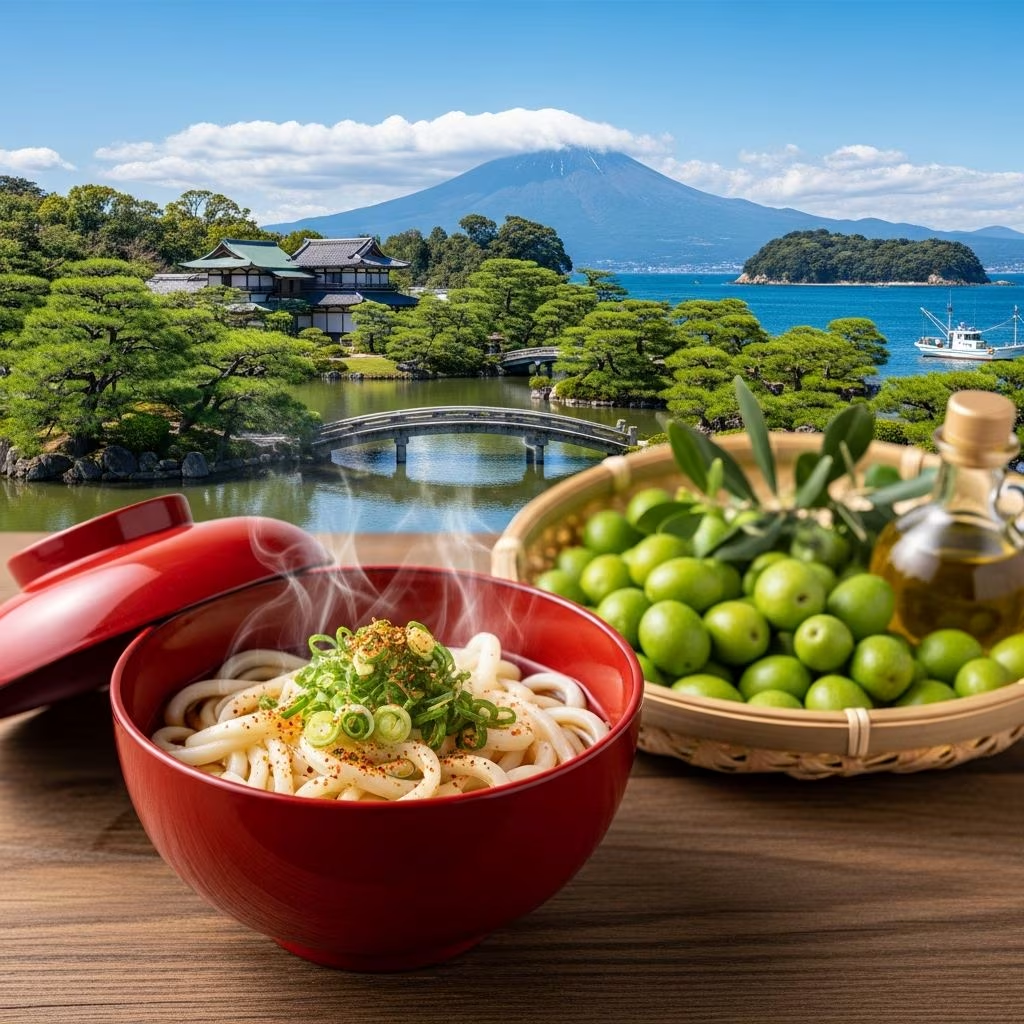
No Kagawa trip skips udon. **Sanuki udon**, thick, chewy noodles in dashi broth, defines the region—over 800 shops dot the prefecture, many opening at dawn. Slurp standing at casual stalls or dine at sit-down spots with tempura toppings. Marugame and Takamatsu boast the best; try kake udon (plain) or bukkake (cold with toppings). Pair with olive products from Shodoshima, Japan’s olive pioneer.
- Pro tip: Use the Udon Map app for hidden gems.
- Variations: Hot, cold, curry, or kitsune (sweetened tofu).
- Pairings: Local sake or seasonal veggies.
Practical Planning: Getting Around Kagawa
Fly into Takamatsu Airport (TAK) with domestic flights. JR trains and Kotoden lines connect cities; rent a car for flexibility. Ferries to islands run frequently—buy Setouchi Triennale passes for art hops. Best times: spring (sakura), autumn (foliage), or Triennale years. Budget ¥10,000-20,000/day excluding lodging.
FAQs
How many days for Kagawa?
3-5 days: 1 for Takamatsu/Ritsurin, 1-2 for islands, 1 for shrines/udon.
Is Naoshima worth it?
Absolutely for art lovers; book Chichu tickets ahead.
Best udon spots?
Marugame’s Sano Ramen or Takamatsu’s Udon Baka Garasu.
Kotohira-gu climb difficulty?
Moderate; wear comfy shoes, take breaks at shops.
Shikoku Pilgrimage for beginners?
Yes, visit select temples like Zentsu-ji without full circuit.
References
- What to Do in Kagawa | Japan Travel by NAVITIME — NAVITIME. 2023. https://japantravel.navitime.com/en/area/jp/guide/NTJtrv0844-en/
- THE 15 BEST Things to Do in Kagawa Prefecture (2026) — Tripadvisor. 2026. https://www.tripadvisor.com/Attractions-g298231-Activities-Kagawa_Prefecture_Shikoku.html
- Kagawa | Shikoku | Destinations | Travel Japan — Japan National Tourism Organization. 2024. https://www.japan.travel/en/destinations/shikoku/kagawa/
- Kagawa Prefecture – Japan Guide — Japan Guide. 2024. https://www.japan-guide.com/list/e1233.html
- How (and Why) to Visit Japan’s Kagawa Prefecture — Japan Starts Here. 2023. https://japanstartshere.com/kagawa-travel-guide/
- Kagawa: Things to See and Do in the Udon Prefecture — JNTO UK. 2024. https://www.japan.travel/en/uk/inspiration/kagawa-things-to-see-and-do-in-the-udon-prefecture/
← Previous
Best Things to Do in Memphis: Music, Museums & More
Next →
Costa Rica vs Belize: Which Central America Destination Is Right for You?
Related Reading
More in Food & Culture
Food & Culture Food & Culture
 Food & Culture
Best Places to Eat in Rome: Neighborhood Dining Guide
 Food & Culture
 Food & Culture